




Activity in the nation’s manufacturing sector continued to throttle back in April from a near two-year peak earlier in 2017, but it continues to expand. Separate reports show drops in consumer spending and construction, but analysts remain generally optimistic about the entire year.
Economic Watch: Manufacturing Growth Slows Along with Incomes, Construction
Activity in the nation’s manufacturing sector continued to throttle back in April from a near two-year peak earlier in 2017, but it continues to expand. Separate reports show drops in consumer spending and construction, but analysts remain generally optimistic about the entire year.

Evan Lockridge・Former Business Contributing Editor
5 min to read
The seasonally adjusted final U.S. Manufacturing Purchasing Managers’ Index (PMI) from the financial information services provider IHS Markit registered 52.8 in April, down from 53.3 in March, to signal the slowest improvement in overall business conditions since September 2016. (A reading above 50 shows manufacturing is expanding.) The latest figure is the same as the preliminary estimate released on April 21.
The fall in the headline PMI in April largely reflected weaker contributions from output and new business growth in April, which more than offset a slight rebound in job creation, according to the report. Manufacturing production increased for the 11th successive month in April.
New order growth also moderated to its slowest since September 2016, which survey respondents mainly linked to more cautious spending among domestic clients. Meanwhile, export sales gained momentum in April, with the latest rise in new work from abroad the fastest since August 2016.
The slower rise in output volumes largely reflected a more subdued pace of new business growth in April. Payroll numbers continued to increase across the manufacturing sector, driven by efforts to boost production capacity.
However, latest data indicated that manufacturers sought to reduce their stocks of purchases, which ended a six-month period of inventory building. Meanwhile, cost pressures intensified, with input prices rising at the fastest pace for just over two- and-a-half years.
“The signs of slowing growth are most evident in the domestic consumer sector, but investment goods manufacturers continue to fare well, enjoying stronger capital equipment spending from the energy sector in particular,” said Chris Williamson, chief business economist at IHS Markit. “Exports have also perked up, with April seeing the steepest increase in foreign orders for eight months.”
He noted a more upbeat picture came from hiring, which picked up in April, as did optimism about business conditions in the year ahead, suggesting firms are expecting order books continuing to improve in coming months.
A separate and more closely viewed report from the Institute for Supply Management on manufacturing showed similar results.
While its Purchasing Managers’ Index expanded in April for the eighth month in a row, the 54.8% was a drop of 2.4 percentage points from the March reading of 57.2%. (A reading above 50% indicates that the manufacturing economy is generally expanding.) The reading was lower than the 56.5% expected by a consensus estimate by analysts and is the lowest since December 2016's 54.5%.
The New Orders Index registered 57.5%, a decrease of 7 percentage points from the March reading of 64.5%. The Production Index registered 58.6%, 1 percentage point higher than the March reading of 57.6%. Of the 18 manufacturing industries survey by ISM, 16 reported growth in April.
"The past relationship between the PMI and the overall economy indicates that the average PMI for January through April corresponds to a 4.1% increase in real gross domestic product (GDP) on an annualized basis,” said Bradley J. Holcomb, chair of the Institute for Supply Management Manufacturing Business Survey Committee. “In addition, if the PMI for April is annualized, it corresponds to a 3.6% increase in real GDP annually."
Personal Incomes Nudge Higher, Spending Unchanged
These reports were released the same day as one from the Commerce Department showing personal incomes increased 0.2% in March. However, a measure of personal spending was unchanged in March from the month before.
The performance in personal spending was not unexpected, a report released Friday revealed that lower consumer spending in the first three months of the year helped pull down GDP to the worst performance in three years -- increasing at an annual rate of just 0.7% in the first quarter of the year.
RBC Economics research pointed out the decline in consumer spending in March was due in large part to falling prices.
“A 0.3% tick increase in spending in volume terms provides the first sign that spending is bouncing back after a weak 0.3% annualized increase in all of the first quarter…that looks decidedly out of line with underlying strength in labor markets, rising consumer confidence, and still extremely low interest rates,” said Nathan Janzen, RBC senior economist.
According to Janzen, part of the first quarter disappointment was related to weak spending on utilities, as warmer-than-usual temperatures reduced the need for home heating. The reversal as temperatures returned to normal will also support stronger spending growth in second quarter, he explained.
“We continue to view the fundamental backdrop for consumer spending as solid, supported by ongoing improvement in labor markets, including rising wages, and the stimulative stance of monetary policy,” by the Federal Reserve, Janzen said.
Construction Spending Slips Following Record Performance
Lastly, a Commerce Department measure of U.S. construction spending showed a slight drop of 0.2% in March compared to the revised February estimate of a 1.8% jump that was an all-time high. The latest performance fell short of Wall Street expectations of a 0.5% increase.
Despite the overall decline, March's spending level was up 3.6% from the same time a year ago. During the first three months of 2017, total construction spending increased 4.9% from the same time in 2016.
Spending on private construction projects was nearly the same as February, while spending on public projects fell 0.9%.
“It's hard to get a gauge on this report because of its revisions and volatility, and the general weakness in nonresidential construction contrasts with the enormous strength of investment in nonresidential structures in Friday's first-quarter GDP report,” said analysts at Econoday. “The housing side is more clear, with gains backed up by strength in underlying permits and strong demand for new housing. Next up on the construction sector will be Friday's employment report and construction payrolls, which have been mostly solid so far this year.”
More Fleet Management

ACT: Trucking Volumes Rise, Capacity Tightens as Fuel Prices Cloud Outlook
ACT Research data shows volumes hitting a four-year high and supply-demand balance strengthening, but higher oil prices are undercutting tariff relief and tempering optimism.
Read More →
Wabash Teams Physical Security With Digital Tech For Better Cargo Visibility
The patent-pending cargo solution integrates a digitally connected cargo door and an intelligent locking system with the TrailerHawk.AI technology platform.
Read More →
From Diesel Prices to Cyberattacks: How the Iran War Is Affecting Trucking
The impact of the Iran conflict extends beyond fuel costs, bringing more fraud and cybersecurity risks to the trucking industry.
Read More →
ATA’s Spear Warns Fuel Prices, Trade Policy, and Global Conflict Could Stall Trucking Recovery
Speaking at the TMC Annual Meeting in Nashville, ATA President Chris Spear said trucking faces mounting pressure from rising fuel prices, geopolitical instability, and uncertainty around trade policy.
Read More →
New Entrants, Chameleon Carriers, and Safety: Is It Too Easy to Start a Trucking Company?
More than 100,000 new trucking companies enter the industry each year, but regulators manage to audit only a fraction of them. That churn creates opportunities for inexperienced startups — and for “chameleon carriers” that shut down after safety violations and reappear under new identities. Read more from Deborah Lockridge in this commentary.
Read More →
Fleet Managers Invited to Apply for Exclusive HDT Exchange Event
HDTX is an intimate event that connects heavy-duty trucking fleet managers with industry suppliers through small-group discussions, educational sessions, and structured one-on-one meetings.
Read More →
DAT Launches iPhone Widget to Help Owner-Operators Find Loads Faster
New DAT One feature shows top-paying loads directly on an iPhone’s home screen, helping carriers react faster to spot-market opportunities.
Read More →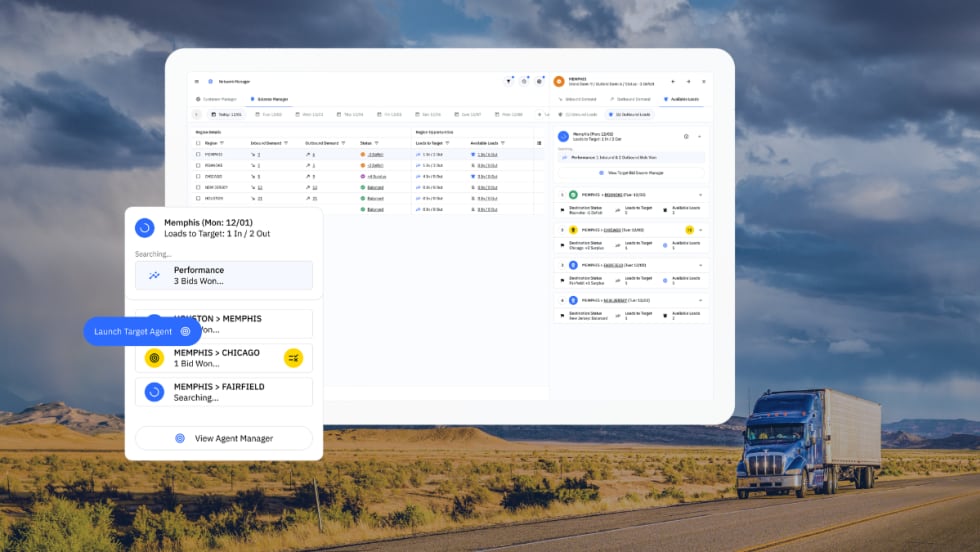
Optimal Dynamics Launches AI System to Help Carriers Choose Better Freight
Optimal Dynamics says its new Scale platform uses AI agents and optimization to help carriers find and secure freight that improves network balance and profitability.
Read More →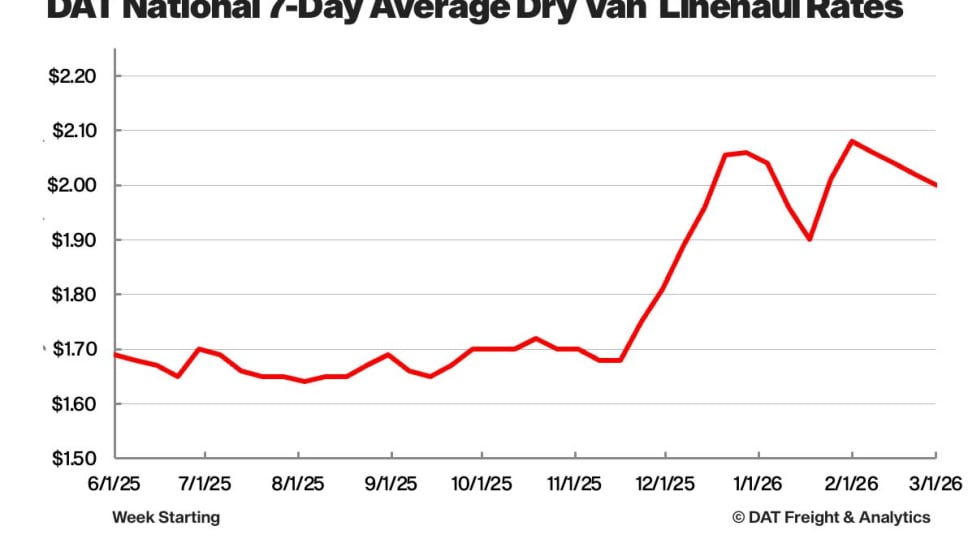
DAT: Flatbed Demand Climbs as Van and Reefer Rates Soften
DAT Freight & Analytics data shows tightening flatbed capacity, easing produce markets, and softening van and reefer rates.
Read More →
Run on Less “Messy Middle” Data Shows Multiple Paths Forward for Truck Powertrains [Watch]
NACFE's Run on Less - Messy Middle project demonstrates the power of data in helping to guide the future of alternative fuels and powertrains for heavy-duty trucks.
Read More →