




Economic activity in the nation’s manufacturing sector continued expanding in February, according to two surveys of nation’s purchasing managers. One report shows conditions are the best in two years while the other indicates things are slightly cooler than they were at the beginning of 2017.
Economic Watch: Manufacturing Keeps Surging as Construction, Personal Spending Slip
Economic activity in the nation’s manufacturing sector continued expanding in February, according to two surveys of the nation’s purchasing managers. One report shows conditions are the best in two years while the other indicates things are slightly cooler than they were at the beginning of 2017.

Evan Lockridge・Former Business Contributing Editor
5 min to read
The closely watched Purchasing Managers’ Index from the Institute for Supply Management posted a final February reading of 57.7%, an increase from January’s level of 56%. This marks the sixth straight month of growth and it’s the highest reading since August 2014. A reading above 50% indicates expansion while below that level shows contraction.
The New Orders Index registered 65.1%, an increase of 4.7 percentage points from the January reading of 60.4%, its highest reading since December 2013. The Production Index registered 62.9%, 1.5 percentage points higher than the January reading of 61.4% and its highest level since March 2011.
"Comments from the panel largely indicate strong sales and demand, and reflect a positive view of business conditions with a watchful eye on commodities and the potential for inflation,” said Bradley J. Holcomb, chair of the ISM Manufacturing Business Survey Committee
Of the 18 manufacturing industries surveyed, 17 reported growth in February.
“The past relationship between the PMI and the overall economy indicates that the average PMI for January through February of 56.9% corresponds to a 4.3% increase in real gross domestic product [GDP] on an annualized basis,” said Holcomb. “In addition, if the PMI for February is annualized, it corresponds to a 4.5% increase in real GDP annually."
Such rates compare to the GDP expanding at a annual rate of 1.9% in the fourth quarter of 2016.
A separate report from the financial information services provider IHS Markit also shows the U.S. manufacturing sector continued to expand at a robust pace, although the latest upturn was slightly weaker than seen at the beginning of 2017.
This largely reflected a moderation in new order growth from January’s 28-month peak, alongside a slightly softer increase in output volumes. Meanwhile, manufacturers reported a sustained rise in inventory levels, which was linked to greater production schedules and expected improvements in client demand, according to the report.
The seasonally adjusted Markit final U.S. Manufacturing Purchasing Managers’ Index (PMI) registered 54.2 in February, down only slightly from January’s 22-month peak of 55. As a result, the average reading for first quarter to date indicates that the manufacturing sector is on course to register its strongest quarterly improvement in business conditions for two years.
Like the ISM survey, a reading above 50 in the Market PMI indicates expansion.
Manufacturing production has picked up in each month since June 2016, and the latest rise was one of the fastest recorded over the past two years. A robust pace of output growth was attributed to a combination of increased client spending and efforts to rebuild finished goods inventories in February. Post-production stocks have now risen for five months in a row, which represents the longest period of inventory building since mid-2015, according to the report.
The February survey points to a modest cooling in the rate of expansion of the manufacturing sector, but it remains too early to tell if this is the start of a more prolonged slowdown, according to Chris Williamson, chief business economist at IHS Markit.
“Even with the latest slowing, the goods-producing sector is still on course for its best quarter for two years, representing a markedly improved picture compared to this time last year,” he said. “Growth is being driven by robust domestic demand, stemming in turn from buoyant consumers and increased investment spending by the energy sector in particular. Manufacturing is far from booming, however, as the strong dollar means near-stagnant exports continue to act as a drag on growth.”
Construction Slips, Consumer Spending Weakens a Bit
Other reports released Wednesday showed the total value of U.S. construction spending in January fell slightly, according to the U.S. Commerce Department.
The seasonally adjusted annual rate of $1.18 billion, fell 1% below the revised December estimate, well short of a 0.6% hike expected in a survey of Wall Street analysts. The December level was revised upward by 0.1% from November, marking the highest level since April 2006. Also, January level is 3.1% higher than the same time a year ago.
Spending on private construction increased 0.2% in January but public construction spending declined 5% due to weak government expenditures, including a 3.3% drop in highway construction spending.
“Public spending looks to get a boost down the road with new fiscal initiatives while the strength of the report, residential investment, is very solid and looks to improve further given gains in related permits” said analysts at Econoday. “The housing sector has gotten off to a bumpy start this year though this report is one of strength.”
Another Commerce Department report showed consumer spending increased 0.2% in January following a 0.5% gain in January, slightly weaker than analysts’ expectations, as auto sales pulled back and warmer-than-usual temperatures were likely to blame for a large pullback in spending on utilities. Also, personal income increased 0.4% in January, better than expected, following a 0.3% rise in January.
The same survey revealed that disposable income, after adjusting for higher prices, fell 0.2% in January, the first drop in three years and an indication that consumer prices are hurting buying power.
On the surface, the personal income and spending report was “good” in January, according to Wells Fargo Securities, however, once inflation is considered then the report was a very weak start for both consumption and income during the first month of the year.
“Although the first month of the year was disappointing for personal consumption expenditures [PCE], we are still encouraged by the strong increase in consumer confidence and the potential effects of this measure on consumer expenditures going forward,” said Eugenio J. Alemán, senior economist at Well Fargo Securities. “Thus, we expect a relatively strong rebound in PCE during the next couple of months and hope that inflation does not ruin the consumer confidence party.”
More Fleet Management

ACT: Trucking Volumes Rise, Capacity Tightens as Fuel Prices Cloud Outlook
ACT Research data shows volumes hitting a four-year high and supply-demand balance strengthening, but higher oil prices are undercutting tariff relief and tempering optimism.
Read More →
Wabash Teams Physical Security With Digital Tech For Better Cargo Visibility
The patent-pending cargo solution integrates a digitally connected cargo door and an intelligent locking system with the TrailerHawk.AI technology platform.
Read More →
From Diesel Prices to Cyberattacks: How the Iran War Is Affecting Trucking
The impact of the Iran conflict extends beyond fuel costs, bringing more fraud and cybersecurity risks to the trucking industry.
Read More →
ATA’s Spear Warns Fuel Prices, Trade Policy, and Global Conflict Could Stall Trucking Recovery
Speaking at the TMC Annual Meeting in Nashville, ATA President Chris Spear said trucking faces mounting pressure from rising fuel prices, geopolitical instability, and uncertainty around trade policy.
Read More →
New Entrants, Chameleon Carriers, and Safety: Is It Too Easy to Start a Trucking Company?
More than 100,000 new trucking companies enter the industry each year, but regulators manage to audit only a fraction of them. That churn creates opportunities for inexperienced startups — and for “chameleon carriers” that shut down after safety violations and reappear under new identities. Read more from Deborah Lockridge in this commentary.
Read More →
Fleet Managers Invited to Apply for Exclusive HDT Exchange Event
HDTX is an intimate event that connects heavy-duty trucking fleet managers with industry suppliers through small-group discussions, educational sessions, and structured one-on-one meetings.
Read More →
DAT Launches iPhone Widget to Help Owner-Operators Find Loads Faster
New DAT One feature shows top-paying loads directly on an iPhone’s home screen, helping carriers react faster to spot-market opportunities.
Read More →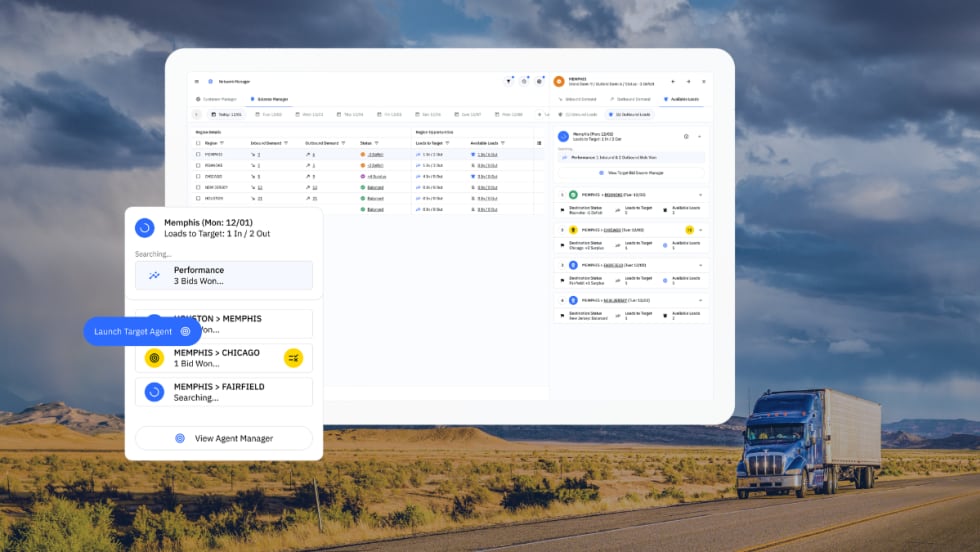
Optimal Dynamics Launches AI System to Help Carriers Choose Better Freight
Optimal Dynamics says its new Scale platform uses AI agents and optimization to help carriers find and secure freight that improves network balance and profitability.
Read More →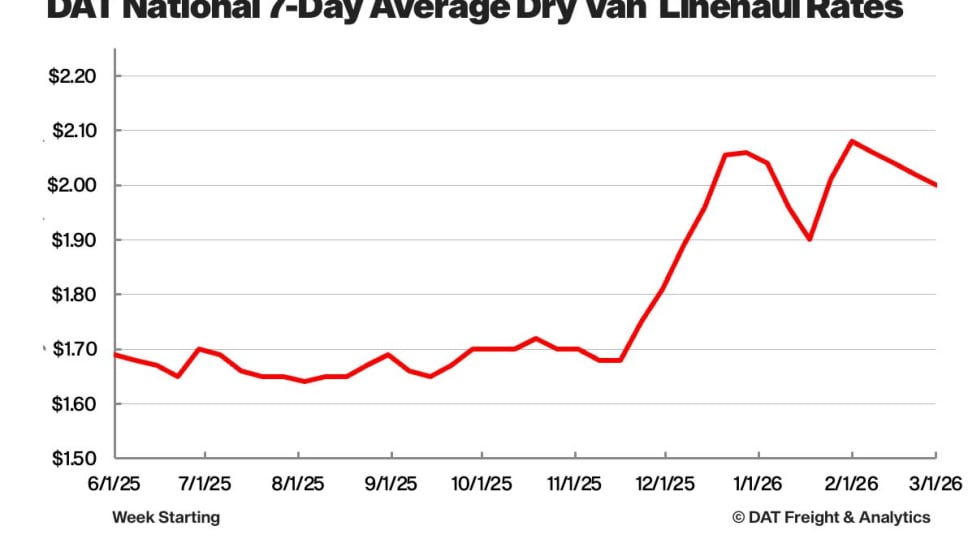
DAT: Flatbed Demand Climbs as Van and Reefer Rates Soften
DAT Freight & Analytics data shows tightening flatbed capacity, easing produce markets, and softening van and reefer rates.
Read More →
Run on Less “Messy Middle” Data Shows Multiple Paths Forward for Truck Powertrains [Watch]
NACFE's Run on Less - Messy Middle project demonstrates the power of data in helping to guide the future of alternative fuels and powertrains for heavy-duty trucks.
Read More →