



Economic activity in the manufacturing sector expanded in June for the 13th consecutive month, and the overall economy grew for the 61st consecutive month, according to the Institute for Supply Management.
 MENU
MENU SEARCH
Economic activity in the manufacturing sector expanded in June for the 13th consecutive month, and the overall economy grew for the 61st consecutive month, according to the Institute for Supply Management.

Economic activity in the manufacturing sector expanded in June for the 13th consecutive month, and the overall economy grew for the 61st consecutive month, according to the Institute for Supply Management.
The nation's supply executives are surveyed for the Manufacturing ISM Report On Business.
The June PMI (commonly known as the Purchasing Managers Index) registered 55.3%, a decrease of 0.1 percentage point from May's reading of 55.4%, says Bradley J. Holcomb, chair of the ISM Manufacturing Business Survey Committee, indicating expansion in manufacturing for the 13th consecutive month.
The New Orders Index registered 58.9%, an increase of 2 percentage points from the 56.9% reading in May, indicating growth in new orders for the 13th consecutive month.
The Production Index registered 60%, 1 percentage point below the May reading of 61%.
Holcomb noted that employment grew for the 12th consecutive month, registering 52.8%, the same level of growth as reported in May. Inventories of raw materials remained at 53%, the same reading as reported in both May and April. The price of raw materials grew at a slower rate in June, registering 58%, down 2 percentage points from May.
A PMI in excess of 43.2%, over a period of time, generally indicates an expansion of the overall economy, ISM says. Therefore, the June PMI indicates growth for the 61st consecutive month in the overall economy, and indicates expansion in the manufacturing sector for the 13th consecutive month.
"The past relationship between the PMI and the overall economy indicates that the average PMI for January through June (54%) corresponds to a 3.6% increase in real gross domestic product (GDP) on an annualized basis," Holcomb says. "In addition, if the PMI for June (55.3%) is annualized, it corresponds to a 4% increase in real GDP annually."
Of the 18 manufacturing industries, 15 are reporting growth in June, led by Furniture & Related Products; Nonmetallic Mineral Products; and Food, Beverage & Tobacco Products.
The data is obtained from a survey of manufacturing supply managers based on information they have collected within their respective organizations.
The ISM offered some sample comments from respondents to the survey:
"Business volume is increasing at a good pace and consumers appear to be spending more." (Food, Beverage & Tobacco Products)
"The strength of the automotive industry continues to drive the high demand for steel." (Fabricated Metal Products)
"Business still very solid and strong -- Class 8 Truck and RV." (Transportation Equipment)

ACT Research data shows volumes hitting a four-year high and supply-demand balance strengthening, but higher oil prices are undercutting tariff relief and tempering optimism.
Read More →
The patent-pending cargo solution integrates a digitally connected cargo door and an intelligent locking system with the TrailerHawk.AI technology platform.
Read More →
The impact of the Iran conflict extends beyond fuel costs, bringing more fraud and cybersecurity risks to the trucking industry.
Read More →
Speaking at the TMC Annual Meeting in Nashville, ATA President Chris Spear said trucking faces mounting pressure from rising fuel prices, geopolitical instability, and uncertainty around trade policy.
Read More →
More than 100,000 new trucking companies enter the industry each year, but regulators manage to audit only a fraction of them. That churn creates opportunities for inexperienced startups — and for “chameleon carriers” that shut down after safety violations and reappear under new identities. Read more from Deborah Lockridge in this commentary.
Read More →
HDTX is an intimate event that connects heavy-duty trucking fleet managers with industry suppliers through small-group discussions, educational sessions, and structured one-on-one meetings.
Read More →
New DAT One feature shows top-paying loads directly on an iPhone’s home screen, helping carriers react faster to spot-market opportunities.
Read More →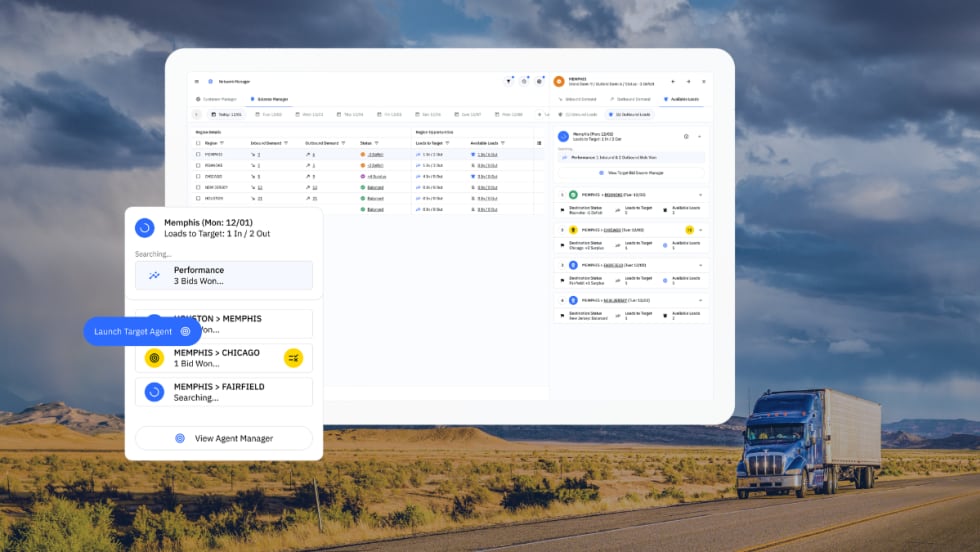
Optimal Dynamics says its new Scale platform uses AI agents and optimization to help carriers find and secure freight that improves network balance and profitability.
Read More →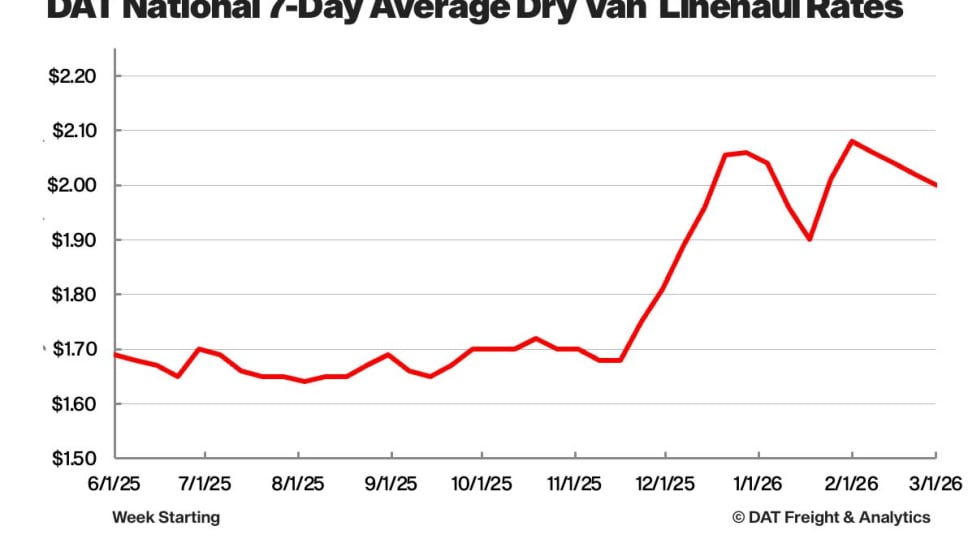
DAT Freight & Analytics data shows tightening flatbed capacity, easing produce markets, and softening van and reefer rates.
Read More →
NACFE's Run on Less - Messy Middle project demonstrates the power of data in helping to guide the future of alternative fuels and powertrains for heavy-duty trucks.
Read More →