



Retail sales in the U.S. fell for the third straight month in February as harsh weather in much of the country kept consumers and their wallets at home.
 MENU
MENU SEARCH
Retail sales in the U.S. fell for the third straight month in February as harsh weather in much of the country kept consumers and their wallets at home.

Photo: Revisorweb via Wikimedia Commons
Retail sales in the U.S. fell for the third straight month in February as harsh weather in much of the country kept consumers and their wallets at home.
A new Commerce Department report shows a decline of 0.6% from January, due in large part to a 2.5% drop in sales of new autos along with declines at department stores and electronics and appliances retailers of 1.4% and 1.2%, respectively. In contrast, gasoline sales increased 1.5%, due to higher prices, while online sales added 2.2%.
Excluding autos, overall sales in February fell just 0.1% after falling 1.1% in January.
The overall drop follows declines of 0.8% in January from the month before and 0.9% in December from November. On a three-month annualized basis, retail sales are down 4.8%, compared to a 4.3% growth rate six months ago. When February retail sales are compared to the level from a year earlier it was still 1.7% higher.
The overall February figure was well short of what many analysts were expecting with one consensus poll of economists forecasting a 0.3% increase.
“Widespread weakness throughout the categories suggests consumers pulled back markedly in the second month of the year, a reflection of sluggish wage growth and growing concerns surrounding financing today's spending with tomorrow's wages,” said Sterne Agee Chief Economist Lindsey Piegza. “Lower gas prices were a welcome windfall, boosting spending in October and November, but by December consumers have been squirreling away cost savings. Low gas prices alone are not enough to sustain spending patterns, support is needed from organic job and income growth.”
She noted while February weather was unseasonably cold, however, retail sales are seasonally adjusted and weather does not appear to have markedly impacted other economic reports in the same timeframe including regional manufacturing reports as well as the national employment report.
“It is difficult to blame February's spending malaise on weather alone, although it could have played a muted role in the Northeast and Midwest in particular,” Piegza said.

ACT Research data shows volumes hitting a four-year high and supply-demand balance strengthening, but higher oil prices are undercutting tariff relief and tempering optimism.
Read More →
The patent-pending cargo solution integrates a digitally connected cargo door and an intelligent locking system with the TrailerHawk.AI technology platform.
Read More →
The impact of the Iran conflict extends beyond fuel costs, bringing more fraud and cybersecurity risks to the trucking industry.
Read More →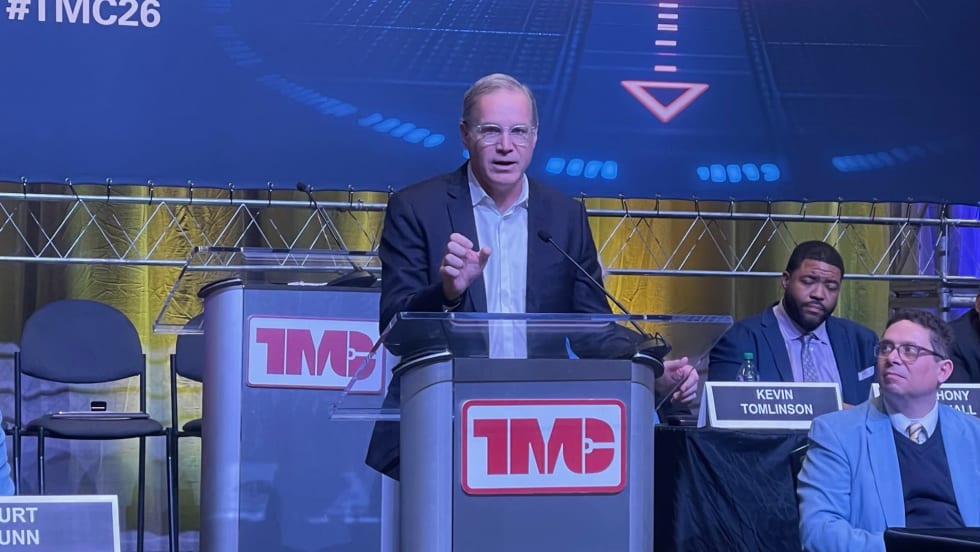
Speaking at the TMC Annual Meeting in Nashville, ATA President Chris Spear said trucking faces mounting pressure from rising fuel prices, geopolitical instability, and uncertainty around trade policy.
Read More →
More than 100,000 new trucking companies enter the industry each year, but regulators manage to audit only a fraction of them. That churn creates opportunities for inexperienced startups — and for “chameleon carriers” that shut down after safety violations and reappear under new identities. Read more from Deborah Lockridge in this commentary.
Read More →
HDTX is an intimate event that connects heavy-duty trucking fleet managers with industry suppliers through small-group discussions, educational sessions, and structured one-on-one meetings.
Read More →
New DAT One feature shows top-paying loads directly on an iPhone’s home screen, helping carriers react faster to spot-market opportunities.
Read More →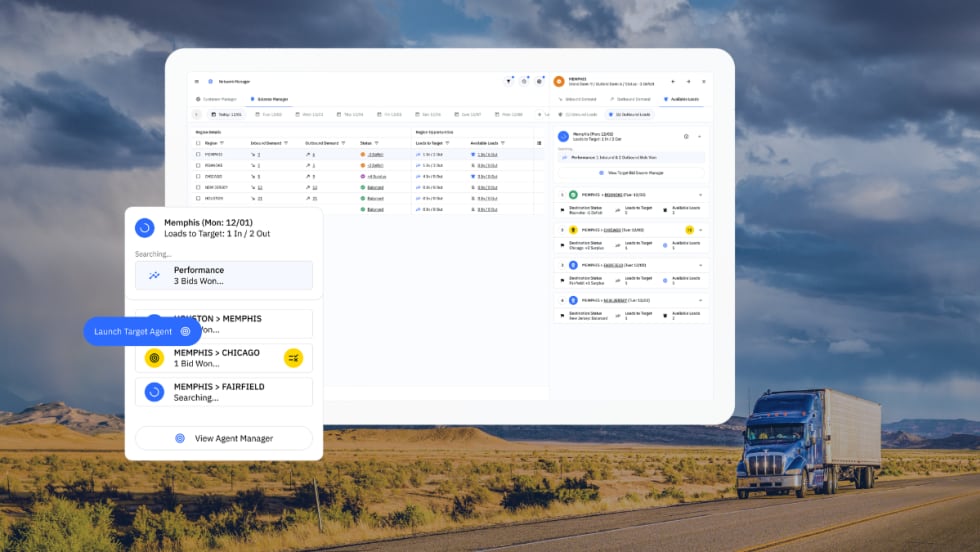
Optimal Dynamics says its new Scale platform uses AI agents and optimization to help carriers find and secure freight that improves network balance and profitability.
Read More →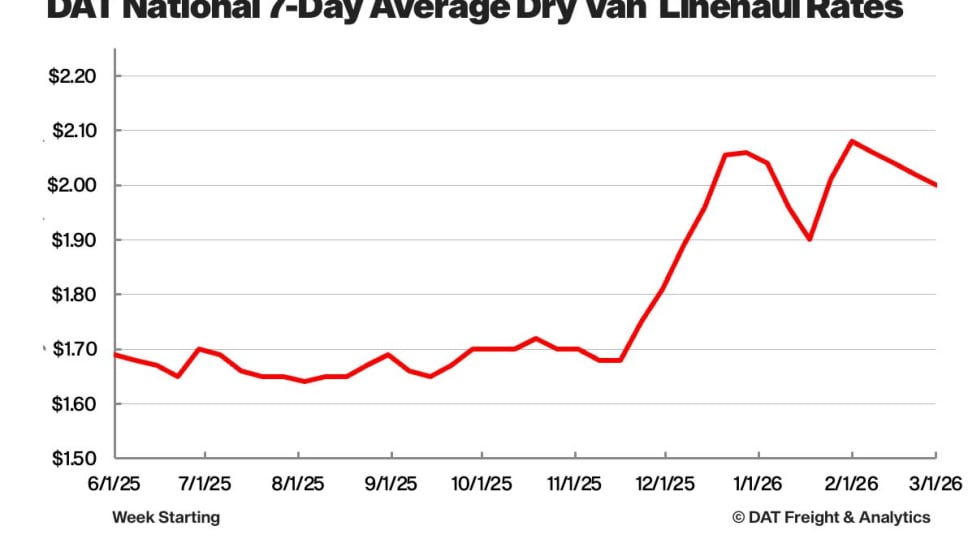
DAT Freight & Analytics data shows tightening flatbed capacity, easing produce markets, and softening van and reefer rates.
Read More →
NACFE's Run on Less - Messy Middle project demonstrates the power of data in helping to guide the future of alternative fuels and powertrains for heavy-duty trucks.
Read More →