




Trucking fleets are leaving an average of nearly a half-million dollars in operational savings on the table by not taking full advantage of mobile technologies they may already utilize, according to a report from Intermec, Everett, Wash.
 MENU
MENU SEARCH
Trucking fleets are leaving an average of nearly a half-million dollars in operational savings on the table by not taking full advantage of mobile technologies they may already utilize, according to a report from Intermec, Everett, Wash.

Eliminating paper alone can drive savings by eliminating the time required to produce the paper in dispatch, the time a driver has spends organizing or sorting the paper and the time it takes to get a customer to sign the paper.
Trucking fleets are leaving an average of nearly a half-million dollars in operational savings on the table by not taking full advantage of mobile technologies they may already utilize, according to a report from Intermec, Everett, Wash.
The report is the second detailing the results of a survey Intermec commissioned of 375 transportation and logistics managers at companies in six countries. (Survey Says: Benefits of Automation Well Recognized Among Truck Fleets)
According to Jeff Sibio, industry director for transport and logistics at Intermec, two things stood out to him from the survey – one involving technology and the other processes. “I think what struck me the most is how few of the fleets have actually done any type of process evaluation or reengineering in recent years,” he said.
The second element was that while nearly 90% of the surveyed fleets said they were either using technology such as GPS or were planning to deploy it within the next 12 months, “it was surprising there was such a large percentage of fleets that were not using those technologies in a current or advanced fashion.”
He said fleets are using GPS for track and trace but relatively few “had caught on to the predictive trends and proactive customer notification or other advanced uses we’ve been seeing.”
The survey found that 72% of fleets had not evaluated their existing processes for at least two years. That is where the savings come in, Sibio said.
For example, 60% of those surveyed still use paper in some aspect of their pick-up and delivery operations. “What we often find is that, if it’s not broken, they don’t fix it,” Sibio said, referring to fleets that may not be doing things as well as they could be, but nonetheless are getting the job done. “They don’t go out and proactively fix, upgrade or improve the process,” he said.
Eliminating the paper alone drives savings by eliminating the time required to produce the paper in dispatch, the time a driver has spends organizing or sorting the paper and the time it takes to get a customer to sign the paper. Then, everything that is written on that piece of paper has to be transcribed into the back-office system. Saving just a few minutes per delivery by getting rid of the paper adds up to real savings when applied across a fleet of several hundred vehicles – an average of $460,000 annually based on survey results.
The survey covered a wide range of trucking operations from postal carriers to couriers, to logistics and transportation companies to long-haul trucking fleets. The surveyed companies included only those with a minimum of 500 employees.
As Sibio noted, today’s e-commerce world means that delivery demands have changed dramatically. The end customer, rather than the shipper often chooses the form of delivery, the time of delivery and other options such as same-day or next-day delivery.
“There is a real demand for these delivery options,” Sibio said. “Customers have more delivery choices and they want notification on these deliveries. Ten years ago, we didn’t have customer requirements for notification or $4 a gallon fuel. It’s all about looking at your processes – there is a better way to do things today.”
Find more information online at www.intermec.com.

ACT Research data shows volumes hitting a four-year high and supply-demand balance strengthening, but higher oil prices are undercutting tariff relief and tempering optimism.
Read More →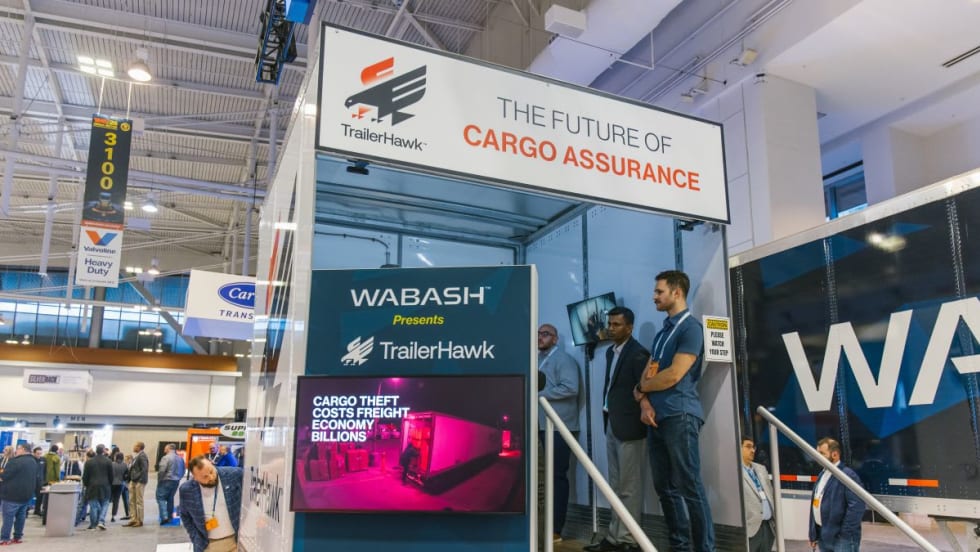
The patent-pending cargo solution integrates a digitally connected cargo door and an intelligent locking system with the TrailerHawk.AI technology platform.
Read More →
The impact of the Iran conflict extends beyond fuel costs, bringing more fraud and cybersecurity risks to the trucking industry.
Read More →
Speaking at the TMC Annual Meeting in Nashville, ATA President Chris Spear said trucking faces mounting pressure from rising fuel prices, geopolitical instability, and uncertainty around trade policy.
Read More →
More than 100,000 new trucking companies enter the industry each year, but regulators manage to audit only a fraction of them. That churn creates opportunities for inexperienced startups — and for “chameleon carriers” that shut down after safety violations and reappear under new identities. Read more from Deborah Lockridge in this commentary.
Read More →
HDTX is an intimate event that connects heavy-duty trucking fleet managers with industry suppliers through small-group discussions, educational sessions, and structured one-on-one meetings.
Read More →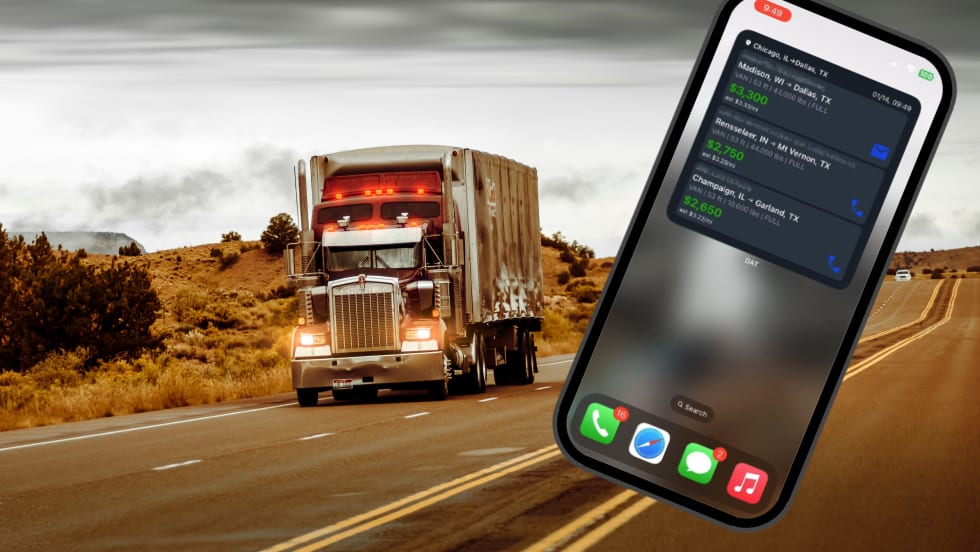
New DAT One feature shows top-paying loads directly on an iPhone’s home screen, helping carriers react faster to spot-market opportunities.
Read More →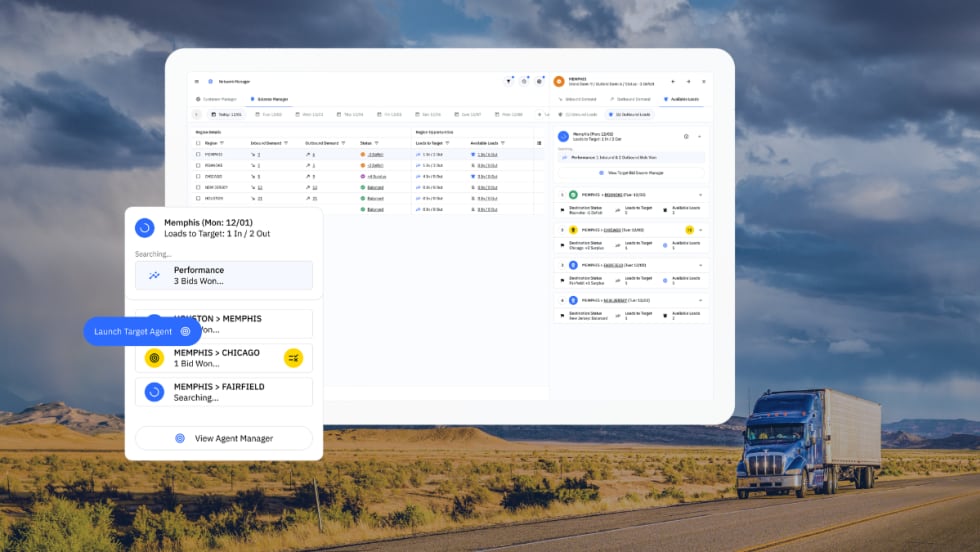
Optimal Dynamics says its new Scale platform uses AI agents and optimization to help carriers find and secure freight that improves network balance and profitability.
Read More →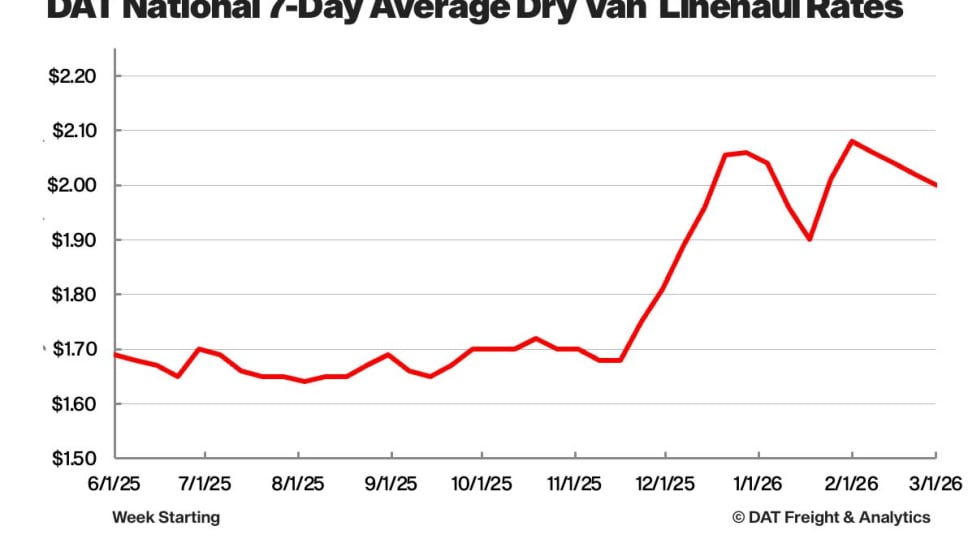
DAT Freight & Analytics data shows tightening flatbed capacity, easing produce markets, and softening van and reefer rates.
Read More →
NACFE's Run on Less - Messy Middle project demonstrates the power of data in helping to guide the future of alternative fuels and powertrains for heavy-duty trucks.
Read More →