




LOUISVILLE, KY. – The U.S. economy is "nowhere near” slipping into recession. But because in the short term the economy is sending mixed signals, “freight demand will rise only modestly over the next several months."
 MENU
MENU SEARCH
LOUISVILLE, KY -- The U.S. economy is "nowhere near” slipping into recession. But the economy is sending mixed signals, so what's going to happen to freight demand over the next several months? FTR's Eric Starks shared his insights at the MATS Fleet Forum Wednesday.
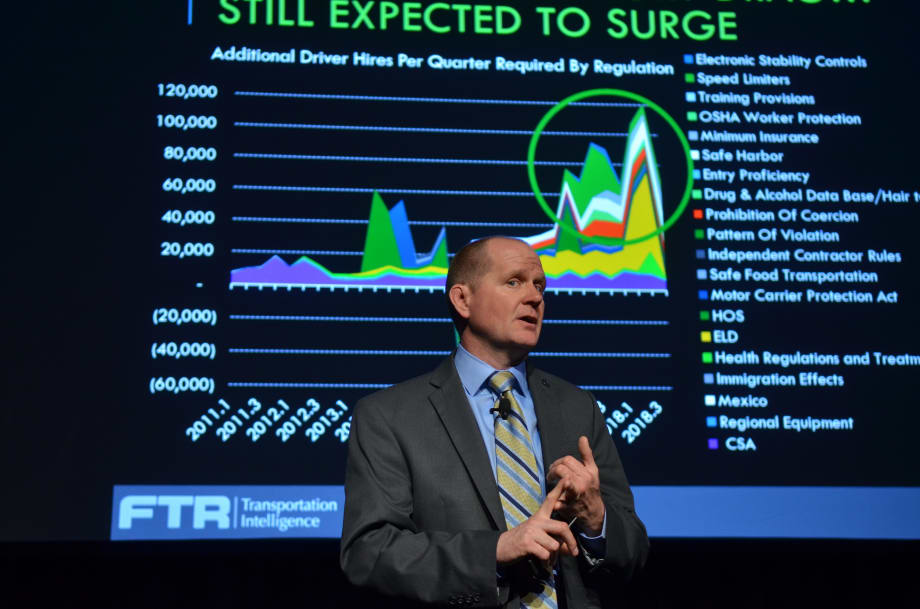
FTR's Eric Starks laying out where he sees freight headed at Fleet Forum in Louisville, Ky. Photo: Jim Park
LOUISVILLE, KY. – The U.S. economy is "nowhere near” slipping into recession. But because in the short term the economy is sending mixed signals, “freight demand will rise only modestly over the next several months."
That was a key takeaway from forecaster Eric Starks’ presentation at the Fleet Forum business conference, co-sponsored by HDT, held here on March 30, the day before the Mid-America Trucking Show opened.
Starks, president of FTR Transportation Intelligence, said the U.S. manufacturing sector is “by and large robust” despite industrial production running “in fits and starts” and that freight capacity is currently “relatively loose.”
However, despite a number of positive economic indicators – including employment, auto and light truck sales, stable fuel prices, and, to a lesser extent, housing activity – both retail sales and business activity remain flat.
“For 2016, GDP growth is forecast at 1.8 to 2.0% – that’s sluggish growth,” said Starks. "The economy is moving along slowly, with continued growth.”
Starks said the lack of capital spending by businesses is a concern. “Employment generates spending. Job growth of over 200,000 per month indicates [economic] growth and, on average, we are holding above the 200,000 level.
“But business is holding back,” he continued. “The level of core capital goods orders shows that business activity remains flat — I would like to see those orders pick up.”
Starks said a big part of what’s holding businesses back is excessive inventories, which he cited as “a structural problem, throughout the commercial-vehicle market and the economy at large.
“Inventory levels are now problematic,” he continued. “Too much inventory reduces demand for freight transportation. We need to see inventories go down before [business] orders can pick up.”
Still, Starks added, freight loading originations (which he noted, “unlike a ton-mile, can be physically seen”) are trending up. He said the loading originations forecast “indicates modest freight growth going forward in 2016 into 2017.”
Starks also cautioned that the drag on fleet operations from regulations, such as for electronic log devices and speed-limiters, is expected to “surge” this year and next year will affect utilization.
He said it remains to be seen if this will result from fewer “quality drivers” being available or a need to make up for a decline in operational utilization. “A lot of [regulatory] pressure on drivers will compel carriers to boost productivity,” Starks noted. “Some of that will require educating shippers. Some may have to ‘fire’ shippers who don’t get what is happening.”
Starks added that “by and large, I don’t see changes in regulations [now in the works] even if the administration changes [hands] after the election.”

ACT Research data shows volumes hitting a four-year high and supply-demand balance strengthening, but higher oil prices are undercutting tariff relief and tempering optimism.
Read More →
The patent-pending cargo solution integrates a digitally connected cargo door and an intelligent locking system with the TrailerHawk.AI technology platform.
Read More →
The impact of the Iran conflict extends beyond fuel costs, bringing more fraud and cybersecurity risks to the trucking industry.
Read More →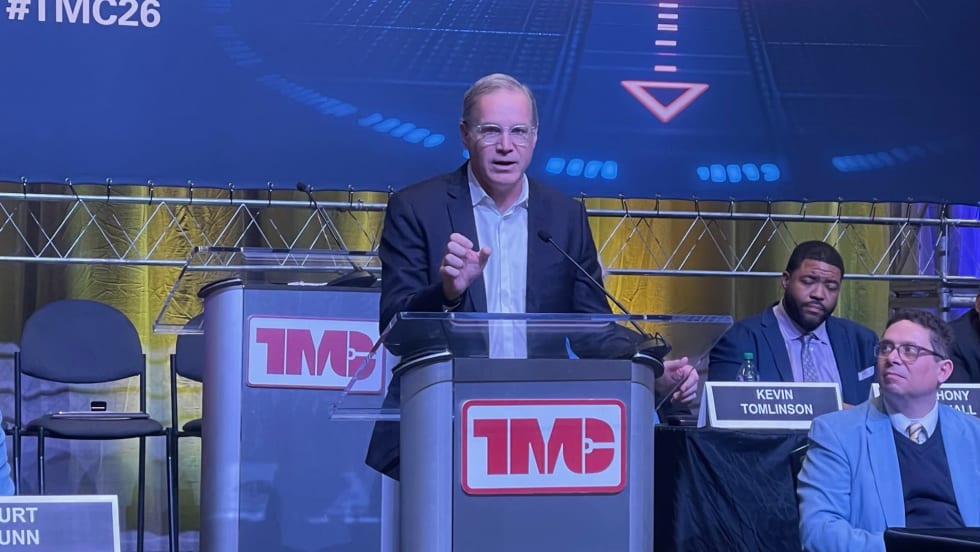
Speaking at the TMC Annual Meeting in Nashville, ATA President Chris Spear said trucking faces mounting pressure from rising fuel prices, geopolitical instability, and uncertainty around trade policy.
Read More →
More than 100,000 new trucking companies enter the industry each year, but regulators manage to audit only a fraction of them. That churn creates opportunities for inexperienced startups — and for “chameleon carriers” that shut down after safety violations and reappear under new identities. Read more from Deborah Lockridge in this commentary.
Read More →
HDTX is an intimate event that connects heavy-duty trucking fleet managers with industry suppliers through small-group discussions, educational sessions, and structured one-on-one meetings.
Read More →
New DAT One feature shows top-paying loads directly on an iPhone’s home screen, helping carriers react faster to spot-market opportunities.
Read More →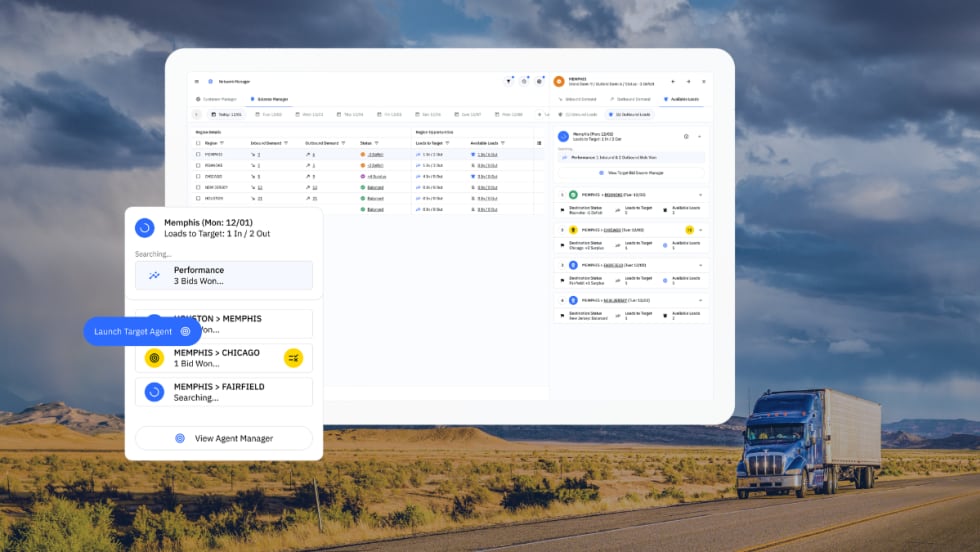
Optimal Dynamics says its new Scale platform uses AI agents and optimization to help carriers find and secure freight that improves network balance and profitability.
Read More →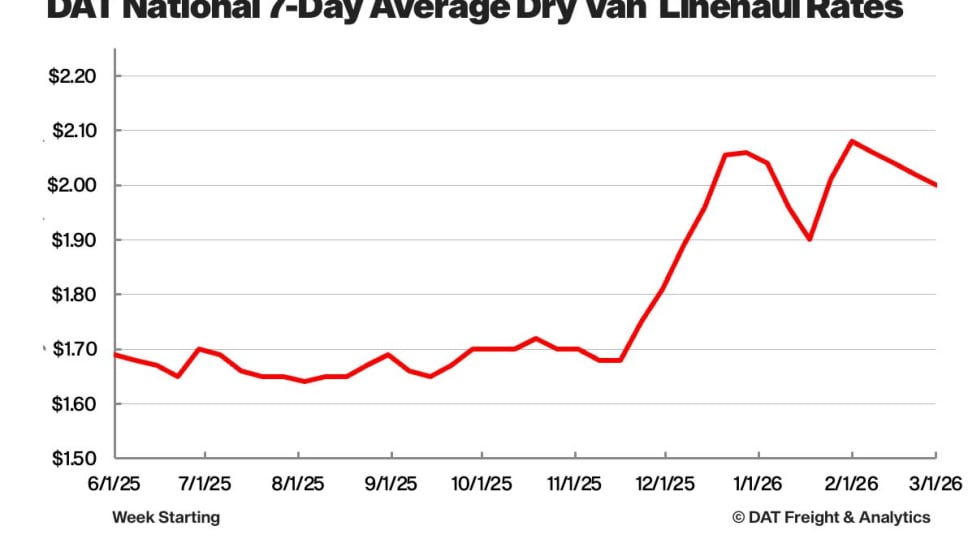
DAT Freight & Analytics data shows tightening flatbed capacity, easing produce markets, and softening van and reefer rates.
Read More →
NACFE's Run on Less - Messy Middle project demonstrates the power of data in helping to guide the future of alternative fuels and powertrains for heavy-duty trucks.
Read More →