



North American shipment volumes and freight expenditures both continued the decline that began in December after the economy abruptly reversed direction near the end of last year, according to the latest Cass Freight Index.
 MENU
MENU SEARCH
North American shipment volumes and freight expenditures both continued the decline that began in December after the economy abruptly reversed direction near the end of last year, according to the latest Cass Freight Index.
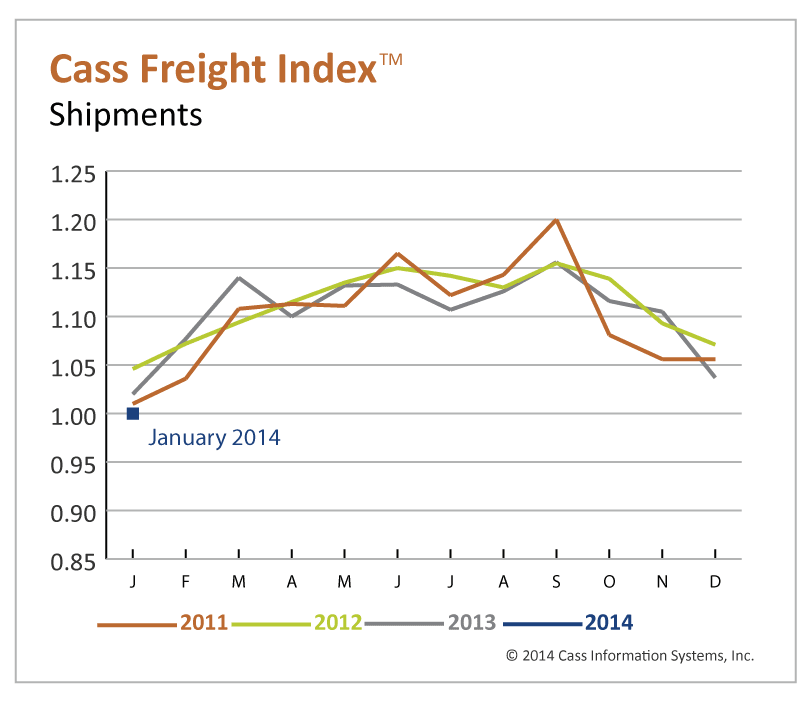
North American shipment volumes and freight expenditures both continued the decline that began in December after the economy abruptly reversed direction near the end of last year, according to the latest Cass Freight Index.
The number of shipments dropped 3.6% in January from December and was 2% lower than a year ago. Freight shipment volumes follow a predictable trend.
“January sees a post‐holiday drop‐off and is also the slowest month of the year. Volumes rise throughout the spring, flatten or even drop during the summer months, peak in August‐September, then fall close to the levels at which the year started,” said Rosalyn Wilson, supply chain expert and senior business analyst with the management consulting firm Delcan Corporation, who provides analysis in the report.
"This year begins the same, with January shipment levels the lowest since 2010. Railroad carload and intermodal loadings, a good barometers of the volume of freight moving, have trended down in the last three months. Snowy January weather contributed to the depressed figures,” she said.
Freight spending dropped 5.1% in January. Much of the decrease can be attributed to the 3.6% decline in the number of shipments. Compared to this time last year, freight expenditures are up 1.4%.
“Movements in our freight expenditures index have been stronger than those for shipment volumes, indicating that there has been very modest growth in rates. The trucking sector is still unable to push rates up significantly, while the railroads have made more headway,” said Wilson.
The report notes many industry observers believe that the economy will gain momentum and that 2014 will be much stronger than last year. “There are still some strong headwinds to overcome in the freight sector, the most obvious of which being the nearly imperceptible growth in volumes. The global marketplace remains weak, so our exports are lagging expectations,” said Wilson. "While the unemployment level continues to fall, the level of new jobs created each month is not enough to sustain the economy.”
She predicts the Federal Reserve will continue to reduce its bond purchases, pushing interest rates higher. “This will have repercussions in the freight sector. The inventory levels that are now higher than those during 2009, when carrying costs were minimal, will become more burdensome and will probably lead to a drawdown similar to what we saw during the recession.”
Wilson said trucking capacity is at exactly the right level for the volume of freight today, but will become inadequate later this year if the predictions of a robust 2014 materialize. “Obtaining credit to purchase new vehicles will become more difficult, probably squeezing out smaller and marginal trucking companies that don’t have the capital to expand their fleet or, almost as important, modernize their fleets,” she said.
Data within the index includes all domestic freight modes and is derived from $23 billion in freight transactions processed by Cass annually on behalf of its client base of hundreds of large shippers.

The American Transportation Research Institute will examine driver coaching, regulatory impacts — including the "Beyond Compliance" concept —and weather disruptions that shape trucking operations.
Read More →
Fleet Advantage's Brian Antonellis says it's time for fleets to get back to the fundamentals of good maintenance practices. And that includes replacing older, inefficient equipment.
Read More →
Load matching for flatbed, lowbed, oversize and overweight loads can't be automated like basic van freight, but Truckstop.com is adding more high-tech tools to help.
Read More →
An expanded Trucker Path and Truckstop.com integration brings more freight opportunities into the TruckLoads app while emphasizing security and network quality.
Read More →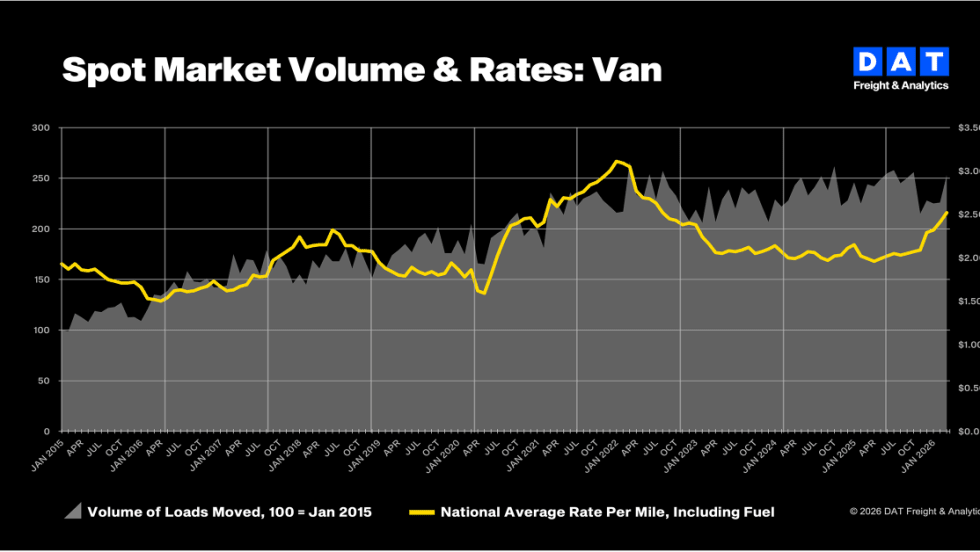
Strong March freight demand combined with a spike in fuel costs pushed both spot and contract truckload rates to their highest levels in more than two years.
Read More →
Everyone’s talking about AI — but is your transportation management system actually built for it?
Read More →
Being part of KTG will allow Sharp to expand and improve its services.
Read More →
The Fair Compensation for Truck Crash Victims Act would increase insurance requirements for interstate motor carriers by nearly seven times.
Read More →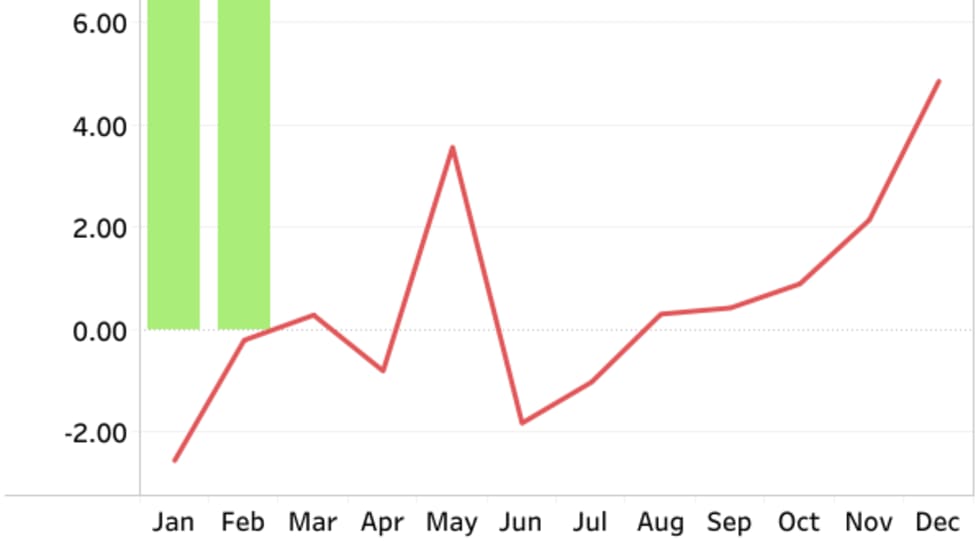
Strong freight rates push TCI to 10.2, but FTR expects fuel-price volatility to skew March results.
Read More →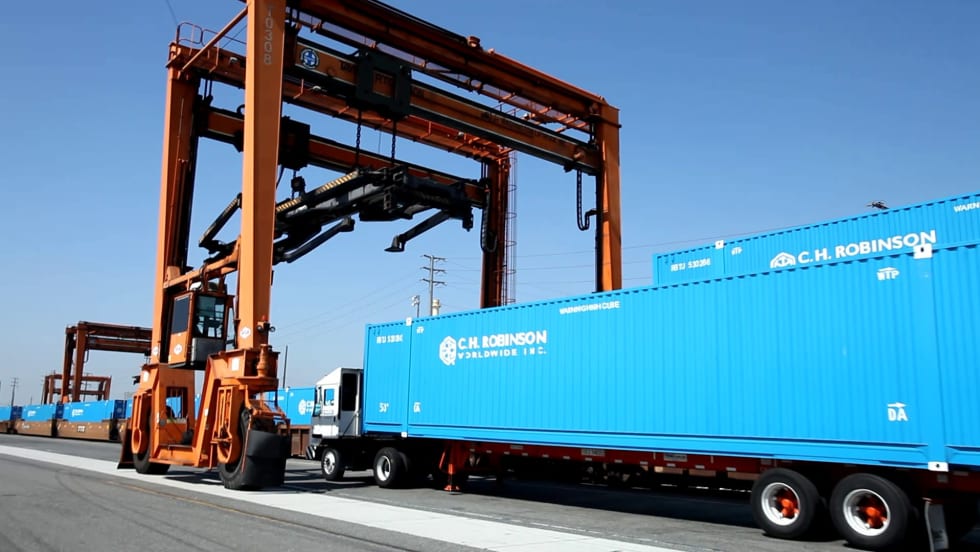
C.H. Robinson is waiving fees on fuel cards and cash advances for April and May, aiming to help carriers offset rising diesel costs tied to geopolitical instability.
Read More →