FTR Conference: Expect a Freight Recovery, Just Not a Big One
While a recovery for freight and the overall U.S. economy is in the cards for the fourth quarter of the year, those attending the first sessions of the FTR Transportation Conference in Indianapolis on Wednesday were also told by experts they should not expect a huge boom.
Evan Lockridge・Former Business Contributing Editor
September 14, 2016
FTR economist Noel Perry said it would be prudent to prepare for the possibiilty of a recession.Photo: Evan Lockridge
3 min to read
Daniel Meckstroth, chief economist with the Manufacturers Alliance for Productivity and Innovation, expects a fourth-quarter spike in production. Photo: Evan Lockridge
While a recovery for freight and the overall U.S. economy is in the cards for the fourth quarter of the year, those attending the first sessions of the FTR Transportation Conference in Indianapolis on Wednesday were also told by experts they should not expect a huge boom.
Ad Loading...
Daniel Meckstroth, chief economist with the industry group the Manufacturers Alliance for Productivity and Innovation (MAPI), said that after a long while July shows “the first indication that the manufacturing inventory-to-sales ratios are falling” after higher levels hurt freight shipments earlier in the year. The July level is also the lowest in about two years.
Ad Loading...
“In the future, we are going to get a spike in production, I think is going to occur in the fourth quarter … not only in the manufacturing sector but [also] in the U.S. economy,” he said.
The reason, Meckstroth said, is that inventory cycles, such as the high one manufacturing has experienced lately, are usually short. When they are over, you typically see a spike in production.
Helping this along is the ever-resilient U.S. consumer, who accounts for about 70% of all U.S. economic activity. Meckstroth said “consumers are keeping us out of a recession.” How are they doing it? Because, as he put it, “we are in a jobs boom, with the percentage of new jobs being adding being much faster than overall economic expansion.”
“It’s new jobs creating new income…that’s what’s propelling the U.S. economy right now.”
Ad Loading...
However, there are still other problems lingering that will keep both trucking and the economy from seeing better times.
According to Meckstroth, a strong U.S. dollar is a problem, because it makes export goods produced here more expensive overseas. He also pointed to figures showing the physical volume (as opposed to dollar volume) of world trade has slowed dramatically, depressing U.S economic growth.
“If you go back 20 years before the last recession, trade was growing two to three times the rate of the global economy. Now it’s growing slower than the growth of the global economy,” he said. “We’re not seeing globalization anymore. We’re seeing deglobalization.”
In other words, expect only “modest” growth, or as he called it “the new normal” in both the economy and trucking.
FTR economist Noel Perry said it would be prudent to prepare for the possibiilty of a recession. Photo: Evan Lockridge
Even then it may not last for long, according to Noel Perry, FTR’s transportation economist.
Ad Loading...
As he explained it, the current recovery from recession is one of the longest since 1950 and it has been one of the weakest. Perry said there is a 30% to 40% probability an economic recession will hit in the next two or three years.
“You should prepare for that,” he told those listening and warned those who don’t do so at their own peril. “It’s like saying, it ain’t gonna snow tomorrow, but I know it’s gonna snow sometime in the next month, so I better get my snow blower out of the garage, put gas in it and make sure it starts. Well, I’m telling you the same thing about a recession.”
The reason he (and others) see a recession in the next two or three years is simply the growth of the overall economy has slowed.
According to Perry, if there is a recession, trucking can expect to see business decline by 5% to 6%, with rates falling about the same. For comparison, in the last recession the declines were much larger, around 15% – meaning the next recession, if it happens, will be much milder.
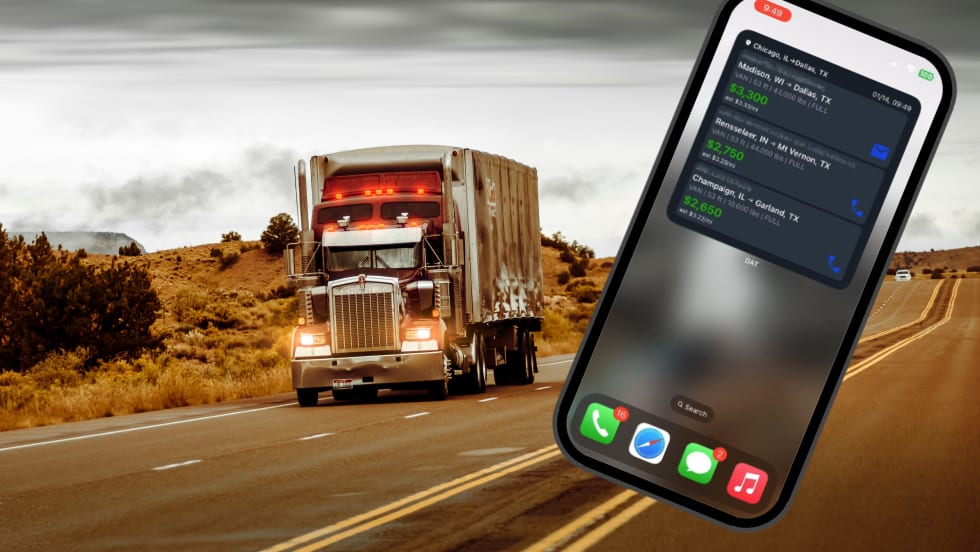
ACT Research data shows volumes hitting a four-year high and supply-demand balance strengthening, but higher oil prices are undercutting tariff relief and tempering optimism.
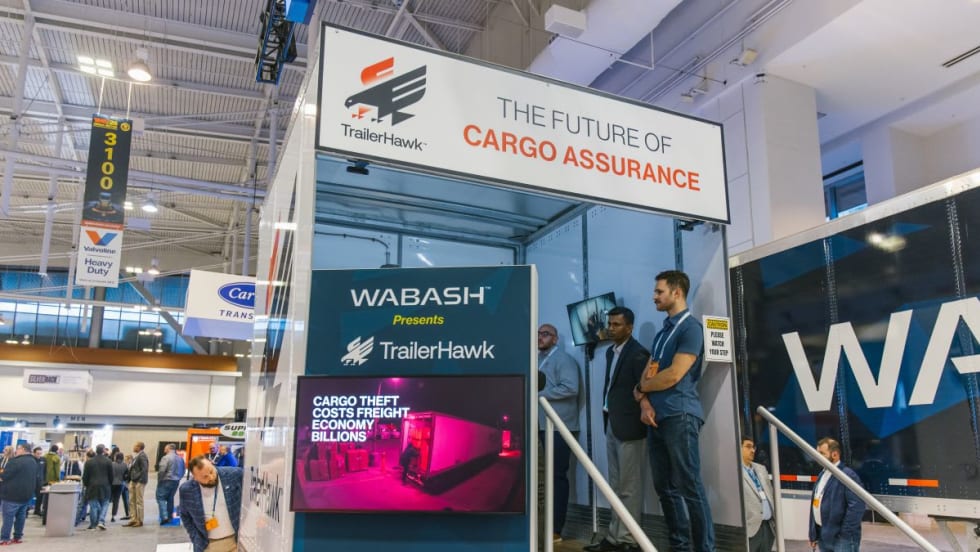
The patent-pending cargo solution integrates a digitally connected cargo door and an intelligent locking system with the TrailerHawk.AI technology platform.
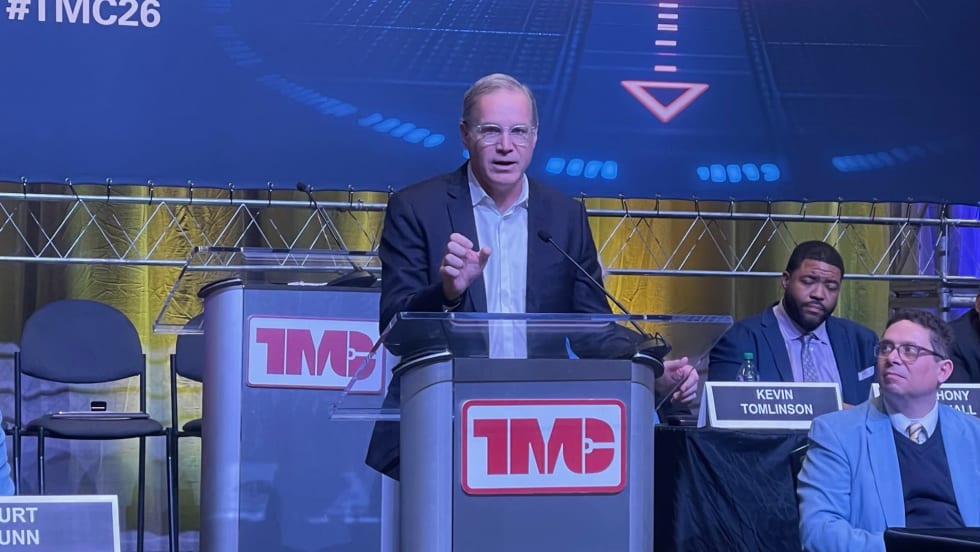
Speaking at the TMC Annual Meeting in Nashville, ATA President Chris Spear said trucking faces mounting pressure from rising fuel prices, geopolitical instability, and uncertainty around trade policy.
More than 100,000 new trucking companies enter the industry each year, but regulators manage to audit only a fraction of them. That churn creates opportunities for inexperienced startups — and for “chameleon carriers” that shut down after safety violations and reappear under new identities. Read more from Deborah Lockridge in this commentary.
HDTX is an intimate event that connects heavy-duty trucking fleet managers with industry suppliers through small-group discussions, educational sessions, and structured one-on-one meetings.
Optimal Dynamics says its new Scale platform uses AI agents and optimization to help carriers find and secure freight that improves network balance and profitability.
NACFE's Run on Less - Messy Middle project demonstrates the power of data in helping to guide the future of alternative fuels and powertrains for heavy-duty trucks.