




More gloom than boom but no doom sums up the economic outlook for 2016 presented by economists in the latest State of Freight webinar hosted by the research and analysis firm FTR.
 MENU
MENU SEARCH
More gloom than boom, but no doom sums up the economic outlook for 2016 presented by FTR economists in the latest State of Freight webinar hosted by the research and analysis firm.
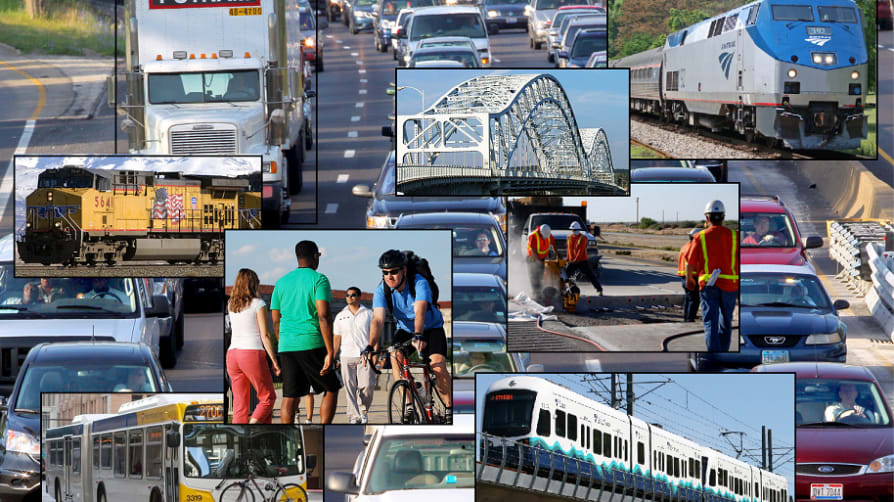
Image: U.S. DOT
More gloom than boom but no doom sums up the economic outlook for 2016 presented by economists in the latest State of Freight webinar hosted by the research and analysis firm FTR.
Conceding that his forecasting model has “surrendered to the new normal,” macro economist Bill Witte, FTR senior consultant, said that “2016 will be déjà vu all over again. Economic growth will average between 2 and 2.5% next year.”
Witte said his forecast through the end of 2016 is now “significantly less optimistic than it was nine months ago,” but his model still points to “continuing growth” similar to what has been experienced over the past five quarters, that is back to mid-2014.
He is also optimistic about 2016 because “there is no component of the economy that is growing at an unstainable level” so there are no bubbles to burst. On the other hand, he said “the downside risks to the economy make the outlook more pessimistic.”
Witte elaborated that he does not foresee “any events that will add to the upside. “But [in 2016] we could have a year better than my model [indicates] and end up at 2.8% growth.” However, he put the probability of that happening at about 20%.
On the downside, Witte said there are a number of risks that could constrain growth to only one percent. That probability he set at 25%.
“However,” he continued, “I don’t think an actual recession is likely [in 2016] because the pattern of the U.S. economy is now very balanced with no sector showing ‘irrational exuberance.’”
Economist Noël Perry, FTR senior consultant, was more pessimistic about the year ahead. He said he is “concerned that now, eight years into recovery, the economy will start to slow [to where] we’re facing a growing risk of recession. Secondly, the global economy is very worrisome, especially given the problems China is a having. Chinese manufacturing is in recession now.”
That being said, Perry regards the risk of the economy slipping into recession next year as small, but added that the chance of that happening will increase in 2017.
“When you look at the broader [U.S.] economy,” he remarked, “there’s less than a 20% probability of a dramatic change [next year]. But when we have this discussion a year from now, Bill [Witte} and I will be a hell of a lot more worried.”
Perry also pointed out that something beyond economic factors to consider. “Trucking has experienced more growth than has the GDP — this has been the best freight recovery since 1990. The exposure is could this change?” And if it did, he said, it would happen at the same time the economic recovery starts to show its age.
“History tells us freight slows before a recession occurs,” Perry added. “So, we could have slow growth in freight in 2016. And a recessionary condition in 2017.”
FTR Director of Transportation Analysis Jonathan Starks said key downside risks threatening the economy next year include whether the Federal Reserve will start raising interest rates and how much the domestic economies in key global markets may slow.
“By itself, what the Fed may do does not matter much in my [forecasting] model,” said Witte. “Raising short-term interest rates by 1% per year for several years would have very little impact.” However, he said if the Fed does move on interest rates, there could be “a spillover effect” that would cause a drop in stock prices or lower consumer confidence, “which is the biggest driver of the economy.”
As for the international situation, Starks said it’s not just China as there are negative economic impacts from what is happening in Europe and the Middle East to weigh as well. “International,” Witte contended, “may be the biggest risk [for 2016] but it is hard to quantify its magnitude.
“The problem is a slowdown [in one country or region] will produce large effects on other countries, making it more significant for us,” he continued. “Plus there can be impacts on global financial markets.” He noted that when it comes to China, “a slowdown there affect Europe more than the U.S. because their trade with China is larger.” Witte noted that because of how it was based on rapid industrialization, the “Chinese economic buildup was never sustainable.”
Related: Latest Numbers Disappoint, More Uncertainty with Fed

The American Transportation Research Institute will examine driver coaching, regulatory impacts — including the "Beyond Compliance" concept —and weather disruptions that shape trucking operations.
Read More →
Fleet Advantage's Brian Antonellis says it's time for fleets to get back to the fundamentals of good maintenance practices. And that includes replacing older, inefficient equipment.
Read More →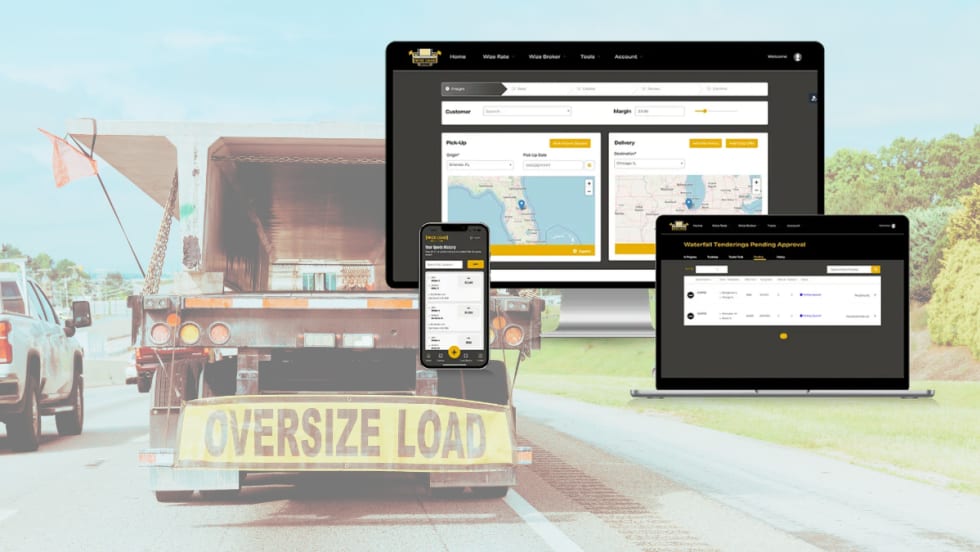
Load matching for flatbed, lowbed, oversize and overweight loads can't be automated like basic van freight, but Truckstop.com is adding more high-tech tools to help.
Read More →
An expanded Trucker Path and Truckstop.com integration brings more freight opportunities into the TruckLoads app while emphasizing security and network quality.
Read More →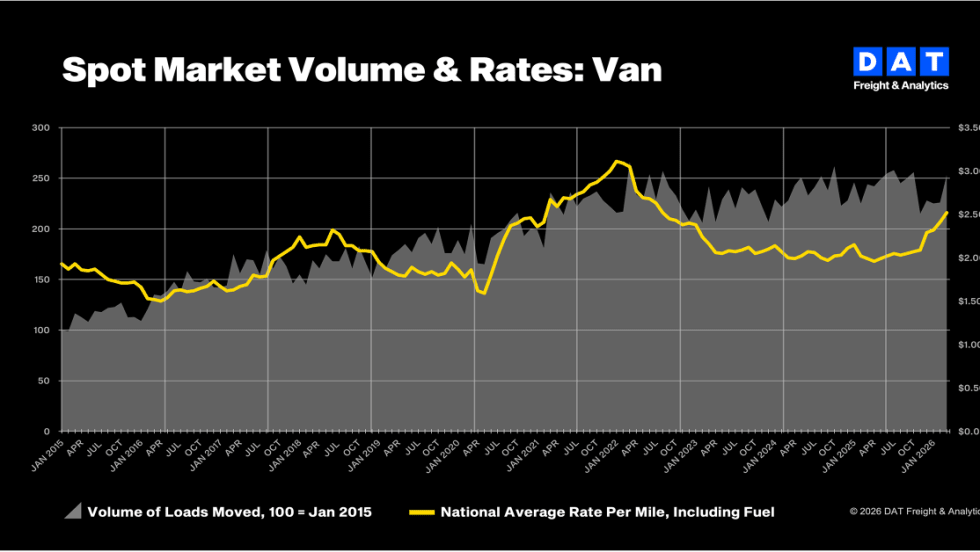
Strong March freight demand combined with a spike in fuel costs pushed both spot and contract truckload rates to their highest levels in more than two years.
Read More →
Everyone’s talking about AI — but is your transportation management system actually built for it?
Read More →
Being part of KTG will allow Sharp to expand and improve its services.
Read More →
The Fair Compensation for Truck Crash Victims Act would increase insurance requirements for interstate motor carriers by nearly seven times.
Read More →
Strong freight rates push TCI to 10.2, but FTR expects fuel-price volatility to skew March results.
Read More →
C.H. Robinson is waiving fees on fuel cards and cash advances for April and May, aiming to help carriers offset rising diesel costs tied to geopolitical instability.
Read More →