




INDIANAPOLIS -- FTR and Internet Truckstop announced a new strategic partnership to bring FTR's analysis and forecasting skills to bear on the "big data" collected by the freight-matching technology provider.
 MENU
MENU SEARCH
FTR and Internet Truckstop announced a new strategic partnership to bring FTR's analysis and forecasting skills to bear on the "big data" collected by the freight-matching technology provider.

Photo: Deborah Lockridge
INDIANAPOLIS -- FTR and Internet Truckstop announced a new strategic partnership to bring FTR's analysis and forecasting skills to bear on the "big data" collected by the freight-matching technology provider.
The new alliance will offer market analysis of both contract and spot freight segments by region and by trailer type. FTR will analyze the millions of load transactions gathered by Internet Truckstop to offer a picture of the current balance of supply and demand between locations. Using these new tools, carrier and shipper planners will be able to base forecasts on conditions for all truck types and all regions.
"One of the challenges has been that the world of trucking, especially truckload, is dispersed, fragmented and difficult to understand," explained FTR Partner Larry Gross. That's one of the reasons FTR was founded.
However, customers have been asking for some information that FTR was struggling to provide. Tapping into Big Data was the answer.
"Internet Truckstop has opened up a new window of visibility for us," Gross said. "They are generating huge quantities of data on what's happening in terms of demand, and region-to-region demand."
The plan is that FTR will be able to analyze, understand and forecast based on this data that Internet Truckstop hasn't been able to do before.
Peter Vomocil, Internet Truckstop vice president of marketing, admitted that "we have more data than we know what to do with. Big data by itself is simply data. Big data with insights results in actionable information."
Over the next few months, FTR and Internet Truckstop will start rolling out products based on this new collaboration. They will provide planning and forecasting products with four benefits to subscribers:
Timely regional data for capacity and demand
Access to combined contract and spot market data
Simplified planning with advanced analytics on spot market economics
Spot market forecasts
The two companies made the announcement at the opening of FTR's Annual Transportation Conference in Indianapolis.

ACT Research data shows volumes hitting a four-year high and supply-demand balance strengthening, but higher oil prices are undercutting tariff relief and tempering optimism.
Read More →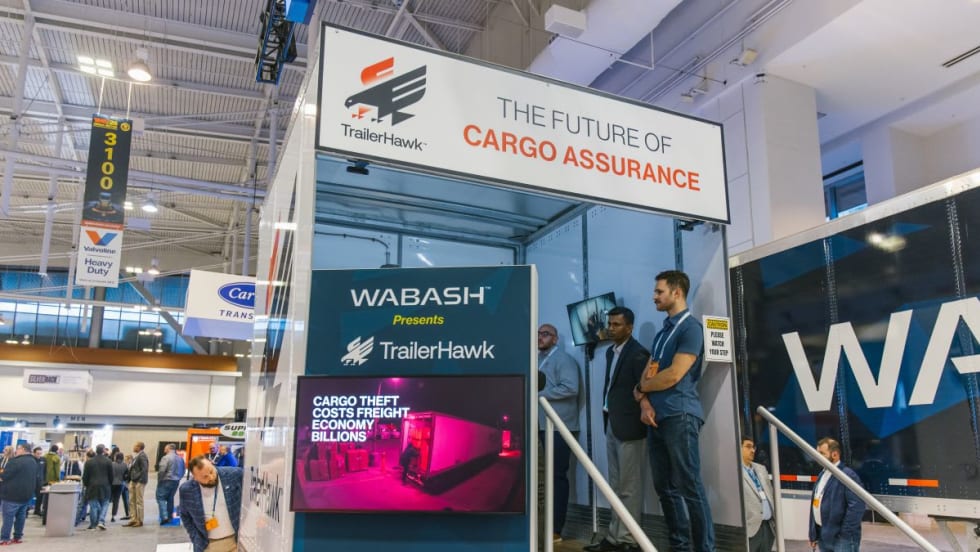
The patent-pending cargo solution integrates a digitally connected cargo door and an intelligent locking system with the TrailerHawk.AI technology platform.
Read More →
The impact of the Iran conflict extends beyond fuel costs, bringing more fraud and cybersecurity risks to the trucking industry.
Read More →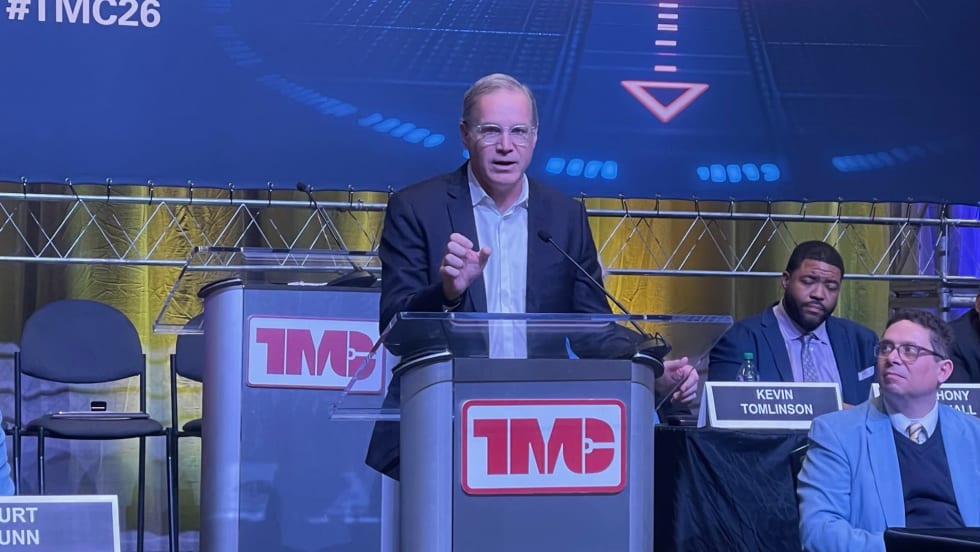
Speaking at the TMC Annual Meeting in Nashville, ATA President Chris Spear said trucking faces mounting pressure from rising fuel prices, geopolitical instability, and uncertainty around trade policy.
Read More →
More than 100,000 new trucking companies enter the industry each year, but regulators manage to audit only a fraction of them. That churn creates opportunities for inexperienced startups — and for “chameleon carriers” that shut down after safety violations and reappear under new identities. Read more from Deborah Lockridge in this commentary.
Read More →
HDTX is an intimate event that connects heavy-duty trucking fleet managers with industry suppliers through small-group discussions, educational sessions, and structured one-on-one meetings.
Read More →
New DAT One feature shows top-paying loads directly on an iPhone’s home screen, helping carriers react faster to spot-market opportunities.
Read More →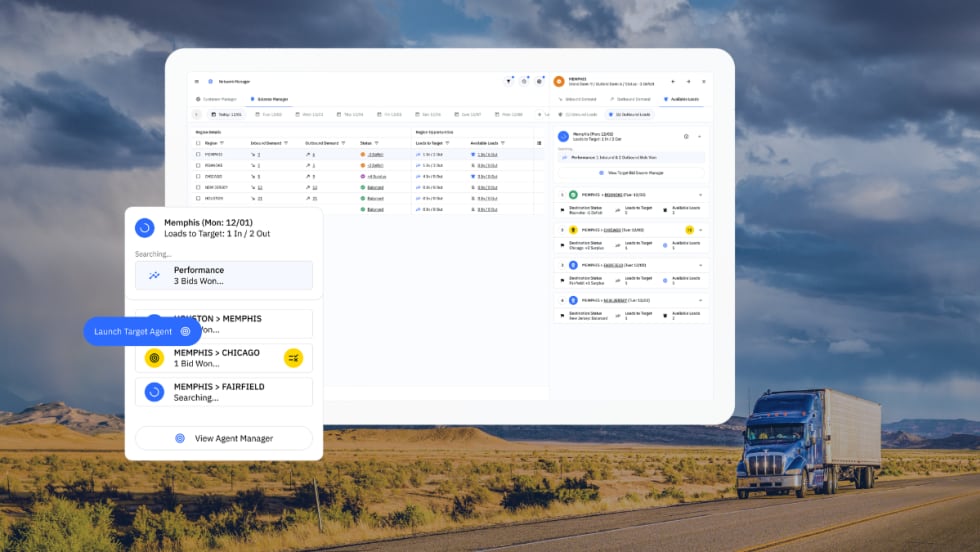
Optimal Dynamics says its new Scale platform uses AI agents and optimization to help carriers find and secure freight that improves network balance and profitability.
Read More →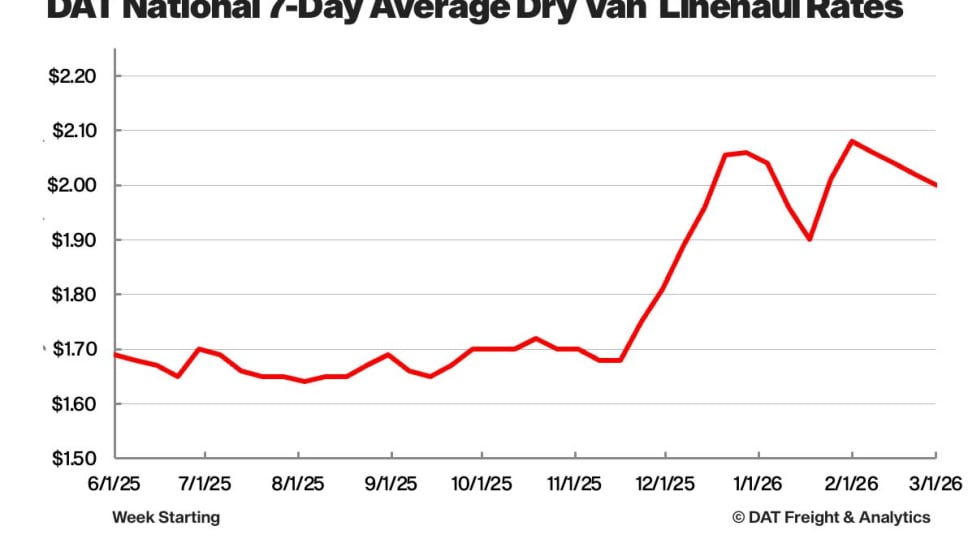
DAT Freight & Analytics data shows tightening flatbed capacity, easing produce markets, and softening van and reefer rates.
Read More →
NACFE's Run on Less - Messy Middle project demonstrates the power of data in helping to guide the future of alternative fuels and powertrains for heavy-duty trucks.
Read More →