




The Great Recession hit trucking hard, but the rebound has begun with the open-deck sector leading the charge back to profitability. For the week ending March 19, a 3.2 percent uptick in flatbed freight volume compared to the previous week helped lead overall truckload freight availability on TransCore's DAT Network of load boards to increase by 2 percent nationwide.
Heavy Industry Drives Flatbed Uptick
The Great Recession hit trucking hard, but the rebound has begun with the open-deck sector leading the charge back to profitability. For the week ending March 19, a 3.2 percent uptick in flatbed freight volume compared to the previous week helped lead overall truckload freight availability on TransCore's DAT Network of load boards to increase by 2 percent nationwide
by Staff
March 27, 2011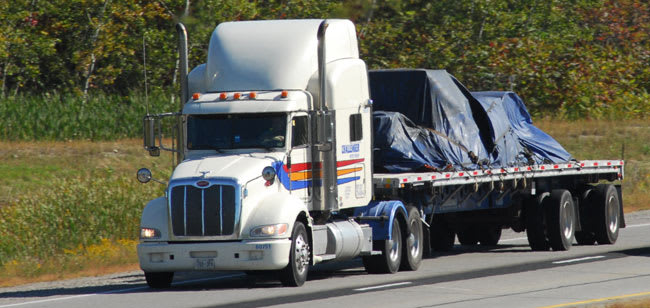
A surge in flatbed freight and tightening capacity could lead to shortages this spring and summer. (Photo by Jim Park)
3 min to read
Flatbed freight availability has increased in every consecutive week since the beginning of January, TransCore reports. Flatbed capacity for the week ending March 19 declined by 4.3 percent, bringing the week's load-to-truck ratio to 43.3, the highest for flatbeds since 2006. The ratio indicates unusually strong demand coupled with extreme capacity constraints in that segment on the spot market.
According to TransCore's North American Freight Index report on March 15, total February load volume rose by 38 percent over January. However, the flatbed freight segment alone had a whopping 44 percent volume increase, with load-to-truck numbers doubling over February. Overall, February marked the highest spot-market volume for that month in the index's 25-year history.
Driving the Increase
Much of the flatbed industry is tied closely to construction and residential housing - mostly the shipment of lumber and drywall. The housing market, or course, is still in the pits. According to Noel Perry, managing director of trucking research and analysis firm FTR Associates, the force behind this recent uptick is steel and heavy machinery, driven in part by renewed American automotive production. Flatbeds serve primarily these heavy industries, with housing and construction making up 20 percent to 25 percent of shipping demand normally.
"[Steel and machinery] are shipping like crazy," Perry says. "There is a strong possibility of a spot platform shortage, especially in spring and early fall."
Typically, flatbeds are the first trucking segment to feel the impact of larger economic wheels. Unlike the larger freight segments, flatbeds ship raw materials more than finished products. This placement early in the supply chain can make flatbeds a good barometer of freight industry movement as a whole. When the recession first hit, many flatbed carriers began feeling the pinch three or four months in advance of other trucking segments. However, they are also the first to come back.
"Flatbeds are cyclical," Perry explains. "There is a huge swing between bottom and top. Machinery and metals went down in the downturn. It has the most rapid growth in the upturn."
Since flatbeds are also a smaller segment, a comparatively small market force can make flatbeds jump higher than vans, as was the case in February and March.
"Platforms are ground zero," Perry says. "What you can say without a doubt is that this is entirely predictable."
Early Onset
What makes this particular surge noteworthy is the early onset during a seasonally rough time of year - and a particularly rough season at that. Usually, the arrival of spring marks a pickup in flatbeds, but this time around things have been happening much sooner.
"It is kind of interesting because our business started to pick up in the middle of November last year," says Dan Taylor, senior vice president of sales and marketing at Melton Truck Lines. Good business continued in December and January. "It has been totally against tradition."
Taylor indicated that other flatbed players have been experiencing similar upticks, mostly in relation to steel production. Last December, one of his steel clients reported booked production through next quarter. He says some shippers have been voluntarily offering surcharges to secure a haul.
"We are turning down two or three loads for every one we take. We haven't seen that in years," Taylor says. "April, May and June we will be running 100 percent [capacity], no question."
More Fleet Management

'Beyond Compliance,' Regulations, Driver Coaching on ATRI’s 2026 Research List
The American Transportation Research Institute will examine driver coaching, regulatory impacts — including the "Beyond Compliance" concept —and weather disruptions that shape trucking operations.
Read More →
Fleet Advantage's Brian Antonellis on the Growing Need to Replace Old Trucks
Fleet Advantage's Brian Antonellis says it's time for fleets to get back to the fundamentals of good maintenance practices. And that includes replacing older, inefficient equipment.
Read More →
Truckstop.com Adding to Open Deck, Heavy Haul Offerings
Load matching for flatbed, lowbed, oversize and overweight loads can't be automated like basic van freight, but Truckstop.com is adding more high-tech tools to help.
Read More →
Trucker Path, Truckstop.com Expand Load Access Partnership
An expanded Trucker Path and Truckstop.com integration brings more freight opportunities into the TruckLoads app while emphasizing security and network quality.
Read More →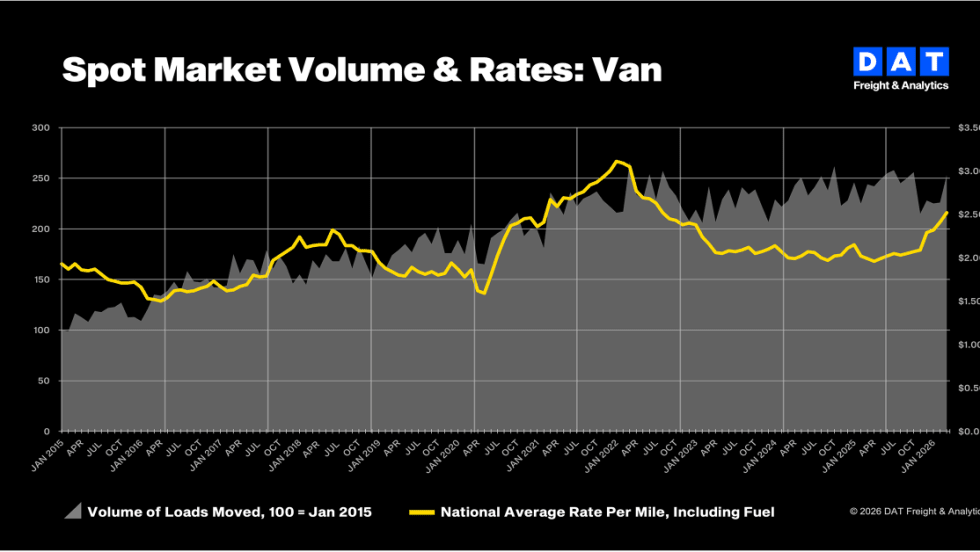
Truckload Rates Hit Two-Year Highs as Diesel Costs Surge, DAT Says
Strong March freight demand combined with a spike in fuel costs pushed both spot and contract truckload rates to their highest levels in more than two years.
Read More →
The AI Conversation You Need to Have with Your TMS Provider
Everyone’s talking about AI — but is your transportation management system actually built for it?
Read More →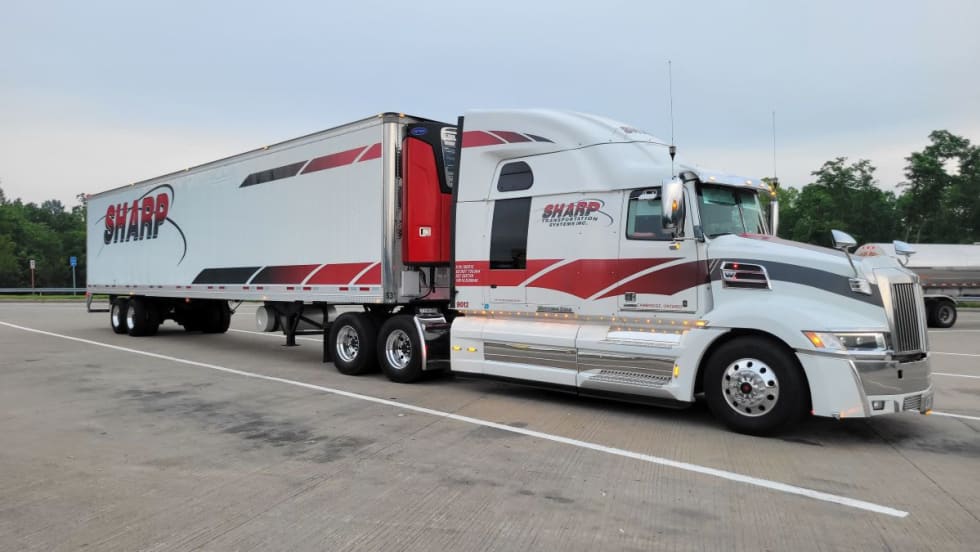
Kriska Buys Fellow Canadian Carrier Sharp Transportation Systems
Being part of KTG will allow Sharp to expand and improve its services.
Read More →
Bill in House Would Raise Minimum Insurance for Motor Carriers to $5 Million
The Fair Compensation for Truck Crash Victims Act would increase insurance requirements for interstate motor carriers by nearly seven times.
Read More →
FTR Trucking Conditions Index Hits Four-Year High in February
Strong freight rates push TCI to 10.2, but FTR expects fuel-price volatility to skew March results.
Read More →
C.H. Robinson Offers Carriers Relief as Diesel Prices Surge
C.H. Robinson is waiving fees on fuel cards and cash advances for April and May, aiming to help carriers offset rising diesel costs tied to geopolitical instability.
Read More →