



Private investment can work well as a funding source for some infrastructure projects, particularly those that are very expensive and complex, but it is not useful for most projects.
 MENU
MENU SEARCH
Private investment can work well as a funding source for some infrastructure projects, particularly those that are very expensive and complex, but it is not useful for most projects. That’s the message from a House study on the benefits and risks of using public-private partnerships to pay for highways and other transportation projects.


Private investment can work well as a funding source for some infrastructure projects, particularly those that are very expensive and complex, but it is not useful for most projects.
That’s the message from a House study on the benefits and risks of using public-private partnerships to pay for highways and other transportation projects.
The study was done over the past six months by members of the House Transportation and Infrastructure Committee as part of their preparation for drafting the next federal highway bill.
“Billions of dollars of infrastructure needs in the U.S. are in search of funding, and well-executed public-private partnerships can enhance the delivery and management of infrastructure,” said Rep. John Duncan, R-Tenn., who chaired the bipartisan panel.
“P3s cannot provide the sole solution to all of the nation’s infrastructure needs, but they can offer significant benefits, particularly for high-cost, technically complex projects,” Duncan said.
Rep. Michael Capuano, D-Mass., the ranking minority member of the panel, concurred with Duncan, adding, “When it comes to improving our nation’s infrastructure there is no question that federal investment remains a key factor.”
Capuano said that the key to a successful P3 project is transparency about the money and management. Although private investors are putting in their own money, there’s a lot of public money involved as well, he said.
“Federal money is a huge chunk of every P3,” he said. “There is no free lunch. When tax dollars are on the line either directly or indirectly through a P3, people need to know what’s at stake.”
Rep. Peter DeFazio, D-Ore., said the key moment in the panel’s research came when Wall Street financial services experts who have a vested interest in P3s said that such projects could address maybe 10% to 12% of the nation’s infrastructure deficit.
Duncan indicated he is more optimistic about the potential scope of P3s than that.
“I will be very surprised if they are not a bigger percentage 20 years down the road,” he said.
Duncan also said that Rep. Bill Shuster, R-Pa., chairman of the Transportation and Infrastructure Committee, wants to incorporate P3s as much as possible into the next highway bill. The deadline for that bill is next May, when funding for the current highway program expires.
The panel has recommendations for ways to improve government’s ability to manage P3s, to break down barriers to using these methods and to ensure transparency.
It says the Department of Transportation should establish a procurement office to work with modal agencies such as the Federal Highway Administration, states and other grant recipients on P3 contracts.
That office should issue best practices for states to follow as they draft contracts and manage P3s to ensure that they are fair and balanced.
It also should develop performance standards for specific types of P3 projects, including design-bid-build and design-build.
Another recommendation is that DOT prepare an annual report on procurement performance in projects that use federal money.
Also, DOT should build on the program started under the current highway law that simplifies and standardizes P3 projects. Parties to such projects need to be flexible enough to handle changes without cancelling the agreement.
And DOT should work with other federal agencies as well as state and local governments to share lessons learned when implementing P3s.
These recommendations echo testimony the panel received as it gathered information for its report.
For example, P3 experts from Canada, where these financing mechanisms are more widely used than in the U.S., said partnerships can work but cautioned that they require careful design and management.
P3s are not a cheap way to deliver infrastructure, one witness said. Their true value is that they help manage construction risk.

ACT Research data shows volumes hitting a four-year high and supply-demand balance strengthening, but higher oil prices are undercutting tariff relief and tempering optimism.
Read More →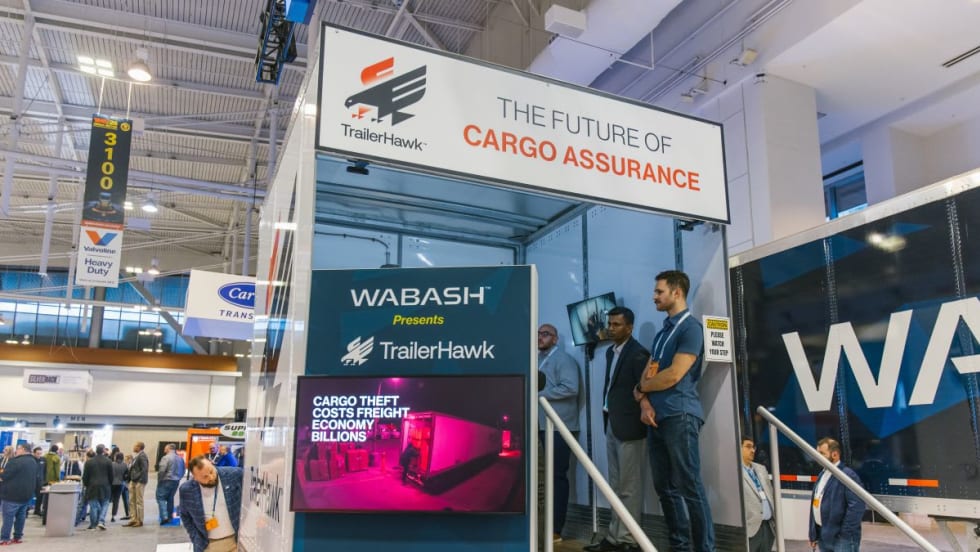
The patent-pending cargo solution integrates a digitally connected cargo door and an intelligent locking system with the TrailerHawk.AI technology platform.
Read More →
The impact of the Iran conflict extends beyond fuel costs, bringing more fraud and cybersecurity risks to the trucking industry.
Read More →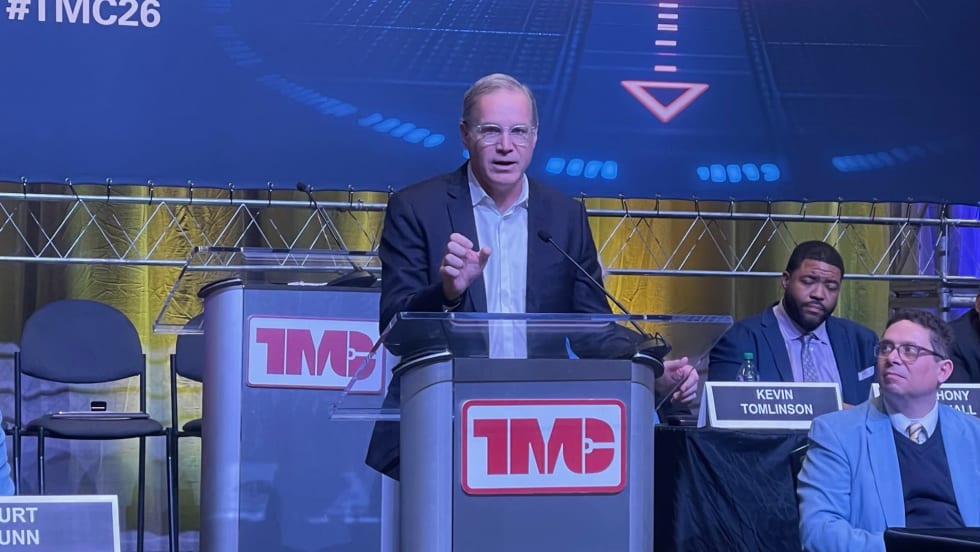
Speaking at the TMC Annual Meeting in Nashville, ATA President Chris Spear said trucking faces mounting pressure from rising fuel prices, geopolitical instability, and uncertainty around trade policy.
Read More →
More than 100,000 new trucking companies enter the industry each year, but regulators manage to audit only a fraction of them. That churn creates opportunities for inexperienced startups — and for “chameleon carriers” that shut down after safety violations and reappear under new identities. Read more from Deborah Lockridge in this commentary.
Read More →
HDTX is an intimate event that connects heavy-duty trucking fleet managers with industry suppliers through small-group discussions, educational sessions, and structured one-on-one meetings.
Read More →
New DAT One feature shows top-paying loads directly on an iPhone’s home screen, helping carriers react faster to spot-market opportunities.
Read More →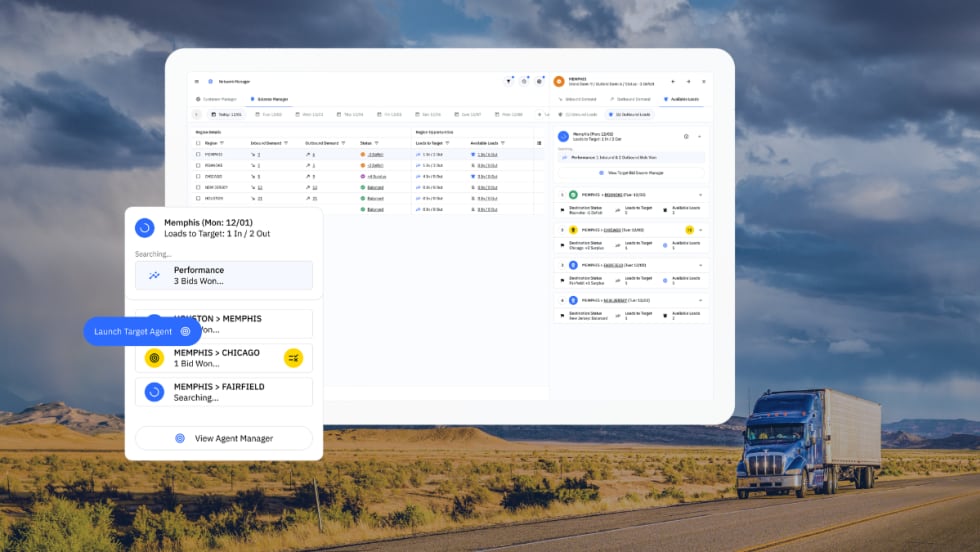
Optimal Dynamics says its new Scale platform uses AI agents and optimization to help carriers find and secure freight that improves network balance and profitability.
Read More →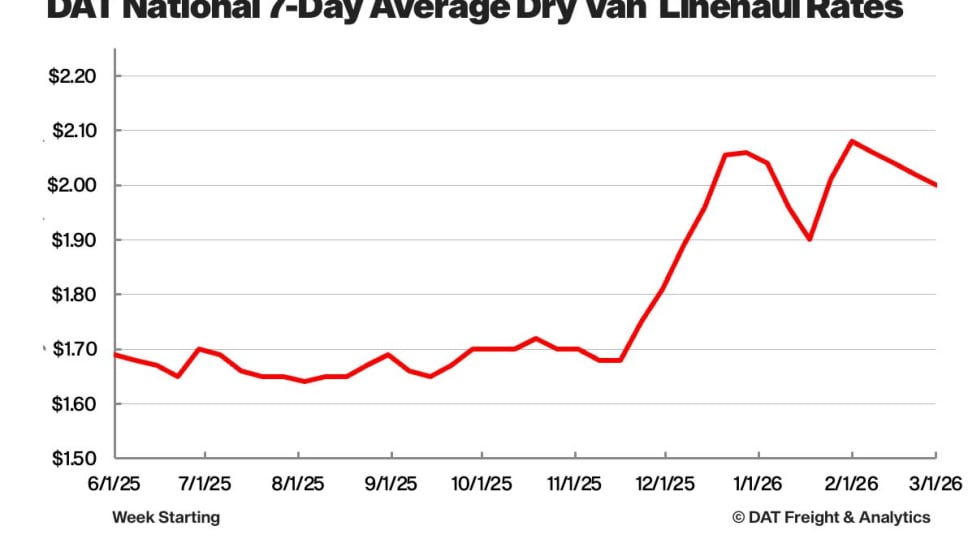
DAT Freight & Analytics data shows tightening flatbed capacity, easing produce markets, and softening van and reefer rates.
Read More →
NACFE's Run on Less - Messy Middle project demonstrates the power of data in helping to guide the future of alternative fuels and powertrains for heavy-duty trucks.
Read More →