



The House of Representatives will begin oversight of the new federal highway program March 14 with a hearing to review implementation of key elements of last year’s highway bill.
 MENU
MENU SEARCH
The House of Representatives will begin oversight of the new federal highway program March 14 with a hearing to review implementation of key elements of last year’s highway bill.


The House of Representatives will begin oversight of the new federal highway program March 14 with a hearing to review implementation of key elements of last year’s highway bill.
Rep. Thomas Petri, R-Wisc., chairman of the House Highway and Transit Subcommittee, said Wednesday the hearing will cover how the Department of Transportation is handling the reforms contained in last year’s highway law.
The law, known as MAP 21, requires DOT to streamline the project approval process, consolidate programs, establish performance measures and expand its project loan program.
Petri, speaking to members of the American Association of State Highway and Transportation Officials meeting in Washington, D.C., said he’ll inquire about DOT’s progress in these areas, as well as in creation of a national freight policy.
DOT last week announced it is looking for nominations to a committee to establish a National Freight Strategic Plan as called for in the law. Also at the meeting was Transportation Secretary Ray LaHood, who urged AASHTO members to submit recommendations for the committee.
Petri supports a strong federal role in transportation. He took issue with those on Capitol Hill who say devolution of funding and policy to the states will improve the national transportation system.
Devolution can promote competition among the states, but it also can lead to a race to the bottom, he said. And it won’t help a state resolve transportation problems caused by issues outside its borders.
His home state, Wisconsin, is in the shadow of the Chicago rail bottleneck, for example, he said. “We need regional and national coordination.”
Petri acknowledged that the big transportation issue is funding and said he expects that Congress will eventually figure out how to get the revenues. He believes it will take a variety of sources, from highway user fees to innovative financing, to bridge the gap in the near term.
He noted that past federal fuel tax increases have been implemented in the context of broader economic policy than just transportation funding. The last increase, in 1993, initially went to deficit reduction and later was shifted to the Highway Trust Fund.
In the future Petri foresees the vehicle mile tax playing a larger role.
“Using the gas tax as a proxy for road use worked in 1950 but it won’t work in 2050,” he said.
The technology for VMT is well established and concerns about privacy can be overcome, he said. He is urging trucking interests to take a close look.
“We’ll keep working on it,” he said.
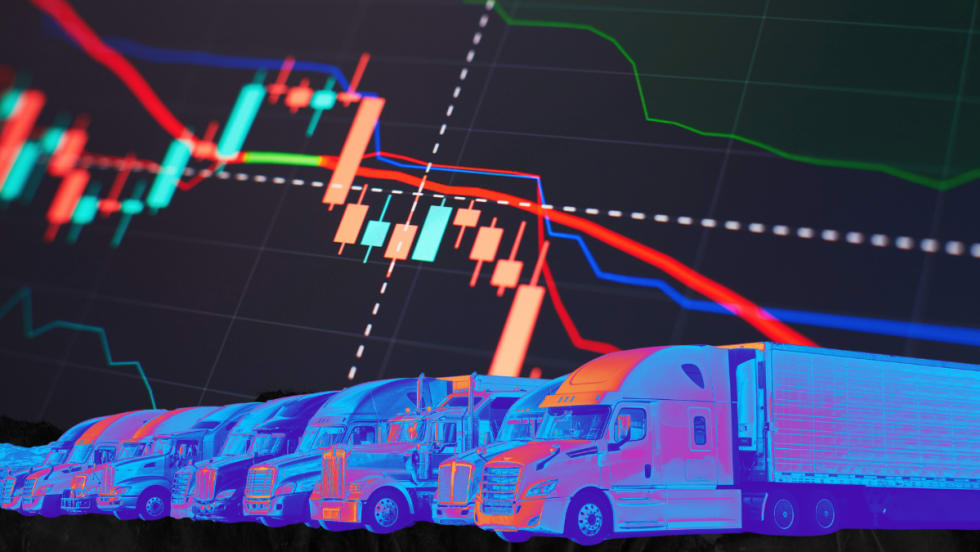
ACT Research data shows volumes hitting a four-year high and supply-demand balance strengthening, but higher oil prices are undercutting tariff relief and tempering optimism.
Read More →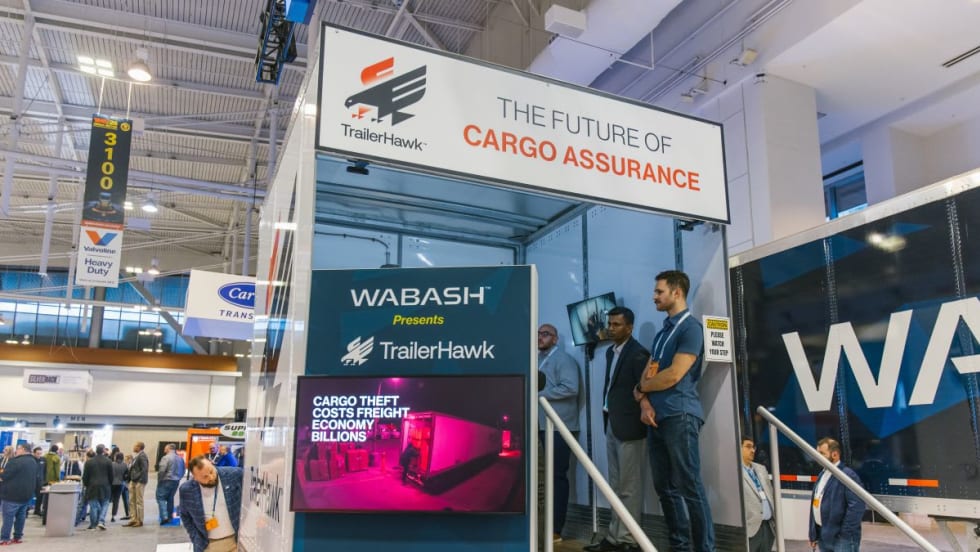
The patent-pending cargo solution integrates a digitally connected cargo door and an intelligent locking system with the TrailerHawk.AI technology platform.
Read More →
The impact of the Iran conflict extends beyond fuel costs, bringing more fraud and cybersecurity risks to the trucking industry.
Read More →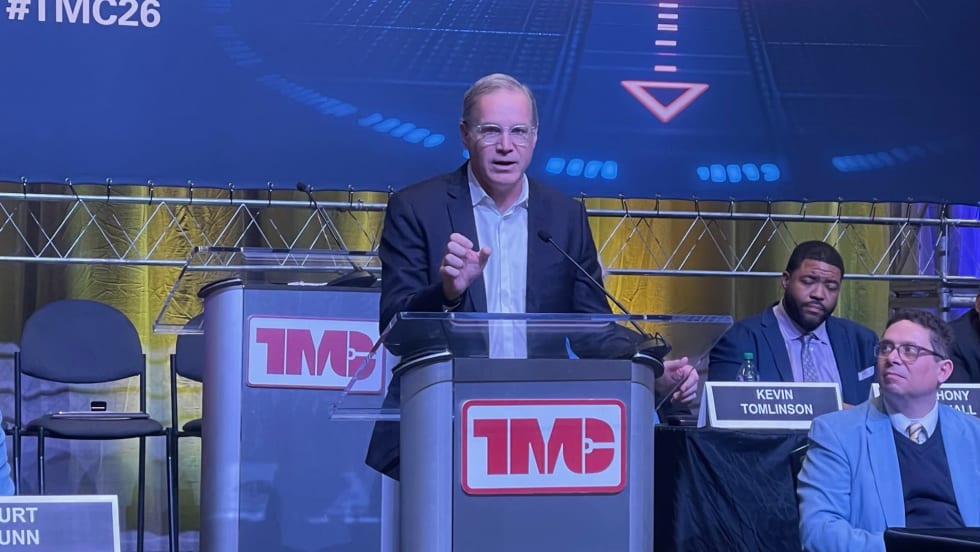
Speaking at the TMC Annual Meeting in Nashville, ATA President Chris Spear said trucking faces mounting pressure from rising fuel prices, geopolitical instability, and uncertainty around trade policy.
Read More →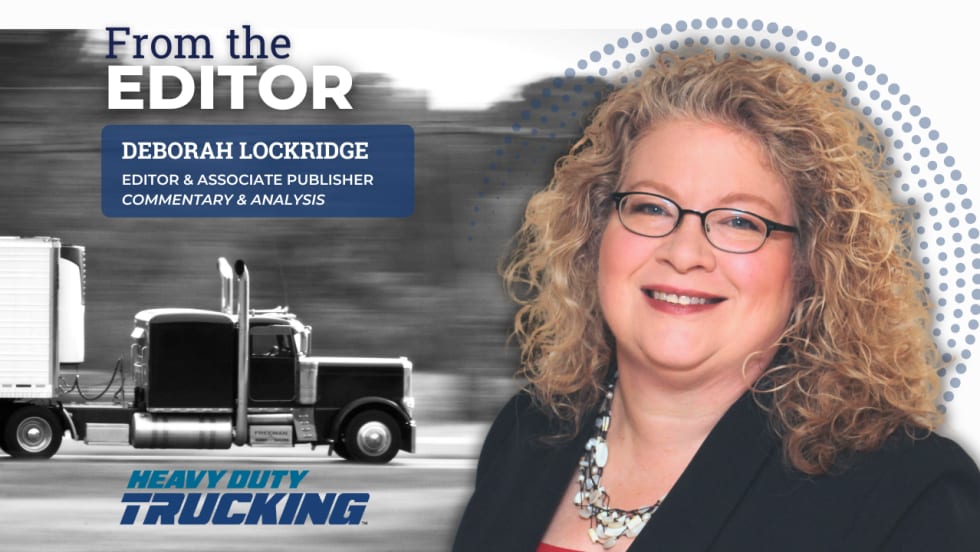
More than 100,000 new trucking companies enter the industry each year, but regulators manage to audit only a fraction of them. That churn creates opportunities for inexperienced startups — and for “chameleon carriers” that shut down after safety violations and reappear under new identities. Read more from Deborah Lockridge in this commentary.
Read More →
HDTX is an intimate event that connects heavy-duty trucking fleet managers with industry suppliers through small-group discussions, educational sessions, and structured one-on-one meetings.
Read More →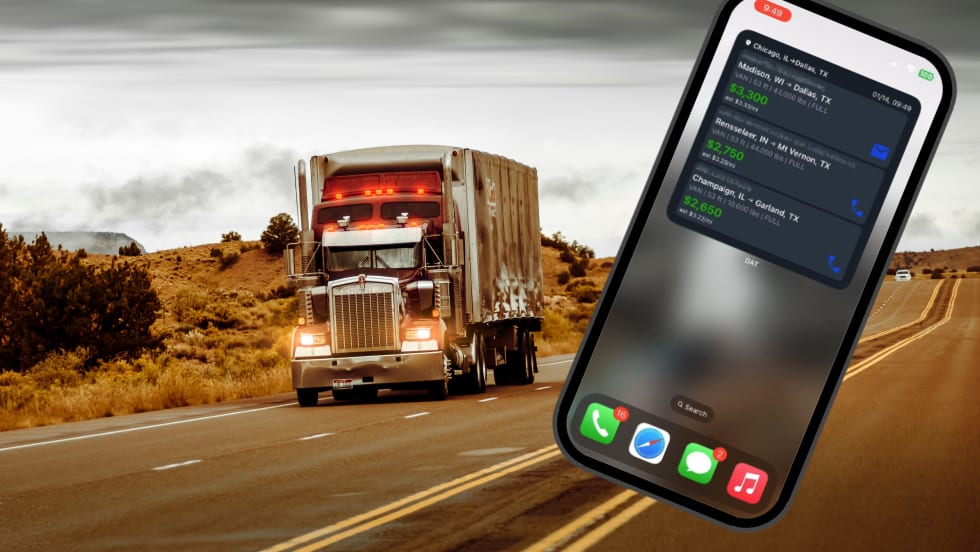
New DAT One feature shows top-paying loads directly on an iPhone’s home screen, helping carriers react faster to spot-market opportunities.
Read More →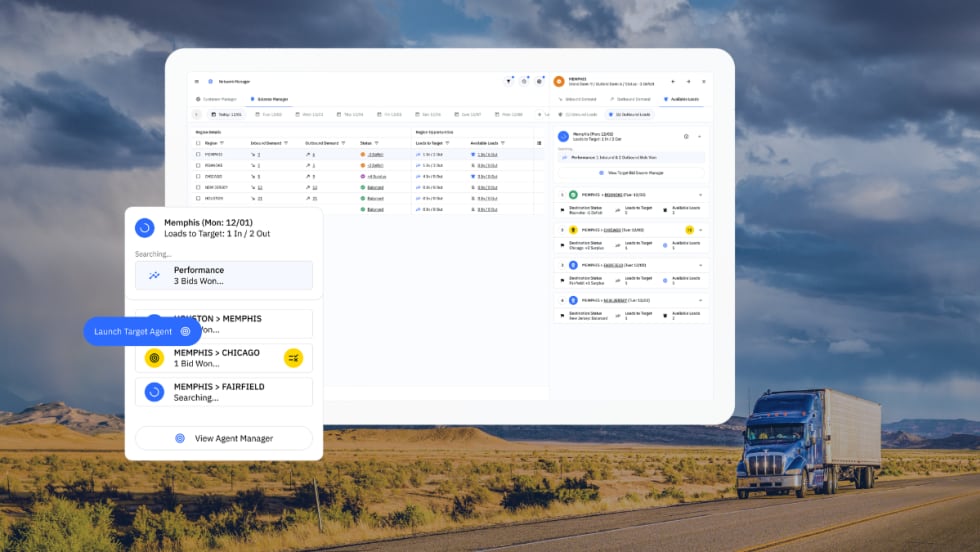
Optimal Dynamics says its new Scale platform uses AI agents and optimization to help carriers find and secure freight that improves network balance and profitability.
Read More →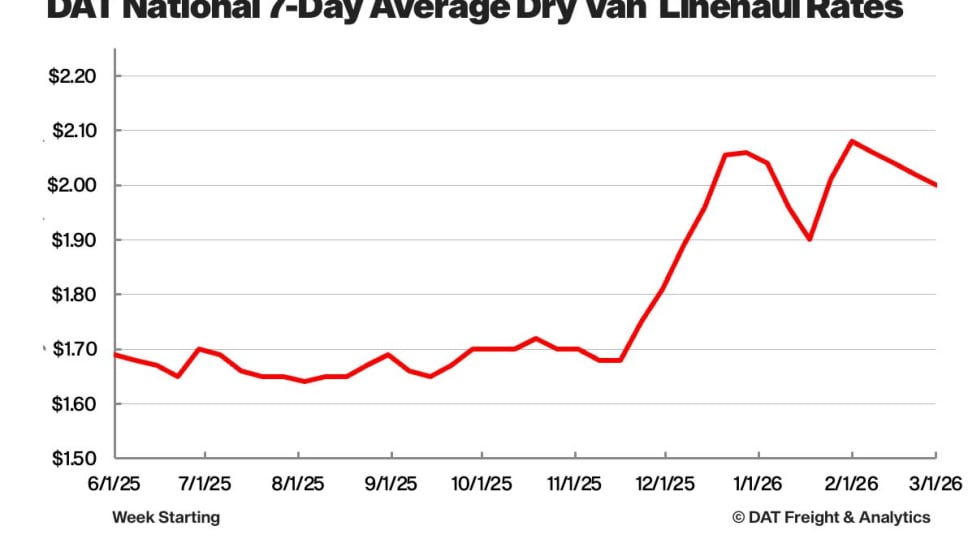
DAT Freight & Analytics data shows tightening flatbed capacity, easing produce markets, and softening van and reefer rates.
Read More →
NACFE's Run on Less - Messy Middle project demonstrates the power of data in helping to guide the future of alternative fuels and powertrains for heavy-duty trucks.
Read More →