





Getting your truck specs right depends on your application, first and foremost, said fleet professionals speaking on the “Truck Specs 2022” panel, held at the Technology & Maintenance Council’s Fall Meeting in Cleveland on Sept. 14. Yet spec’ing is also a constantly evolving process, thanks to the steady flow of new technology coming into trucking.
How to Get Truck Specs Right
Getting truck specifications correct is a constantly evolving process and never-ending balancing act, according to TMC experts.
September 15, 2021

Joe Eilerman of Daimler Trucks North America urged TMC attendees to be open minded about new rear-view camera systems because of the fuel economy benefits they offer.
Photo: Jack Roberts
4 min to read
One of the most recent technological developments has been down-sped drivetrains, said Kris Ptasznik, Cummins’ heavy duty on-highway product manager. Downspeeding, he explained, allows trucks to cruise at lower RPMs thanks to faster axle ratios.
But Ptasznik said it’s not for everyone. “If you’re on the highway and at cruise speed 90% of the time, downspeeding is a natural fit for your application. If you’re on the highway, say, 80% of the time, and on two-lane roads the remainder of the time, then they are some advantages to downspeeding. But those [benefits] are balanced by the limited resell value you’ll have for that truck when it’s time to dispose of it.”
How many horses?
Another critical question fleet managers must consider is how much horsepower they actually need to get work done with their trucks, Ptasznik added. “If you’re running on flat ground at cruise speeds, what does 500 horsepower give you other than a driver who gets to tell people he’s got 500 horsepower under the hood?”
For the most part, Ptasznik said, proper horsepower specs come down to geography and application. “Big bore engines typically have better resale value,” he noted. “And they offer better climbing ability and engine braking for driving in hills and mountains. On the other hand, if you take weight out of the engine, you can haul more stuff. And smaller engines mean smaller upfront acquisition costs.”
Another key spec’ing development has been the choice between selecting manual gearboxes or automated transmissions (AMTs). Ptasznik said that “AMTs have the downside of higher cost. But they have much faster ROI than manuals, through reduced fuel costs.”
Interestingly, he pointed out that AMT popularity has exploded over the past several years. And, as a result, many commercial drivers today who trained on AMTs cannot drive manual transmissions. “So, understand that if you spec an AMT, it may take you a longer period of time to sell that truck later on, because you’ll have to wait for a driver with a manual transmission endorsement to buy it.”
Safety integration
Joe Eilerman, engine product manager, Daimler Trucks North America, said that advanced driver safety systems (ADAS) and collision mitigation systems (CMS) began life as two separate, but complementary technologies. But now, he said, those lines are blurring when it comes to spec’ing driver safety and assistance systems.
“The two systems are becoming increasingly integrated,” Eilerman said. “And we’re seeing more and more sensors on trucks that ‘talk’ to each other with greater confidence and fewer false positives than in the past. We’re also starting to see more sensors covering the sides and rear of the trailer as well.”
Another noteworthy new feature expected in the near future, according to Eilerman, are mirror camera systems, which will take the place of traditional rear-view mirrors to decrease aerodynamic drag and increase fuel economy. “I’d advise you to keep an open mind about these systems,” Eilerman told the audience. “Because they offer significant fuel savings.”
Drive on data
Lee Long, director of fleet services, Southeastern Freight Lines, stressed the importance of collecting data on all facets of your operation and using it to drive your future specs.
“Everything we do at Southeastern is driven by data,” he said. “Beginning in 2014, we began gathering data on both engine horsepower and transmissions and eventually changed our specs based on our findings. We went from a 10-speed to a 12-speed automated transmission because the testing showed we were getting another level of performance with those units and a better performing unit all the way around.”
Long also stressed the importance of involving your technicians in the spec’ing process. “Technician acceptance of new technology and products is critical,” he said. “They’re the ones who will have to keep the trucks running. So, you need to have them weigh in on the repair process in general and how easy new technologies or products are to repair.
“And it’s the same thing with drivers,” Long added. “Make sure you communicate what you want to do and why with new technology or products. If you do that, you’ll find that they’re pretty accepting of the changes you want to make.”
[Editor's note: This article was updated on Sept. 17 at 10:18 a.m. CT to clarify the type of camera system to be offered in the future.]
More Fleet Management

ACT: Trucking Volumes Rise, Capacity Tightens as Fuel Prices Cloud Outlook
ACT Research data shows volumes hitting a four-year high and supply-demand balance strengthening, but higher oil prices are undercutting tariff relief and tempering optimism.
Read More →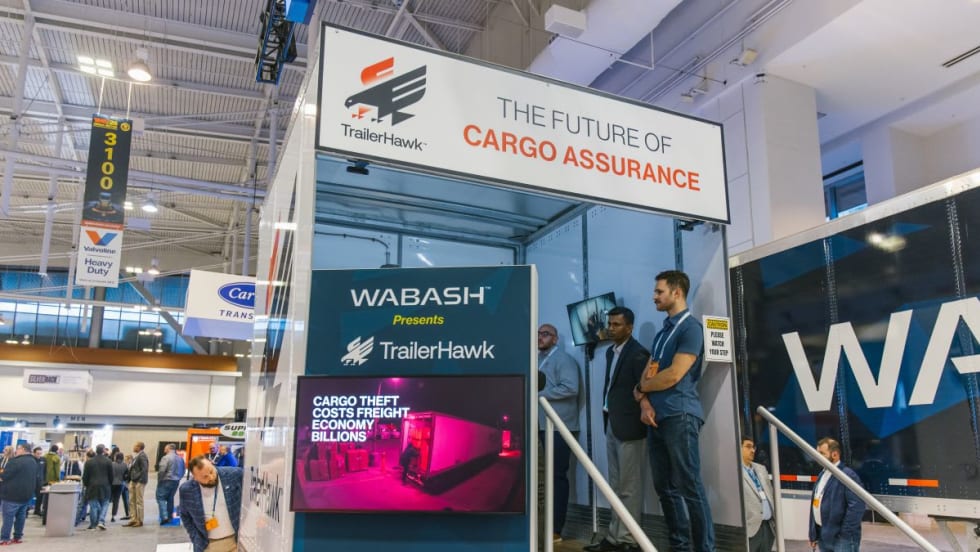
Wabash Teams Physical Security With Digital Tech For Better Cargo Visibility
The patent-pending cargo solution integrates a digitally connected cargo door and an intelligent locking system with the TrailerHawk.AI technology platform.
Read More →
From Diesel Prices to Cyberattacks: How the Iran War Is Affecting Trucking
The impact of the Iran conflict extends beyond fuel costs, bringing more fraud and cybersecurity risks to the trucking industry.
Read More →
ATA’s Spear Warns Fuel Prices, Trade Policy, and Global Conflict Could Stall Trucking Recovery
Speaking at the TMC Annual Meeting in Nashville, ATA President Chris Spear said trucking faces mounting pressure from rising fuel prices, geopolitical instability, and uncertainty around trade policy.
Read More →
New Entrants, Chameleon Carriers, and Safety: Is It Too Easy to Start a Trucking Company?
More than 100,000 new trucking companies enter the industry each year, but regulators manage to audit only a fraction of them. That churn creates opportunities for inexperienced startups — and for “chameleon carriers” that shut down after safety violations and reappear under new identities. Read more from Deborah Lockridge in this commentary.
Read More →
Fleet Managers Invited to Apply for Exclusive HDT Exchange Event
HDTX is an intimate event that connects heavy-duty trucking fleet managers with industry suppliers through small-group discussions, educational sessions, and structured one-on-one meetings.
Read More →
DAT Launches iPhone Widget to Help Owner-Operators Find Loads Faster
New DAT One feature shows top-paying loads directly on an iPhone’s home screen, helping carriers react faster to spot-market opportunities.
Read More →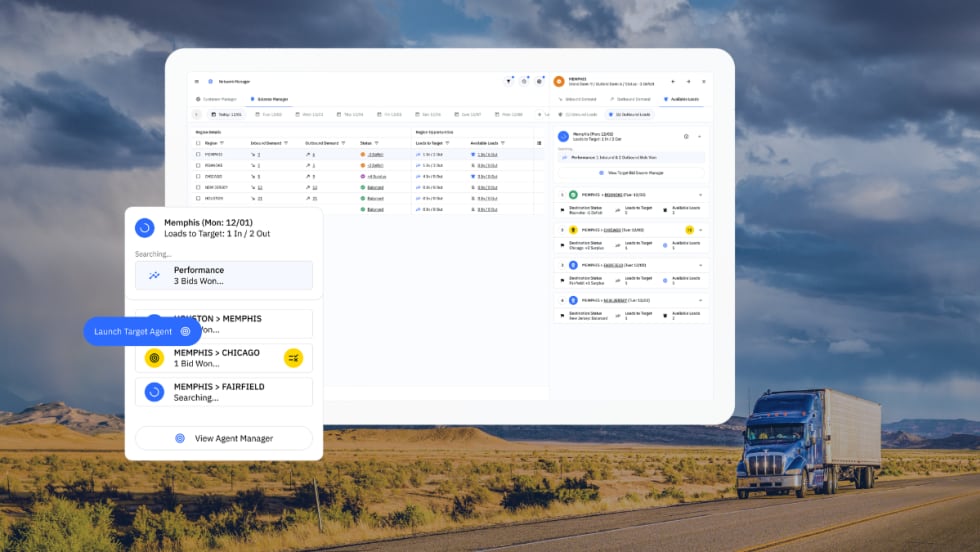
Optimal Dynamics Launches AI System to Help Carriers Choose Better Freight
Optimal Dynamics says its new Scale platform uses AI agents and optimization to help carriers find and secure freight that improves network balance and profitability.
Read More →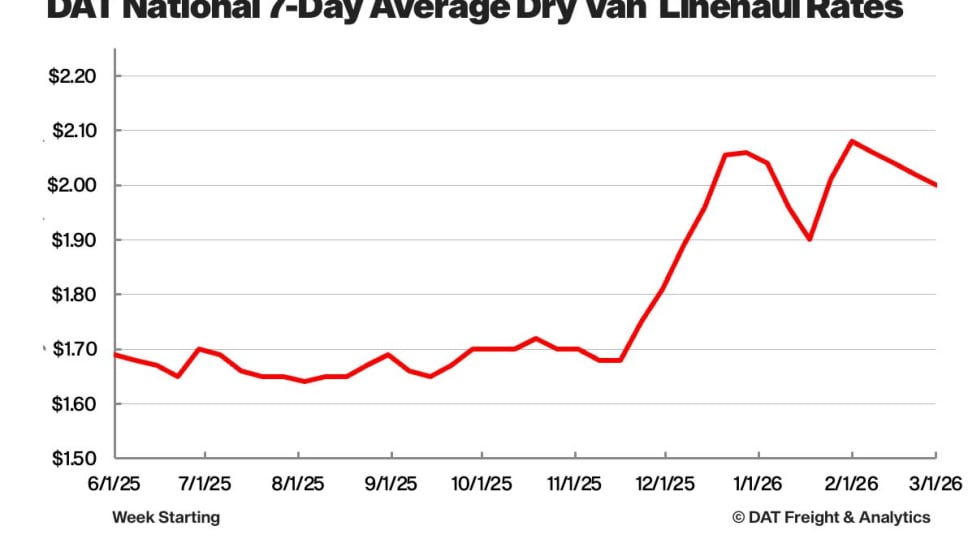
DAT: Flatbed Demand Climbs as Van and Reefer Rates Soften
DAT Freight & Analytics data shows tightening flatbed capacity, easing produce markets, and softening van and reefer rates.
Read More →
Run on Less “Messy Middle” Data Shows Multiple Paths Forward for Truck Powertrains [Watch]
NACFE's Run on Less - Messy Middle project demonstrates the power of data in helping to guide the future of alternative fuels and powertrains for heavy-duty trucks.
Read More →