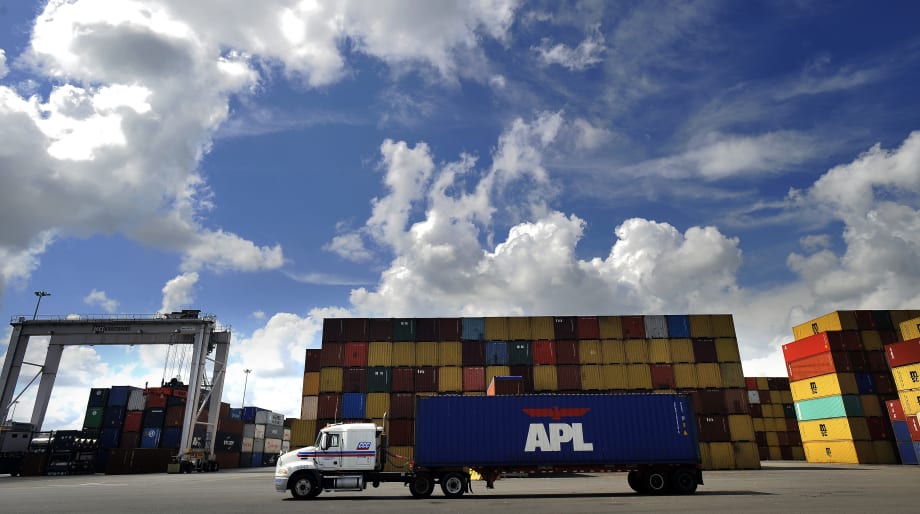
As intermodal freight enters peak shipping season at the nation's ports, West Coast ports appear to be slowing the diversion of freight to East Coast ports. At the same time, East Coast ports are working to extend their inland reach, according to published reports.
by Staff
August 18, 2015
Photo: Georgia Ports Authority
3 min to read
Photo: Georgia Ports Authority
As intermodal freight enters peak shipping season at the nation's ports, West Coast ports appear to be slowing the diversion of freight to East Coast ports. At the same time, East Coast ports are working to extend their inland reach, according to published reports.
Ad Loading...
Total container volume moving through the Los Angeles-Long Beach port complex in July was up 6.8% from a year ago, and Oakland’s total container volume in July increased 1% year over year.
Ad Loading...
East and Gulf Coast ports don't seem to be hurting too badly, however, reporting double-digit increases in container volumes due to cargo diversions from the West Coast.
Diversions from the U.S. West Coast began in July 2014, when the coastwide contract agreement between the International Longshore and Warehouse Union and the Pacific Maritime Association expired. Beneficial cargo owners, especially importers, hedged their bets against possible labor disruptions by diverting some of their shipments through East and Gulf Coast ports as well as through Vancouver and Prince Rupert in Canada.
The modest diversions last summer turned into a flood of diverted cargo beginning in November 2014 when the PMA statistics showed clearly that ILWU work slowdowns crippled West Coast port productivity. The congestion at all of the major gateways grew worse in early 2015 when the PMA retaliated by withholding lucrative night and weekend work opportunities from longshoremen. The contract impasse ended on Feb. 20 when intervention from the Obama administration resulted in a tentative contract that was ratified by the ILWU and PMA in late May.
In the meantime, shippers have been spending a lot of money to route containers to the East Coast and haul them back to inland destinations.
Ad Loading...
The Southeast ports, meanwhile, are extending their reach inland. Port authorities in Georgia and South Carolina are writing plans to build more inland ports in their states.
In late July, the Georgia Ports Authority announced a new inland terminal will open in 2018 in Chatsworth, Ga. Its service area will include North Georgia, Alabama, Tennessee and parts of Kentucky. Port officials estimate the CSX rail route will reduce Atlanta truck traffic by 40,000 moves annually, creating a new intermodal option to and from the deepwater Port of Savannah. Each container moved by rail to the Appalachian Regional Port will offset 355 truck miles on Georgia highways.
In South Carolina, the inland port is 212 miles from the ocean. A brochure for the Greer, S.C., facility claims a 70-85% reduction in emissions from fewer truck/empty miles for shippers using it.
The Port of Jacksonville has been looking for sites for inland ports in Northeast Florida. And the Virginia Port Authority is happy with its inland facility’s recent performance and says it will use it as a template for future terminals elsewhere in the state.
As another JOC report explains, "the appeal of inland ports is clear. By setting up shop near inland ports, shippers can cut down their drayage costs and tap the benefits of logistics clusters such as third-party logistics services and a skilled workforce. In the U.S. Southeast that appeal is illustrated in the booming success of three individual inland ports in Georgia, South Carolina and Virginia, where those ports are not only successful, they're now spurring interest in new inland port development in the region."
Ad Loading...
Jim Newsome, president and CEO of the South Carolina Ports Authority, told JOC.com that “This is the next trend in East Coast distribution, these inland ports. The ports are interested because an inland port can make cargo sticky to your port. The railroads are interested because their coal volumes are down."
ACT Research data shows volumes hitting a four-year high and supply-demand balance strengthening, but higher oil prices are undercutting tariff relief and tempering optimism.
The patent-pending cargo solution integrates a digitally connected cargo door and an intelligent locking system with the TrailerHawk.AI technology platform.
Speaking at the TMC Annual Meeting in Nashville, ATA President Chris Spear said trucking faces mounting pressure from rising fuel prices, geopolitical instability, and uncertainty around trade policy.
More than 100,000 new trucking companies enter the industry each year, but regulators manage to audit only a fraction of them. That churn creates opportunities for inexperienced startups — and for “chameleon carriers” that shut down after safety violations and reappear under new identities. Read more from Deborah Lockridge in this commentary.
HDTX is an intimate event that connects heavy-duty trucking fleet managers with industry suppliers through small-group discussions, educational sessions, and structured one-on-one meetings.
Optimal Dynamics says its new Scale platform uses AI agents and optimization to help carriers find and secure freight that improves network balance and profitability.
NACFE's Run on Less - Messy Middle project demonstrates the power of data in helping to guide the future of alternative fuels and powertrains for heavy-duty trucks.