



The Highway Trust Fund is likely to run into the red by September, according to the latest update from the Department of Transportation.
 MENU
MENU SEARCH
The Highway Trust Fund is likely to run into the red by September, according to the latest update from the Department of Transportation. In its most recent monthly status report, DOT shows the fund’s cash balance dipping below zero in late August or the first week of September.

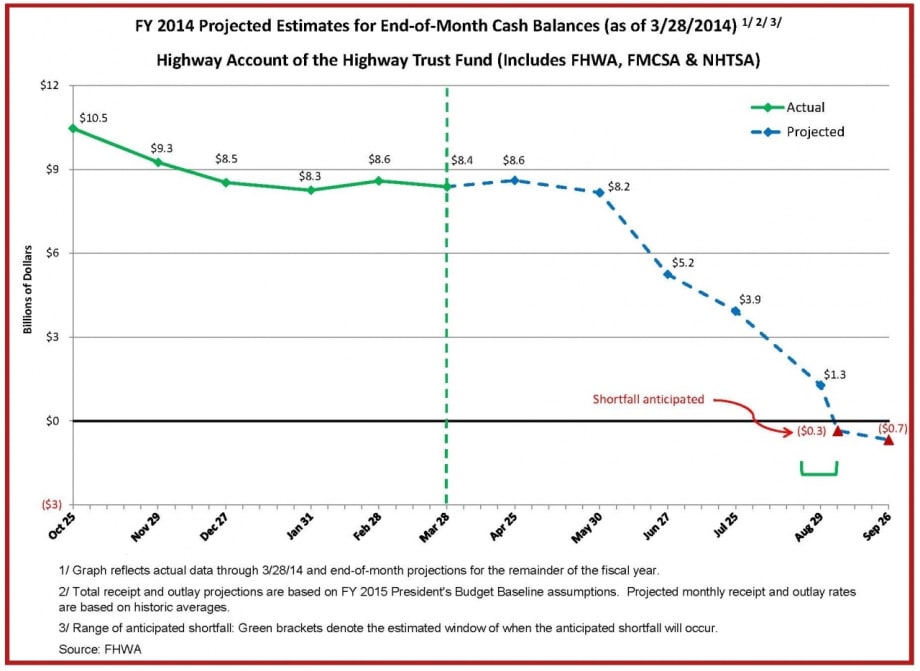
Click to enlarge.
The Highway Trust Fund is likely to run into the red by September, according to the latest update from the Department of Transportation.
In its most recent monthly status report, DOT shows the fund’s cash balance dipping below zero in late August or the first week of September.
The pending shortfall creates a sense of crisis as Congress drafts legislation to replace the current highway law, MAP-21, with a long-term program.
MAP-21, a two-year program, expires in October. All agree that the next bill needs to cover a longer period, five to six years, but there’s no agreement on how to pay for it.
State transportation departments are caught in the middle. Unless they get a clear signal that Congress will find the money needed to keep their programs going, they will start shelving plans for future projects.
Sen. Barbara Boxer, D-Calif., chair of the Senate Environment and Public Works Committee, has said the deadline for sending that signal is June.
Transportation and business interests strongly support raising the fuel tax and indexing it to inflation but a tax hike of any description is too heavy a political lift for Congress or the White House.
There are alternatives on the table. President Obama and Rep. Dave Camp, R-Mich., chairman of the House Ways and Means Committee, have proposed one-time funding infusions derived from corporate tax reforms. Rep. John Delaney, D-Md., has proposed a financing innovation based on tax-free repatriation of overseas earnings.
Boxer, whose committee is drafting a bill this month, has said Congress might be able to come to terms on funding derived from corporate tax reform, but not before the November mid-term election.
That means Congress may have to tap the general treasury for money to keep the fund whole this fall.

ACT Research data shows volumes hitting a four-year high and supply-demand balance strengthening, but higher oil prices are undercutting tariff relief and tempering optimism.
Read More →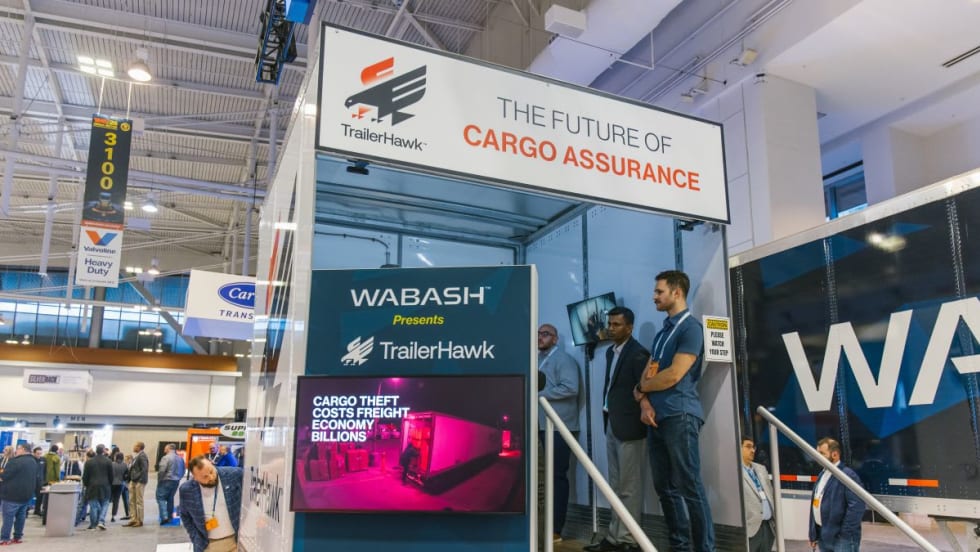
The patent-pending cargo solution integrates a digitally connected cargo door and an intelligent locking system with the TrailerHawk.AI technology platform.
Read More →
The impact of the Iran conflict extends beyond fuel costs, bringing more fraud and cybersecurity risks to the trucking industry.
Read More →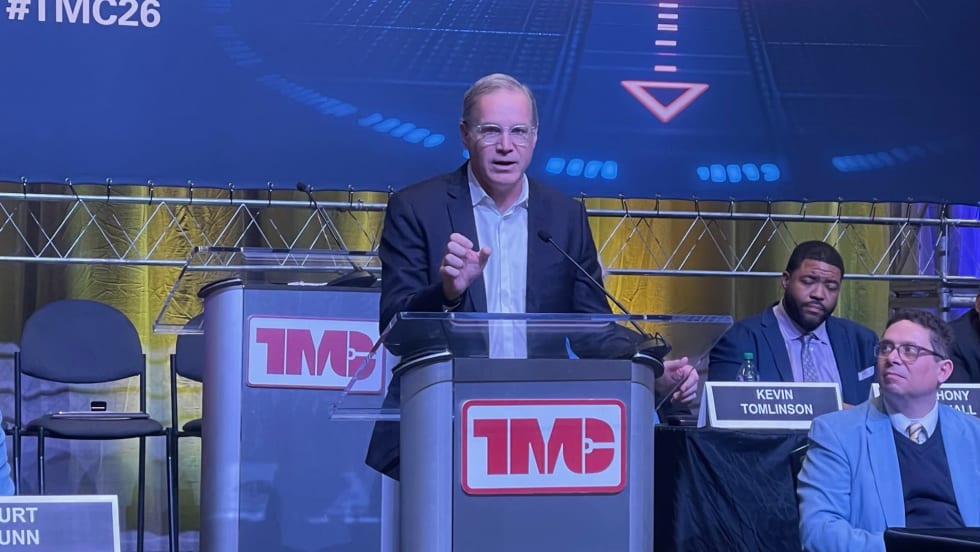
Speaking at the TMC Annual Meeting in Nashville, ATA President Chris Spear said trucking faces mounting pressure from rising fuel prices, geopolitical instability, and uncertainty around trade policy.
Read More →
More than 100,000 new trucking companies enter the industry each year, but regulators manage to audit only a fraction of them. That churn creates opportunities for inexperienced startups — and for “chameleon carriers” that shut down after safety violations and reappear under new identities. Read more from Deborah Lockridge in this commentary.
Read More →
HDTX is an intimate event that connects heavy-duty trucking fleet managers with industry suppliers through small-group discussions, educational sessions, and structured one-on-one meetings.
Read More →
New DAT One feature shows top-paying loads directly on an iPhone’s home screen, helping carriers react faster to spot-market opportunities.
Read More →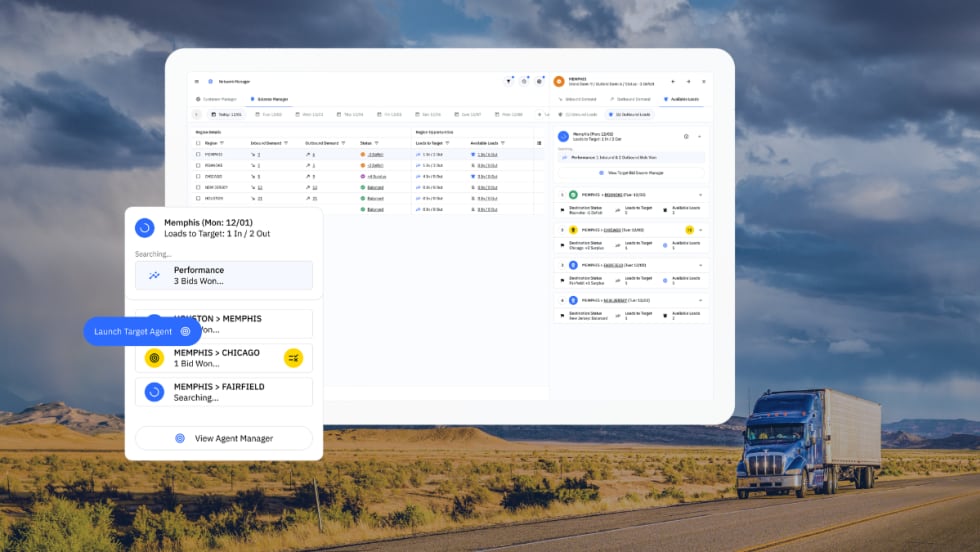
Optimal Dynamics says its new Scale platform uses AI agents and optimization to help carriers find and secure freight that improves network balance and profitability.
Read More →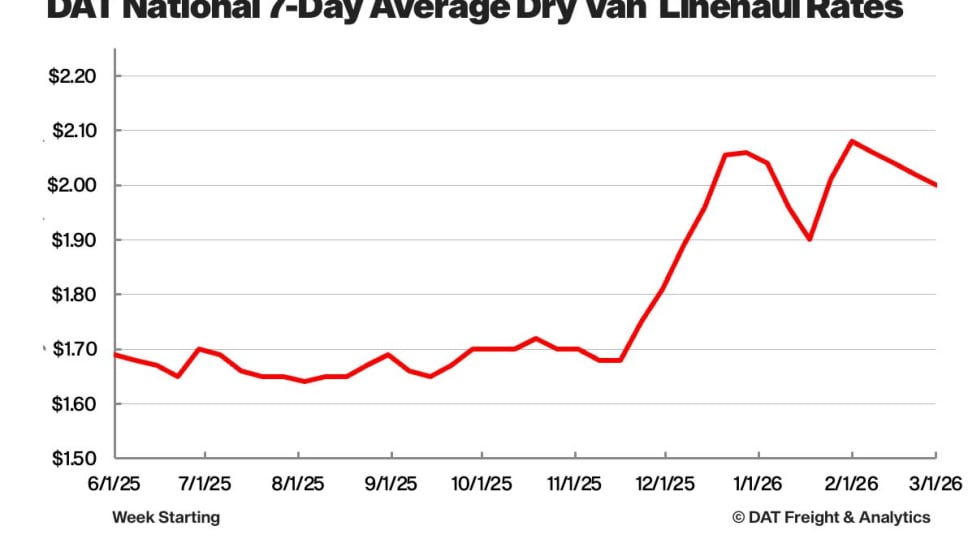
DAT Freight & Analytics data shows tightening flatbed capacity, easing produce markets, and softening van and reefer rates.
Read More →
NACFE's Run on Less - Messy Middle project demonstrates the power of data in helping to guide the future of alternative fuels and powertrains for heavy-duty trucks.
Read More →