





Locomation, a developer of human-guided autonomous convoying, has announced the signing of a definitive agreement establishing a multi-year partnership with Wilson Logistics, a transportation logistics company based out of Springfield, Missouri. The agreement will put Locomation’s autonomous technology on the road across several critical Wilson Logistics shipping routes.
Locomation Autonomous Convoys Go to Work with Wilson Logistics
Locomation’s autonomous convoy technology will begin work on Wilson Logistics’ existing freight routes to drive gains in asset utilization, sustainability, safety, and driver performance.
March 6, 2020
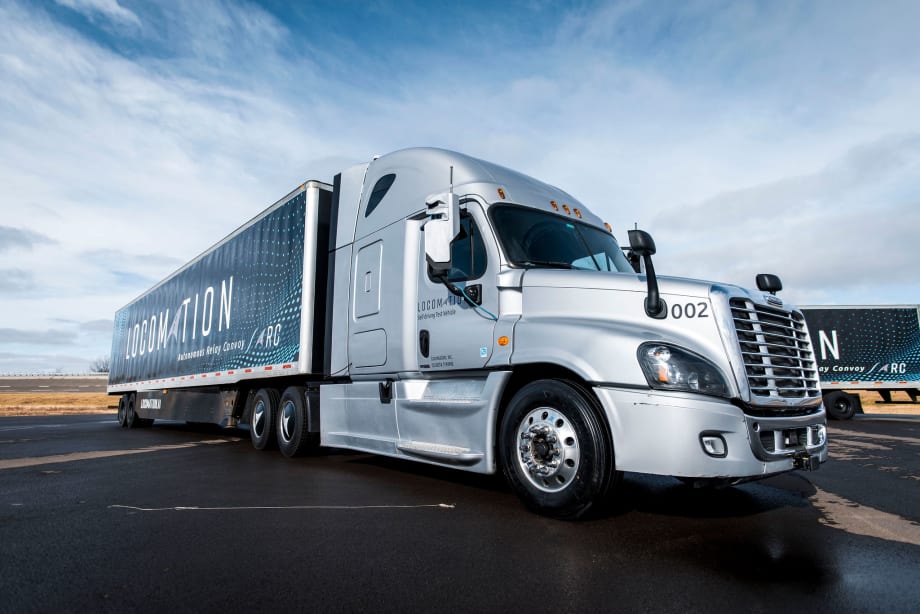
Locomation trucks are expected to begin operations at Wilson Logistics in the spring of 2020, eventually operating more than 62 two-truck convoys on routes throughout the United States.
Photo: Locomation
3 min to read
During the three-year pilot program, Locomation will employ its Autonomous Relay Convoy technology on 11 separate Wilson Logistics ARC segments.
ARC allows one driver to pilot a lead truck equipped with technology augmentation while a follower truck operates in tandem through Locomation’s fully autonomous system. This allows the follower driver to log off and rest during this time. Each ARC segment is engineered for maximum yield by Locomation’s business operations team, headed by trucking industry veteran Tom Kroswek.
“Our work with Locomation will mark a significant step forward for Wilson Logistics,” said Darrel Wilson, chairman and CEO of Wilson Logistics. “Not only will we improve asset utilization and network efficiency, but we’ll make great strides in reducing our energy spend while improving safety. It also makes the truck a much better place to work for our team of professional truck drivers.”
The deal is part of Wilson Logistics’ initiative to improve the driver experience while boosting profitability through innovative technology solutions, the companies said.
During the pilot, Locomation will provide a two-truck convoy with safety staff and will work in tandem with the Wilson Logistics operations team to execute the most efficient freight movements possible.
At full commercialization Locomation’s autonomous vehicle technology is expected to produce an estimated 33% reduction in operating cost per mile, 8% reduction in fuel expense, and remove 41 metric tons of carbon dioxide from the air per tractor annually. One hundred twenty-four trucks will be deployed in the initial commercialization phase before ultimately expanding to more than 2,000 or more ARC-equipped trucks operating daily in their ARC networks.
“We couldn’t be more excited about this partnership,” said Çetin Meriçli, CEO and co-founder of Locomation. Çetin is one of five members of Locomation’s founding team who built highly advanced autonomous vehicle systems during their time together at Carnegie Mellon’s National Robotics Engineering Center. “We’ve built our ARC technology stack and network strategy to leverage the value of long-established trucking routes and systems," Cetin added. "Wilson Logistics is a perfect fit for our first pilot program.”
Tom Kroswek, Locomation’s head of network engineering, said that, “Locomation identifies the most conducive freight activities to produce the highest yield possible, while achieving more than 20 hours of equipment utilization with full integration into the customer’s transportation management systems. This approach enables us to fully implement the technology into the customer’s organization in a way that delivers sustainable results.”
Locomation trucks are expected to begin operations at Wilson Logistics this spring. At peak implementation, the agreement is expected to operate more than 62 two-truck convoys on 11 ARC segments throughout the United States. The next phase in the partnership anticipates delivering more than 1,000 two-truck convoys representing more than 2,000 ARC-equipped trucks operating on more than 68 ARC segments nationwide.
More Fleet Management

ACT: Trucking Volumes Rise, Capacity Tightens as Fuel Prices Cloud Outlook
ACT Research data shows volumes hitting a four-year high and supply-demand balance strengthening, but higher oil prices are undercutting tariff relief and tempering optimism.
Read More →
Wabash Teams Physical Security With Digital Tech For Better Cargo Visibility
The patent-pending cargo solution integrates a digitally connected cargo door and an intelligent locking system with the TrailerHawk.AI technology platform.
Read More →
From Diesel Prices to Cyberattacks: How the Iran War Is Affecting Trucking
The impact of the Iran conflict extends beyond fuel costs, bringing more fraud and cybersecurity risks to the trucking industry.
Read More →
ATA’s Spear Warns Fuel Prices, Trade Policy, and Global Conflict Could Stall Trucking Recovery
Speaking at the TMC Annual Meeting in Nashville, ATA President Chris Spear said trucking faces mounting pressure from rising fuel prices, geopolitical instability, and uncertainty around trade policy.
Read More →
New Entrants, Chameleon Carriers, and Safety: Is It Too Easy to Start a Trucking Company?
More than 100,000 new trucking companies enter the industry each year, but regulators manage to audit only a fraction of them. That churn creates opportunities for inexperienced startups — and for “chameleon carriers” that shut down after safety violations and reappear under new identities. Read more from Deborah Lockridge in this commentary.
Read More →
Fleet Managers Invited to Apply for Exclusive HDT Exchange Event
HDTX is an intimate event that connects heavy-duty trucking fleet managers with industry suppliers through small-group discussions, educational sessions, and structured one-on-one meetings.
Read More →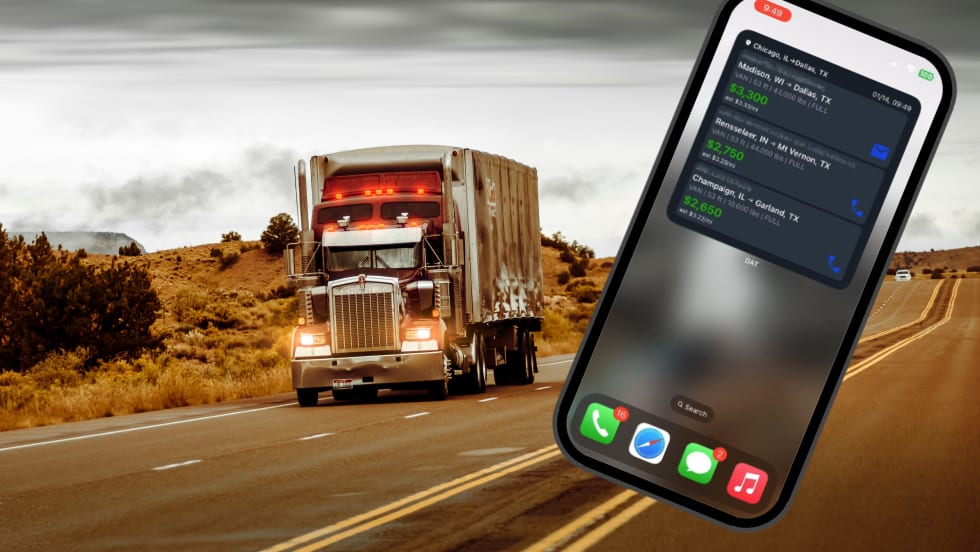
DAT Launches iPhone Widget to Help Owner-Operators Find Loads Faster
New DAT One feature shows top-paying loads directly on an iPhone’s home screen, helping carriers react faster to spot-market opportunities.
Read More →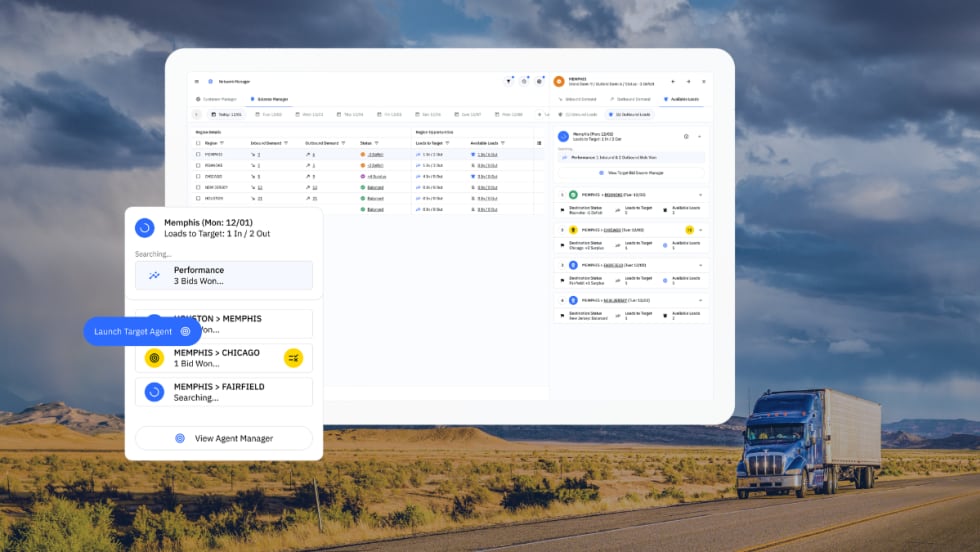
Optimal Dynamics Launches AI System to Help Carriers Choose Better Freight
Optimal Dynamics says its new Scale platform uses AI agents and optimization to help carriers find and secure freight that improves network balance and profitability.
Read More →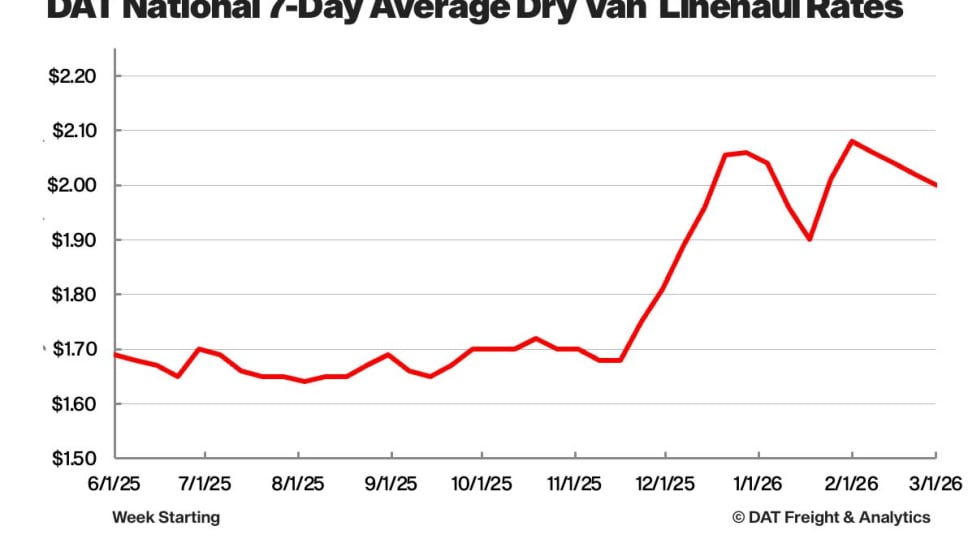
DAT: Flatbed Demand Climbs as Van and Reefer Rates Soften
DAT Freight & Analytics data shows tightening flatbed capacity, easing produce markets, and softening van and reefer rates.
Read More →
Run on Less “Messy Middle” Data Shows Multiple Paths Forward for Truck Powertrains [Watch]
NACFE's Run on Less - Messy Middle project demonstrates the power of data in helping to guide the future of alternative fuels and powertrains for heavy-duty trucks.
Read More →