Weights and Measures Council Fails to OK LNG Standard
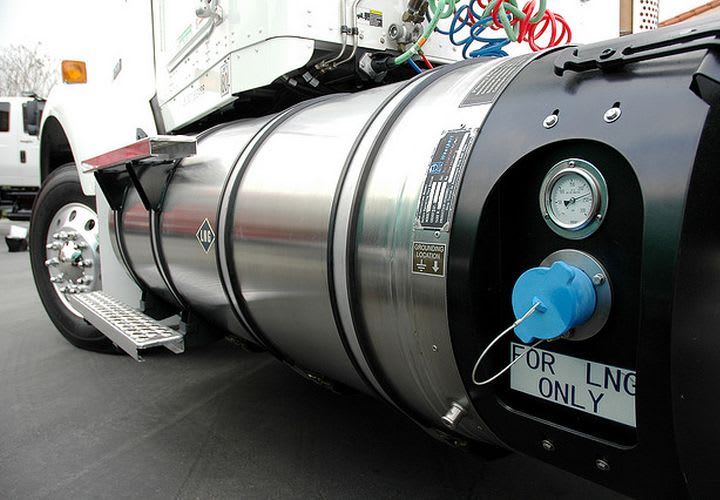
After regulators failed to agree to a nationally recognized, gallon-equivalent measure for sales of liquefied natural gas, fleets that rely on LNG-fueled vehicles will continue to face a state-by-state patchwork of standards for at least one more year.
by Staff
July 24, 2014
Photo via TruckPR/Flickr.
2 min to read
Photo via TruckPR/Flickr.
After regulators failed to agree to a nationally recognized, gallon-equivalent measure for sales of liquefied natural gas, fleets that rely on LNG-fueled vehicles will continue to face a state-by-state patchwork of standards for at least one more year.
Ad Loading...
Meeting in Detroit earlier this month, the National Conference on Weights and Measures failed to agree to a proposal that would set the amount of LNG that provides the same amount of power as one gallon of diesel fuel.
Ad Loading...
The Diesel Gallon Equivalent (DGE) standard needed approval from two panels of the conference, which is made up of state regulators, to take effect. While one of the panels agreed with the proposal, the other did not, sending it back to the regional level for more work, reports the Houston Chronicle.
CNG has been priced for two decades in a method that converts 5.66 pounds of gas to 1 gallon of gasoline, allowing an easy cost comparison as well as using terms that drivers are used to seeing. The Gasoline Gallon Equivalent (GGE) figure allowed for easy comparison, although some delegates at the meeting in Detroit expressed an interest in adjusting that figure as well.
Without the national standard, retailers are allowed to use a DGE or GGE price when selling LNG — as they do now — but consumers will find they get a slightly different amount of fuel state-by-state, said Kathryn Clay, vice president for policy strategy at the American Gas Association.
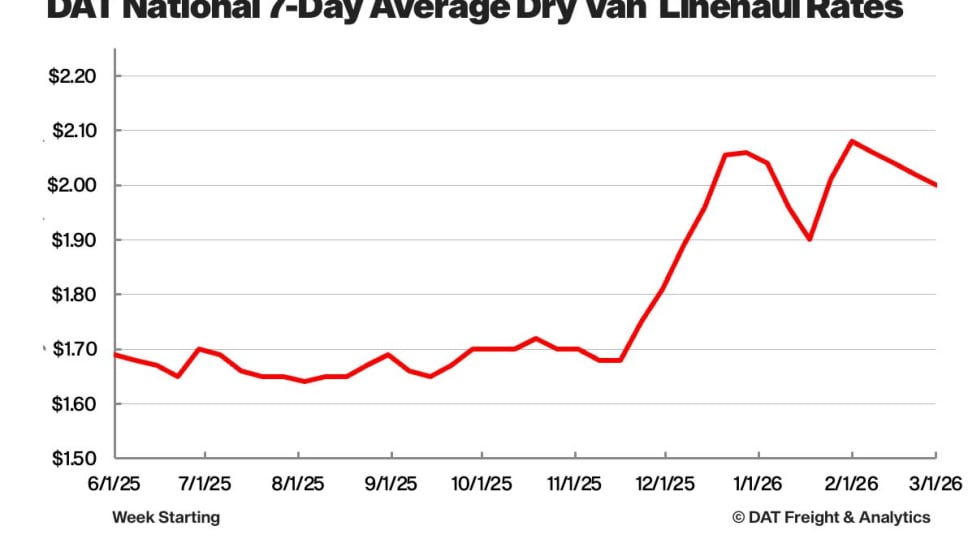
ACT Research data shows volumes hitting a four-year high and supply-demand balance strengthening, but higher oil prices are undercutting tariff relief and tempering optimism.
The patent-pending cargo solution integrates a digitally connected cargo door and an intelligent locking system with the TrailerHawk.AI technology platform.
Speaking at the TMC Annual Meeting in Nashville, ATA President Chris Spear said trucking faces mounting pressure from rising fuel prices, geopolitical instability, and uncertainty around trade policy.
More than 100,000 new trucking companies enter the industry each year, but regulators manage to audit only a fraction of them. That churn creates opportunities for inexperienced startups — and for “chameleon carriers” that shut down after safety violations and reappear under new identities. Read more from Deborah Lockridge in this commentary.
HDTX is an intimate event that connects heavy-duty trucking fleet managers with industry suppliers through small-group discussions, educational sessions, and structured one-on-one meetings.
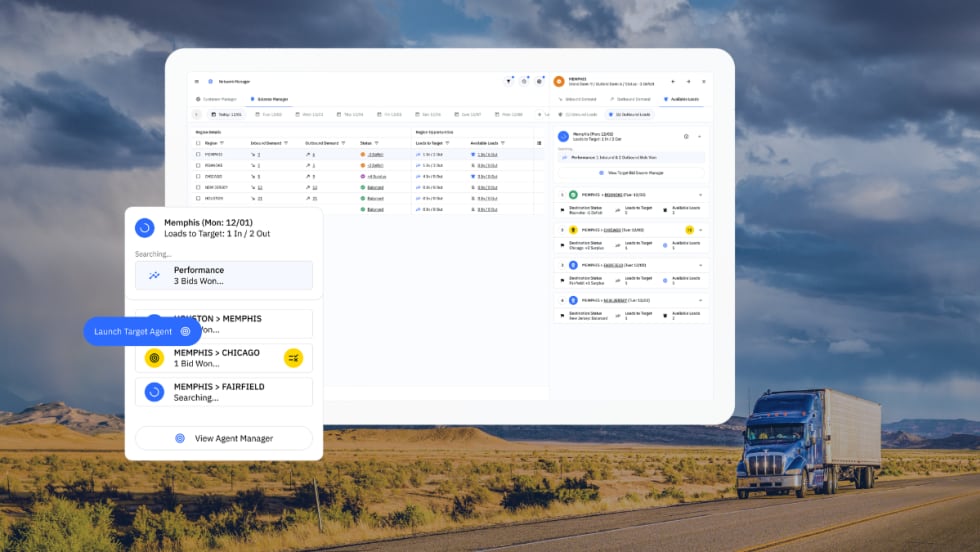
Optimal Dynamics says its new Scale platform uses AI agents and optimization to help carriers find and secure freight that improves network balance and profitability.
NACFE's Run on Less - Messy Middle project demonstrates the power of data in helping to guide the future of alternative fuels and powertrains for heavy-duty trucks.