





Arriving in the fourth quarter of this year, two new connectivity-related services from Daimler Trucks North America are designed to give fleets new power to create their own electronic logging systems, develop driver scoring apps that use data from the truck, and get direct access to truck data for their backend systems.
New Connectivity Features from DTNA Boost Access to Truck Data
Two new connectivity-related services from Daimler Trucks North America will allow fleets to create their own electronic logging systems, develop driver scoring apps, and directly access to data on a truck for their backend systems.
June 7, 2018

A driver can link to the Detroit Connect platform from an in-cab mobile device.
Photo courtesy Daimler Trucks
4 min to read
“Connected vehicles are commonplace, but not all connected vehicles are business machines as trucks are,” said Jason Krajewski, director of connectivity for Daimler Trucks North America, during Daimler Trucks’ Capital Market and Technology Day in Portland, Oregon, on June 6.
“Every feature of a truck is scrutinized for its value,” he explained, emphasizing that the value of a connected truck is directly tied to the people who interact with it, whether hands-on like the driver or technician, or in a remote way managing efficiency or safety, for instance.
The two new connectivity services in the Detroit Connect portfolio are Detroit Connect Direct and a wireless in-cab device connection, exclusive to the new Freightliner Cascadia spec’d with Detroit engines.
Detroit Connect Direct, Krajewski said, is for “people who love data,” such as fleet executives, fleet managers, and fuel and safety managers. It will give them direct access to critical information including vehicle location, fault codes and diagnostics, fuel performance, safety data, and driver behavior. Customers will be able to select which data sets they want, how much, and how frequently they would like that data made available so it can be imported into their backend systems, using a very simple menu-driven process.
“This really opens up a whole new dimension of data-centric thinking for our customers,” Krajewski said. “They’ve repeatedly asked for it.” There will be a tiered subscription offering to accommodate different data appetites.
“In addition to the vehicle-centric services we provide today, we understand that our customers have different business requirements as well as a variety of roles in their business that need accurate and timely information to help them perform their daily functions effectively,” he continued. The proprietary Detroit Connect platform will also link wirelessly with an in-cab device via Bluetooth, which will allow hours of service data to be delivered to Detroit Connect-authorized ELD apps. This will provide the necessary information required from the vehicle to meet the federal ELD rules without the need for any additional pieces of hardware. “Getting rid of that extra device down by the driver’s foot, or of a cable snaking through the cab, provides real value to the customer.”
When asked about the reliability of the Bluetooth connection, Krajewski said it had been tested to work as far as 30 feet from the cab. And he pointed out that even ELD systems that use cables and tablet systems, for instance, have been known to have the cable wiggle enough from truck vibration to become disconnected.
Daimler is looking at other potential applications for these technologies, and Krajewski suggested that a telematics provider and customer could run an application on mobile devices that use truck data such as a driver scoring application that tracks things like fuel economy and hard braking incidents.
Krajewski also highlighted and demonstrated other existing features of the Detroit Connect platform:
Remote diagnostics services with Detroit Connect Virtual Technician. This is available on all Detroit engines, including the Detroit DD5 and DD8, across all DTNA truck models.
Detroit Connect Remote Updates, exclusive to the new Freightliner Cascadia, enables customers to securely make over-the-air engine parameter changes and download Detroit Diesel Engine Control (DDEC) performance reports. Fleet managers no longer have to wait for their vehicles to be brought in to the shop to change key parameters on their vehicles, such as top speed or idle shutdown time. They now can be changed with a few clicks of the mouse, for one truck up to the entire fleet.
With Detroit Connect Analytics, fuel managers no longer need to pull data from various sources to determine how their vehicles are performing. It automatically translates critical fuel consumption and/or safety data into interactive and easy-to-understand reports.
For more information go to www.DemandDetroit.com/Connect.
Related: Daimler Aims for Level 4 Automated Trucks
More Fleet Management

ACT: Trucking Volumes Rise, Capacity Tightens as Fuel Prices Cloud Outlook
ACT Research data shows volumes hitting a four-year high and supply-demand balance strengthening, but higher oil prices are undercutting tariff relief and tempering optimism.
Read More →
Wabash Teams Physical Security With Digital Tech For Better Cargo Visibility
The patent-pending cargo solution integrates a digitally connected cargo door and an intelligent locking system with the TrailerHawk.AI technology platform.
Read More →
From Diesel Prices to Cyberattacks: How the Iran War Is Affecting Trucking
The impact of the Iran conflict extends beyond fuel costs, bringing more fraud and cybersecurity risks to the trucking industry.
Read More →
ATA’s Spear Warns Fuel Prices, Trade Policy, and Global Conflict Could Stall Trucking Recovery
Speaking at the TMC Annual Meeting in Nashville, ATA President Chris Spear said trucking faces mounting pressure from rising fuel prices, geopolitical instability, and uncertainty around trade policy.
Read More →
New Entrants, Chameleon Carriers, and Safety: Is It Too Easy to Start a Trucking Company?
More than 100,000 new trucking companies enter the industry each year, but regulators manage to audit only a fraction of them. That churn creates opportunities for inexperienced startups — and for “chameleon carriers” that shut down after safety violations and reappear under new identities. Read more from Deborah Lockridge in this commentary.
Read More →
Fleet Managers Invited to Apply for Exclusive HDT Exchange Event
HDTX is an intimate event that connects heavy-duty trucking fleet managers with industry suppliers through small-group discussions, educational sessions, and structured one-on-one meetings.
Read More →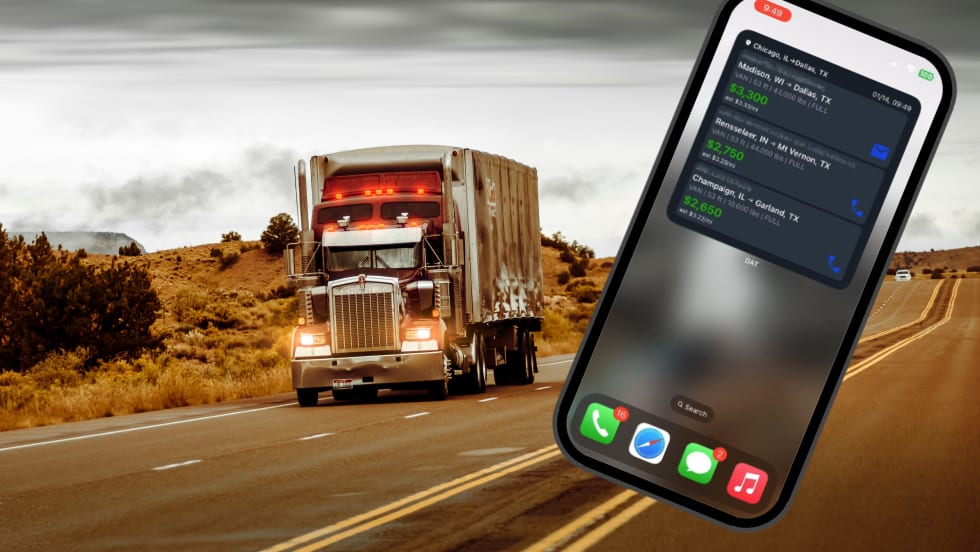
DAT Launches iPhone Widget to Help Owner-Operators Find Loads Faster
New DAT One feature shows top-paying loads directly on an iPhone’s home screen, helping carriers react faster to spot-market opportunities.
Read More →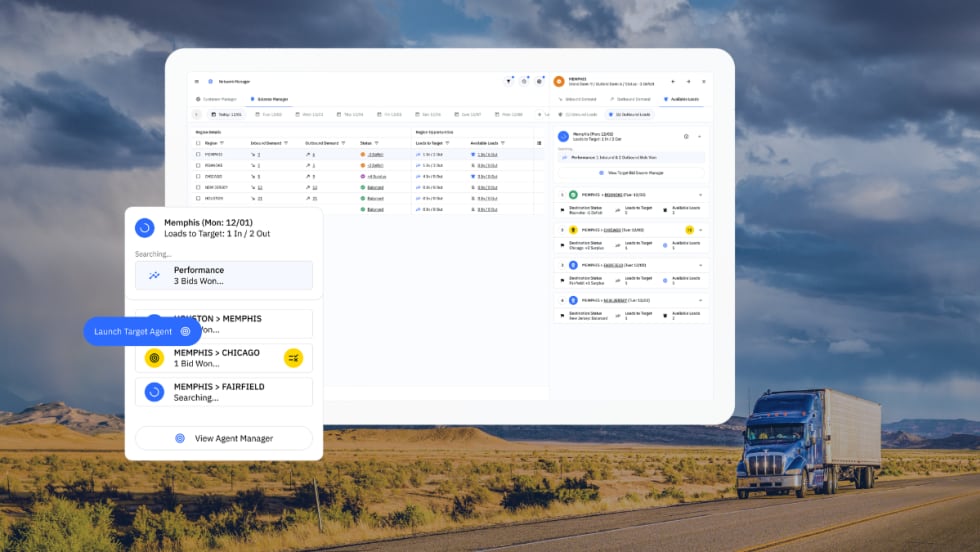
Optimal Dynamics Launches AI System to Help Carriers Choose Better Freight
Optimal Dynamics says its new Scale platform uses AI agents and optimization to help carriers find and secure freight that improves network balance and profitability.
Read More →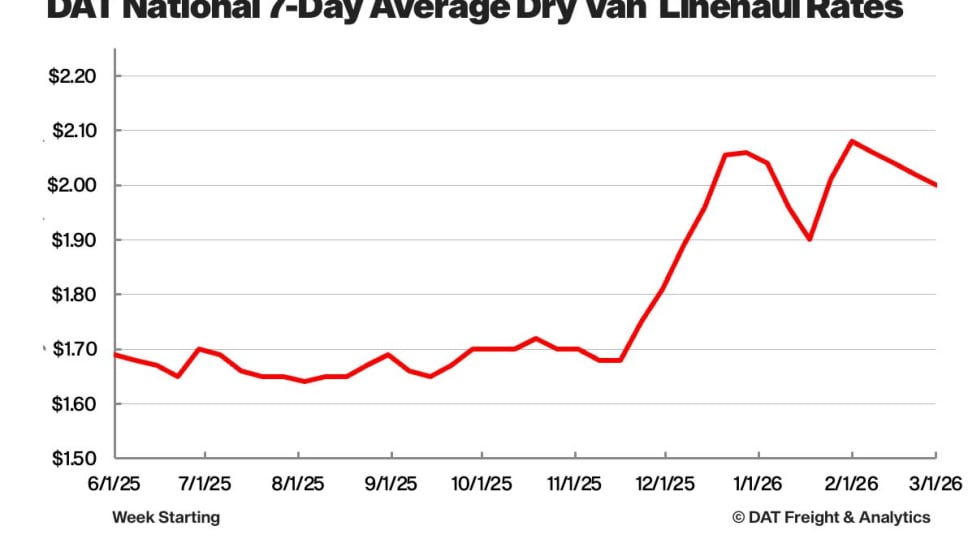
DAT: Flatbed Demand Climbs as Van and Reefer Rates Soften
DAT Freight & Analytics data shows tightening flatbed capacity, easing produce markets, and softening van and reefer rates.
Read More →
Run on Less “Messy Middle” Data Shows Multiple Paths Forward for Truck Powertrains [Watch]
NACFE's Run on Less - Messy Middle project demonstrates the power of data in helping to guide the future of alternative fuels and powertrains for heavy-duty trucks.
Read More →