



While trucking and the rest of the nation are nervous about the increasing likelihood of federal budget sequestration and its effect on the economy, some of the first numbers out show the year has started off better than expected.
 MENU
MENU SEARCH
While trucking and the rest of the nation are nervous about the increasing likelihood of federal budget sequestration and its effect on the economy, some of the first numbers out show the year has started off better than expected.


While trucking and the rest of the nation are nervous about the increasing likelihood of federal budget sequestration and its effect on the economy, some of the first numbers out show the year has started off better than expected.
The private group The Conference Board said Tuesday that its Consumer Confidence Index for February showed the first hike in four months. The 69.6 reading is up dramatically from the previous month’s level and is higher than a consensus poll of economists were forecasting. The Board’s Present Situation Index and The Expectations Index both also reported increases from January.
“Consumer confidence rebounded in February as the shock effect caused by the fiscal cliff uncertainty and payroll tax cuts appears to have abated," said Lynn Franco, director of economic indicators at The Conference Board. "Consumers’ assessment of current business and labor market conditions is more positive than last month.
"Looking ahead, consumers are cautiously optimistic about the outlook for business and labor market conditions. Income expectations, which had turned rather negative last month, have improved modestly.”
Meantime, a separate report from the federal government showed a big spike in new single-family home sales during January. The Commerce Department says sales increased 15.6% from the month before. This moved the annual rate to 437,000, the highest level since July 2008. This latest performance is far better than all of last year, when sales totaled 367,000, the third lowest year on record.
The performance was far better than a consensus forecast by economists, who predicted the annual rate would register 380,000 new home purchases in February.
Despite the positive news, the economic forecasting firm IHS Global Insight predicts it will be until 2015 before new homes sales reach a so-called health level of around 800,000 annually. Another analyst was quoted by Bloomberg News as saying, “the housing recovery will continue at a fairly strong pace.”

ACT Research data shows volumes hitting a four-year high and supply-demand balance strengthening, but higher oil prices are undercutting tariff relief and tempering optimism.
Read More →
The patent-pending cargo solution integrates a digitally connected cargo door and an intelligent locking system with the TrailerHawk.AI technology platform.
Read More →
The impact of the Iran conflict extends beyond fuel costs, bringing more fraud and cybersecurity risks to the trucking industry.
Read More →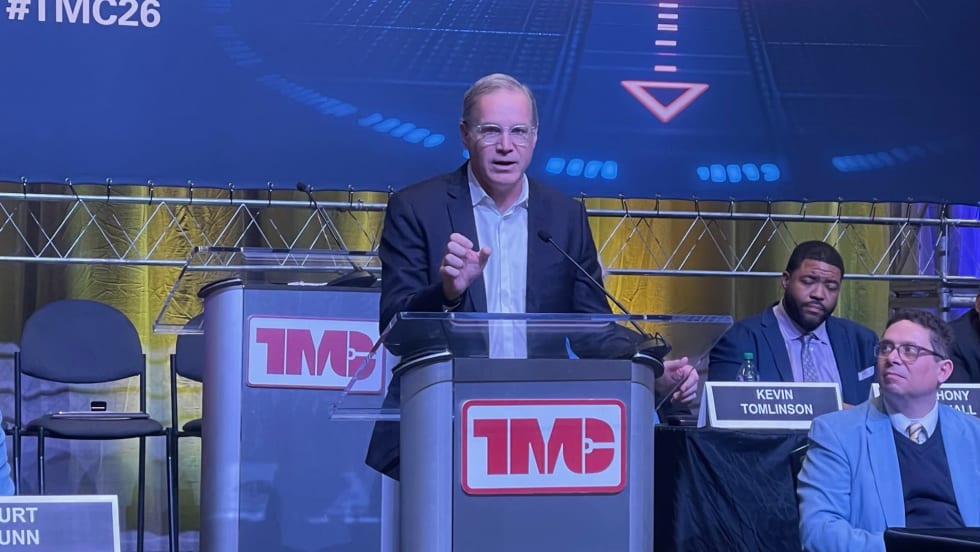
Speaking at the TMC Annual Meeting in Nashville, ATA President Chris Spear said trucking faces mounting pressure from rising fuel prices, geopolitical instability, and uncertainty around trade policy.
Read More →
More than 100,000 new trucking companies enter the industry each year, but regulators manage to audit only a fraction of them. That churn creates opportunities for inexperienced startups — and for “chameleon carriers” that shut down after safety violations and reappear under new identities. Read more from Deborah Lockridge in this commentary.
Read More →
HDTX is an intimate event that connects heavy-duty trucking fleet managers with industry suppliers through small-group discussions, educational sessions, and structured one-on-one meetings.
Read More →
New DAT One feature shows top-paying loads directly on an iPhone’s home screen, helping carriers react faster to spot-market opportunities.
Read More →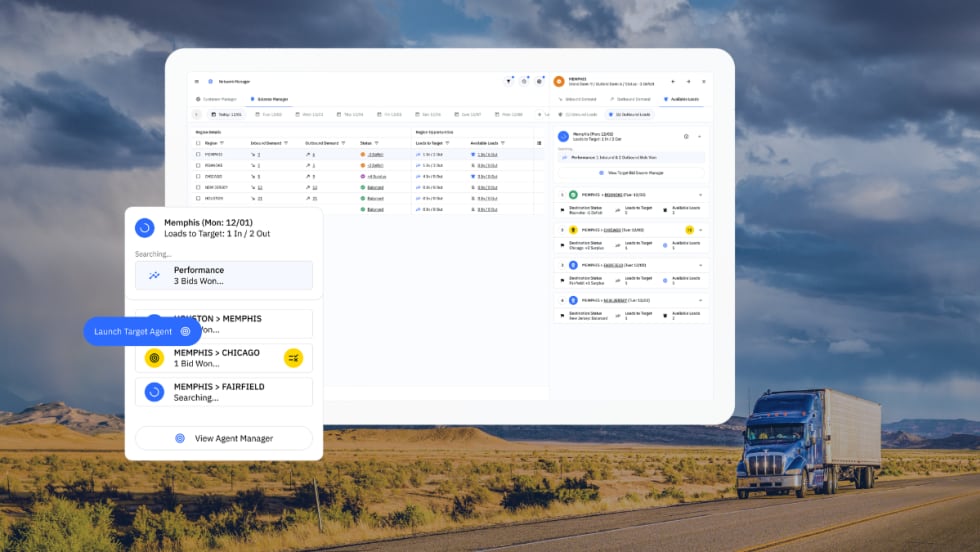
Optimal Dynamics says its new Scale platform uses AI agents and optimization to help carriers find and secure freight that improves network balance and profitability.
Read More →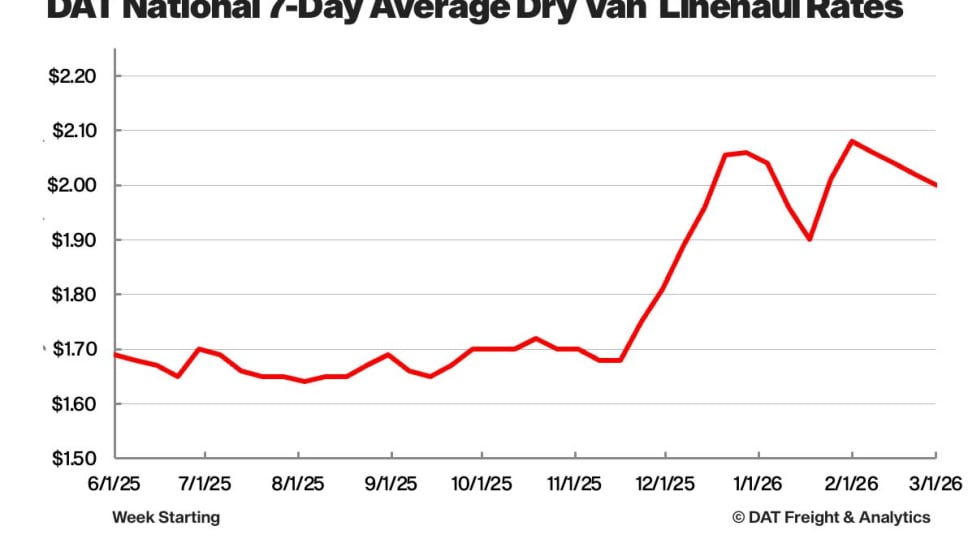
DAT Freight & Analytics data shows tightening flatbed capacity, easing produce markets, and softening van and reefer rates.
Read More →
NACFE's Run on Less - Messy Middle project demonstrates the power of data in helping to guide the future of alternative fuels and powertrains for heavy-duty trucks.
Read More →