




The Port of Oakland Commission tentatively voted Tuesday to support a national goods movement policy, which would amend a federal law that limits local or state regulation related to the price, route or service of any motor carrier. In the meantime, the commission has directed staff to make some minor language changes to the resolution, to make it clear that Oakland is speaking for itself, not "all West Coast ports."
Oakland Port Weighs Exemption to Regulate Drayage
The Port of Oakland Commission tentatively voted Tuesday to support a national goods movement policy, which would amend a federal law that limits local or state regulation related to the price, route or service of any motor carrier. In the meantime, the commission has directed staff to make some minor language changes to the resolution, to make it clear that Oakland is speaking for itself, not "all West Coast ports.
by Staff
July 22, 2009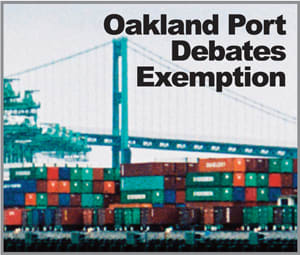
3 min to read
The board will vote on the revised resolution July 30.
The American Trucking Associations says the resolution is a move to get an exemption for port drayage hauls of less than 50 miles and move toward a more employee-based drayage system.
The port has been considering to push for an amendment to the Federal Aviation Administration Authorization Act to allow ports to set regulations to improve operational efficiency and environmental programs. The national goods movement policy that it calls for focuses on port funding, infrastructure, operational efficiencies and environmental protections. The policy would also equalize market competitiveness of the West Coast ports in relation to other ports, according to supporters.
"The unions and [Oakland Harbor Commission President Victor] Uno aim to destroy small independent businesses serving the Port of Oakland and replace them with larger trucking companies whose employees can be more easily organized by the Teamsters," said Clayton Boyce, ATA vice president of public affairs, in a statement denouncing the port's actions as misleading. "Unions and their supporters are wrongly claiming that banning independent owner-operators from the Port of Oakland is necessary to clean the air. The recent experience in the Port of Los Angeles, where clean air efforts are far ahead of schedule even though the L.A. ban on owner-operators has been enjoined, has shown that claim to be false."
The U.S. Court of Appeals and a U.S. District Court ruled earlier this year that banning owner-operators from ports likely violates federal law, rejecting the Port of Los Angeles's claim that a ban was needed to help it achieve its environmental and safety goals.
The Oakland port passed a clean truck program June 16, which included a vote to ban older, polluting trucks from the port. Los Angeles and Long Beach have implemented similar programs.
During the development of the program, Oakland port officials recruited Beacon Economics to perform an economic impact analysis to gain a better understanding of the drayage industry serving the port. As part of the review, Beacon Economics recommended the board adopt a drayage model that is more heavily reliant on employee drivers.
The Coalition for Clean & Safe Ports and the port commission expressed support for the recommendation. The coalition contends that independent contractors average $10 to $11 per hour and can't afford to go into debt to buy or retrofit a new truck to meet new state air quality standards.
"The port is taking the right steps toward protecting public health by holding the highly polluting industry accountable for clean air," said Christine Cordero of the Center for Environmental Health.
"Unless Congress brings transportation law into the 21st century, we will fail to permanently reduce the toxic diesel pollutants that are contributing to serious illnesses such as asthma and cancer amongst children, port drivers and residents," said Uno.
The ATA says port officials are ignoring many of the findings of the Beacon study:
* The majority of truckers serving the port are owner-operators and don't want to become employee drivers.
* Owner-operator and employee driver earnings are comparable and significantly higher than non-drayage truck driver earnings.
* Costs of regulatory compliance as well as employee driver requirement would increase drayage rates by up to 53 percent.
* The supply chain would bear the brunt of the costs associated with regulatory compliance.
"The unions are willing to disrupt national transportation policy, undermine thousands of small businesses and place millions of dollars of unnecessary cost on freight transportation, just to allow them to better advance their organizing goals," the ATA said in a press release.
To read the Agenda Report, click here.
More Fleet Management

'Beyond Compliance,' Regulations, Driver Coaching on ATRI’s 2026 Research List
The American Transportation Research Institute will examine driver coaching, regulatory impacts — including the "Beyond Compliance" concept —and weather disruptions that shape trucking operations.
Read More →
Fleet Advantage's Brian Antonellis on the Growing Need to Replace Old Trucks
Fleet Advantage's Brian Antonellis says it's time for fleets to get back to the fundamentals of good maintenance practices. And that includes replacing older, inefficient equipment.
Read More →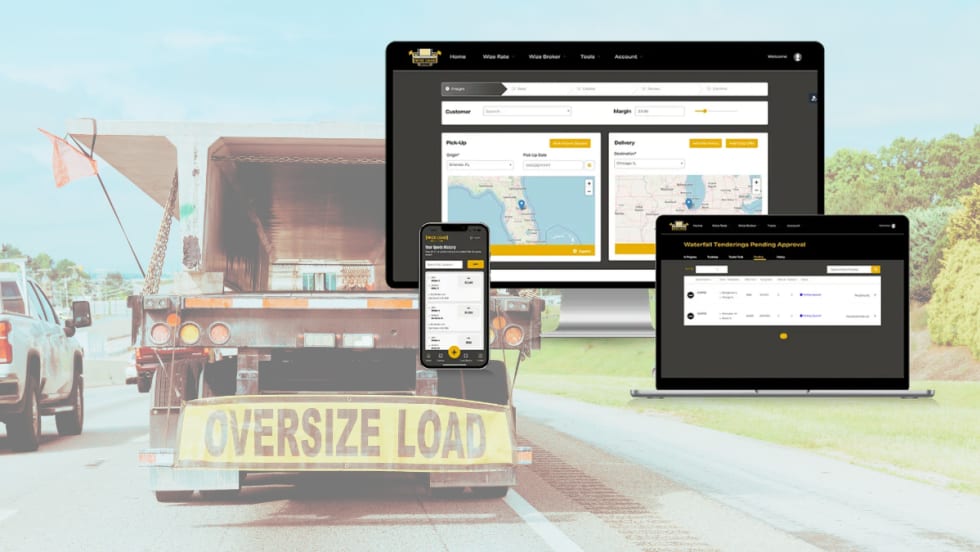
Truckstop.com Adding to Open Deck, Heavy Haul Offerings
Load matching for flatbed, lowbed, oversize and overweight loads can't be automated like basic van freight, but Truckstop.com is adding more high-tech tools to help.
Read More →
Trucker Path, Truckstop.com Expand Load Access Partnership
An expanded Trucker Path and Truckstop.com integration brings more freight opportunities into the TruckLoads app while emphasizing security and network quality.
Read More →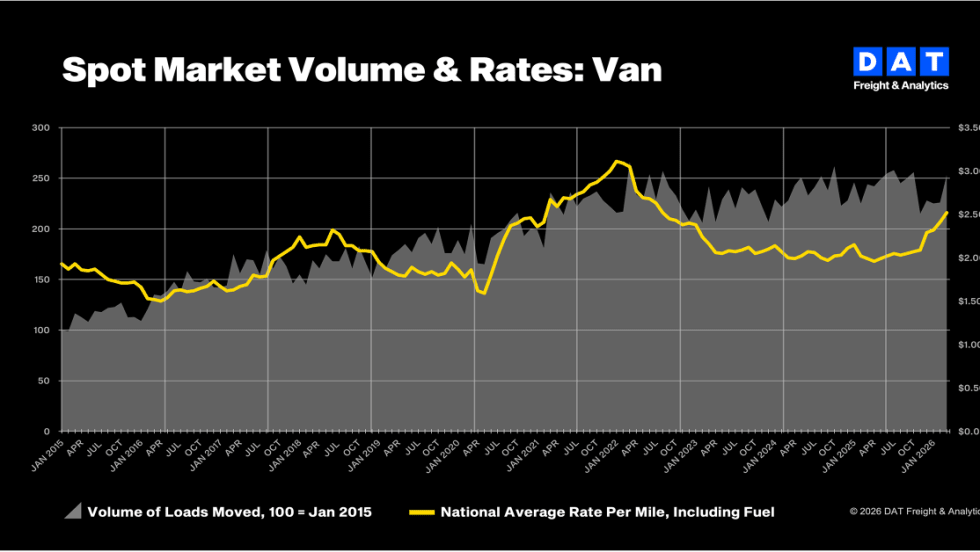
Truckload Rates Hit Two-Year Highs as Diesel Costs Surge, DAT Says
Strong March freight demand combined with a spike in fuel costs pushed both spot and contract truckload rates to their highest levels in more than two years.
Read More →
The AI Conversation You Need to Have with Your TMS Provider
Everyone’s talking about AI — but is your transportation management system actually built for it?
Read More →
Kriska Buys Fellow Canadian Carrier Sharp Transportation Systems
Being part of KTG will allow Sharp to expand and improve its services.
Read More →
Bill in House Would Raise Minimum Insurance for Motor Carriers to $5 Million
The Fair Compensation for Truck Crash Victims Act would increase insurance requirements for interstate motor carriers by nearly seven times.
Read More →
FTR Trucking Conditions Index Hits Four-Year High in February
Strong freight rates push TCI to 10.2, but FTR expects fuel-price volatility to skew March results.
Read More →
C.H. Robinson Offers Carriers Relief as Diesel Prices Surge
C.H. Robinson is waiving fees on fuel cards and cash advances for April and May, aiming to help carriers offset rising diesel costs tied to geopolitical instability.
Read More →