Obama Administration Announces First Fuel Economy Standards for Medium and Heavy Trucks
President Obama today announced first-of-their-kind fuel efficiency standards for trucks, buses, and other heavy-duty vehicles, saying the new rules will save American businesses who operate and own these commercial vehicles approximately $50 billion in fuel costs over the life of the program
by Staff
August 8, 2011
6 min to read
President Obama today announced first-of-their-kind fuel efficiency standards for trucks, buses, and other heavy-duty vehicles, saying the new rules will save American businesses who operate and own these commercial vehicles approximately $50 billion in fuel costs over the life of the program.
Ad Loading...
In May 2010, the president signed an executive order calling on the Environmental Protection Agency and the National Highway Traffic Safety Administration to develop national standards for fuel economy and greenhouse gas emissions for medium and heavy trucks. By the end of 2010, a proposal had been published to establish standards for heavy-duty and medium-duty tractors, and for engines, starting in 2014. Trailers are not covered. Early reaction to the proposal was generally positive.
Under the comprehensive new national program, trucks and buses built in 2014 through 2018 will reduce oil consumption by a projected 530 million barrels and greenhouse gas (GHG) pollution by approximately 270 million metric tons. This program - which relies heavily on off-the-shelf technologies - was developed in coordination with truck and engine manufacturers, fleet owners, the state of California, environmental groups and other stakeholders.
"While we were working to improve the efficiency of cars and light-duty trucks, something interesting happened," said President Obama. "We started getting letters asking that we do the same for medium and heavy-duty trucks. They were from the people who build, buy, and drive these trucks. And today, I'm proud to have the support of these companies as we announce the first-ever national policy to increase fuel efficiency and decrease greenhouse gas pollution from medium-and heavy-duty trucks."
The Rules
In recognition of the variety and complexity of trucking operations, the standards will be based on the work the truck does - gallons per ton-mile and grams of carbon dioxide per ton-mile, rather than the traditional miles per gallon and grams per brake horsepower hour.
The joint DOT/EPA program will include a range of targets which are specific to the diverse vehicle types and purposes. Vehicles are divided into three major categories: combination tractors (semi-trucks), heavy-duty pickup trucks and vans, and vocational vehicles (like transit buses and refuse trucks). Within each of those categories, even more specific targets are laid out based on the design and purpose of the vehicle. This flexible structure allows serious but achievable fuel efficiency improvement goals charted for each year and for each vehicle category and type.
The standards are expected to yield an estimated $50 billion in net benefits over the life of model year 2014 to 2018 vehicles, and to result in significant long-terms savings for vehicle owners and operators.
By the 2018 model year, the program is expected to achieve significant savings relative to current levels, across vehicle types. Combination tractors will be required to achieve up to approximately 20% reduction in fuel consumption and greenhouse gas emissions by model year 2018, saving up to 4 gallons of fuel for every 100 miles traveled.
For heavy-duty pickup trucks and vans, separate standards are required for gasoline-powered and diesel trucks. These vehicles will be required to achieve up to approximately 15% reduction in fuel consumption and greenhouse gas emissions by model year 2018. Under the finalized standards a typical gasoline or diesel powered heavy-duty pickup truck or van could save one gallon of fuel for every 100 miles traveled.
Vocational vehicles - including delivery trucks, buses, and garbage trucks - will be required to reduce fuel consumption and greenhouse gas emissions by approximately 10% by model year 2018. These trucks could save an average of one gallon of fuel for every 100 miles traveled.
Earlier this year, industry experts predicted that the federal government's planned requirements for minimum fuel economy and limited carbon dioxide emissions will add little or no cost to trucks built starting in 2014 while saving money for buyers.
The heavy-duty truck standards will increase the cost of the average truck by about $6,220, but that investment will pay off in less than a year through reduced fuel costs and will save about $73,000 in fuel costs throughout the life of the truck, officials said.
Most reaction positive
Industry groups were quick to release statements in response to the new rules, most of them positive.
American Trucking Association praised the announcement. "While it is too early to know all the potential effects of this rule, we do know it sets us on the path to a future where we depend less on foreign oil, spend less on fuel and contribute less to climate change," said ATA President and CEO Bill Graves. However, he said, the U.S. could do more to cut fuel use, such as setting a national speed limit of 65 mph for all vehicles and requiring trucks to be governed at that speed.
The Diesel Technology Forum noted that this is a national program uniform to all 50 states, and that there is ample lead time for manufacturers to make changes in technology for the diverse vehicle population.
The Forum said many initial gains in fuel efficiency will be realized through improvements in the efficiency of the diesel engines, including further advances in combustion efficiency, waste heat recovery, improved efficiency through advanced turbocharging and fuel injection. Other technologies such as lower rolling resistance tires and aerodynamics, idle reduction strategies and other approaches may also be suitable as a total vehicle approach. Many of the proposed technology solutions are "off the shelf" and the rule advances their wider spread implementation.
Navistar and Cummins, which were both involved in the development of the standards, issued statements affirming their support for the historic regulation.
"Environmental regulations can often be difficult for industry, adding cost and complexity. So early on, Cummins set out with the goal of helping the government establish a clear, consistent, challenging and enforceable regulation that recognizes the needs of business and provides incentives to companies that create innovative technologies as well as jobs in this country," said Rich Freeland, president of Cummins' Engine Business. "This regulation will add real value for our customers as better fuel economy lowers their operating costs while significantly benefitting the environment."
The Engine Manufacturers Association and the Truck Manufacturers Association, while praising a "uniform, national program" and the fact that EPA and NHTSA were willing to listen to manufacturers' concerns, also said it would be challenging.
Jed Mandel, EMA/TMA president, said in a statement that the EPA and NHTSA rule establishes an ambitious program that attempts to address the many diverse engines and vehicles in the commercial transportation sector.
"The rule establishes a completely new regulatory scheme requiring integration of more efficient powertrains together with fuel-saving components such as low rolling resistance tires and features to improve aerodynamics," he said. "Commercial truck manufacturing is highly customized and very complex; implementing a new and innovative regulatory program would be difficult under any timeframe. It will be especially challenging given the very short time before implementation. Nevertheless, we are optimistic that this program provides a realistic opportunity to meet that challenge."
Overlooking driver training
Ad Loading...
The Owner Operator Independent Drivers Association, however, called the administration's announcement "a flawed, one-size-fits-all rule." OOIDA said it ignores input from small-busienss trucking, overlooks less expensive options, and will ultimately increase new truck costs.
"They also totally overlooked the most effective fuel-savings method of all," said Joe Rajkovacz, director of regulatory affairs for OOIDA. "Driver training, which is responsible for 35% of fuel economy and which costs far less than any new technology, should have been the priority."
In 2010, OOIDA says, the National Academy of Sciences found evidence that driver training offers potential fuel savings for the trucking sector that rivals the savings available from technology add-ons and mandates. The Academy called for consideration of this alternative before any regulation was developed.
"This rulemaking basically takes EPA's SmartWay program and mandates participation -- regardless of whether certain technologies are appropriate for a particular operation," Rajkovacz said.
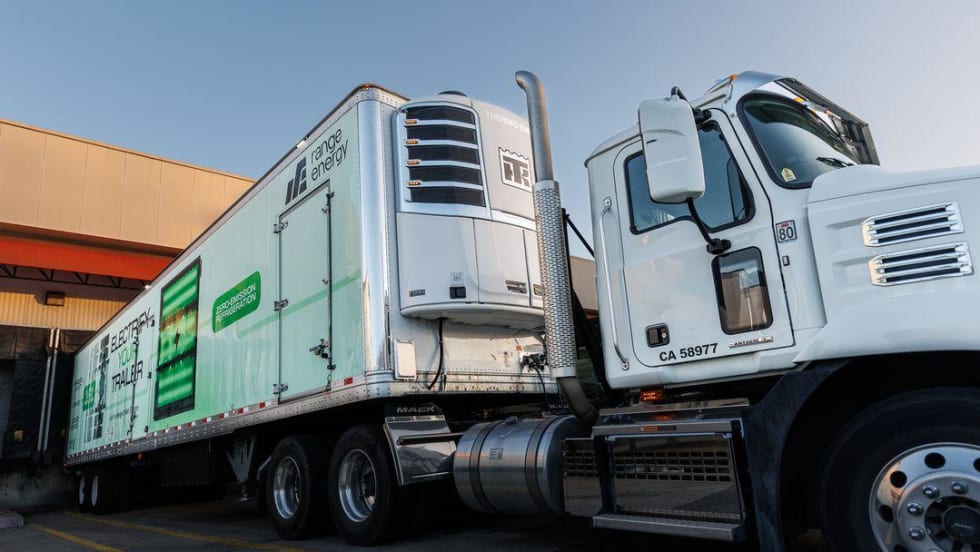
Range Energy said its production-ready eTrailer system proved it can boost stability, safety, and efficiency in sub-zero winter conditions as the company moves toward scaled deployment.
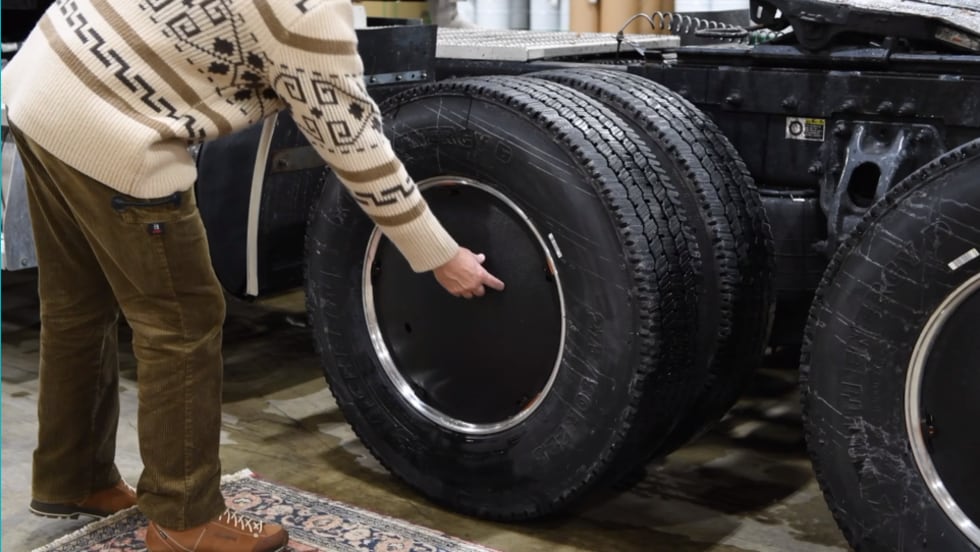
Watch to learn how Deflecktor's new wheel cover design is taking a simpler approach to aerodynamics, with an eye toward making it more practical for both trucks and trailers.
Aerodynamic wheel covers can deliver small but meaningful fuel-economy gains for fleets, and Deflecktor says its latest design aims to make the technology easier and more affordable to deploy.
When diesel prices are as volatile as they've been in 2026, it makes it tough for trucking fleets to plan and control costs. Breakthrough Fuel's Jenny Vander Zanden has insights on near-term savings strategies.
Hydrogen combustion engine trucks will be especially suitable over longer distances and in regions where there is limited charging infrastructure or time for recharging of battery-electric trucks, according to the company.
Trucking operators are slowing speeds, cutting empty miles, and declining unprofitable freight as diesel costs continue to rise due to conflict in the Middle East.