



President Obama proposed a tax reform deal that would include a big, one-time investment in infrastructure.
 MENU
MENU SEARCH
President Obama proposed a tax reform deal that would include a big, one-time investment in infrastructure. In remarks Tuesday at an Amazon Fulfillment Center in Chattanooga, Tenn., Obama said he would support lowering the corporate tax rate from 35% to 28%, and to 25% for manufacturers.


President Obama proposed a tax reform deal that would include a big, one-time investment in infrastructure.
In remarks Tuesday at an Amazon Fulfillment Center in Chattanooga, Tenn., Obama said he would support lowering the corporate tax rate from 35% to 28%, and to 25% for manufacturers.
His plan would pay for the change by eliminating tax loopholes and creating incentives to bring business back from overseas, such as installing a minimum tax on foreign earnings. It also would simplify tax filing and allow small businesses to expense up to $1 million in investments.
He did not detail the numbers but said that the changes could produce one-time revenues for a variety of investments to support job growth, including his “Fix It First” infrastructure proposal.
That proposal, which he first outlined in is State of the Union address last February, calls for a frontloaded $50 billion infrastructure investment, to include $40 billion for deferred maintenance on highways, bridges, transit systems and airports.
He also is calling for a Partnership to Rebuild America to attract private capital to infrastructure investment.
The speech was the fourth stop in an extended grassroots reach-out to build support for the administration’s approach to creating jobs and strengthening the middle class.
“If Washington wants a grand bargain, how about a grand bargain for middle class jobs,” he said.
The tax reform proposal is intended to appeal to Republicans in Congress who believe lower tax rates will give the economy a boost.
“I don’t want Republicans to say no just because it’s my idea,” he said.
Obama did not mention the traditional method of infrastructure funding – user fees collected as fuel taxes, dispensed through the Highway Trust Fund.
This approach has the benefit of providing a long-term revenue stream that gives states confidence to plan for big projects, but the levy has not been raised since 1993 and the trust fund is gradually drying up.
Obama has opposed raising fuel taxes in the past, citing the negative impact on consumers in tough economic times.
His Republican political opposition in Congress also has opposed raising fuel taxes.
Congress and the administration have a little over a year to figure out a solution, since the current highway program expires a year from October.
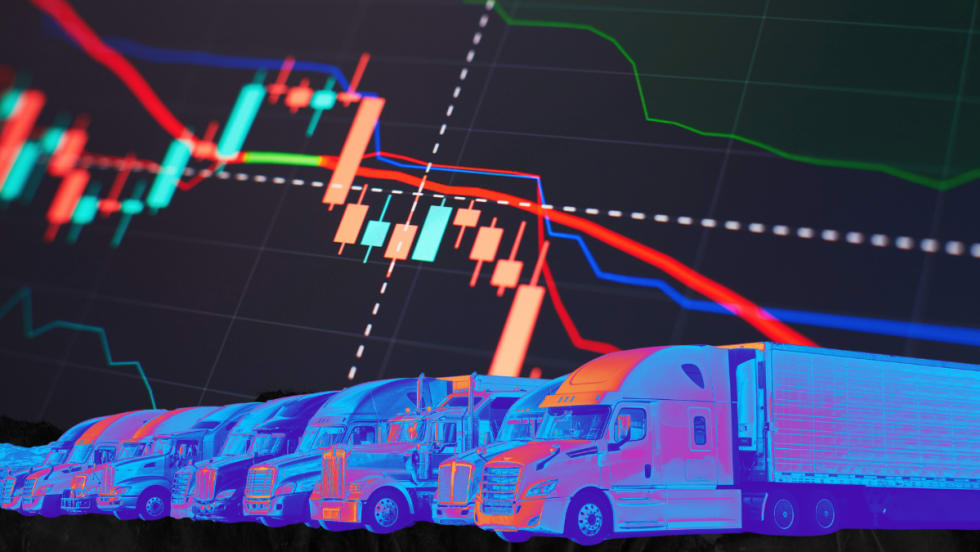
ACT Research data shows volumes hitting a four-year high and supply-demand balance strengthening, but higher oil prices are undercutting tariff relief and tempering optimism.
Read More →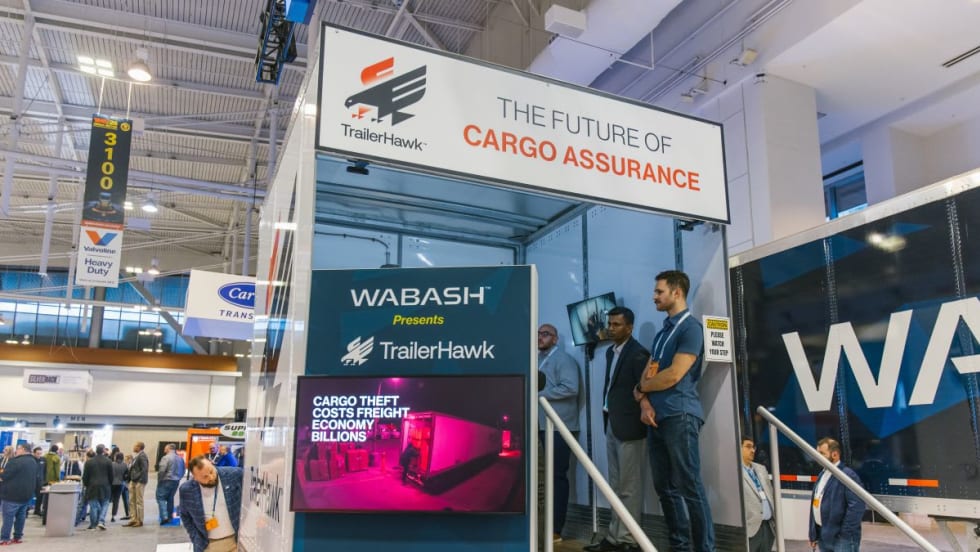
The patent-pending cargo solution integrates a digitally connected cargo door and an intelligent locking system with the TrailerHawk.AI technology platform.
Read More →
The impact of the Iran conflict extends beyond fuel costs, bringing more fraud and cybersecurity risks to the trucking industry.
Read More →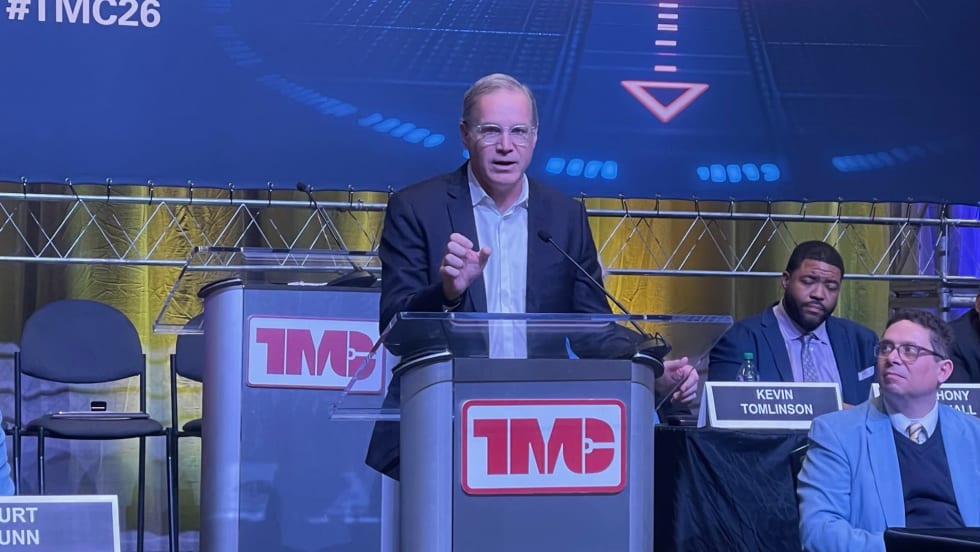
Speaking at the TMC Annual Meeting in Nashville, ATA President Chris Spear said trucking faces mounting pressure from rising fuel prices, geopolitical instability, and uncertainty around trade policy.
Read More →
More than 100,000 new trucking companies enter the industry each year, but regulators manage to audit only a fraction of them. That churn creates opportunities for inexperienced startups — and for “chameleon carriers” that shut down after safety violations and reappear under new identities. Read more from Deborah Lockridge in this commentary.
Read More →
HDTX is an intimate event that connects heavy-duty trucking fleet managers with industry suppliers through small-group discussions, educational sessions, and structured one-on-one meetings.
Read More →
New DAT One feature shows top-paying loads directly on an iPhone’s home screen, helping carriers react faster to spot-market opportunities.
Read More →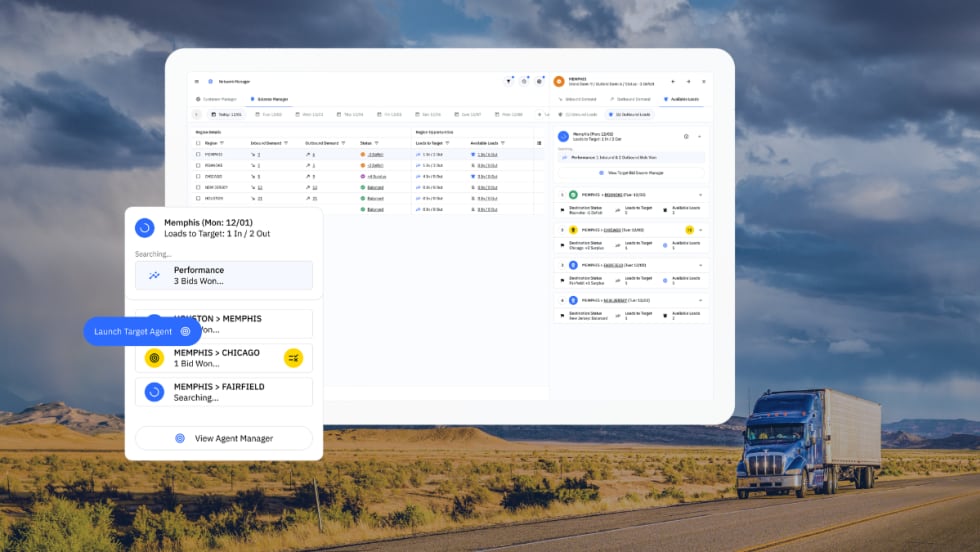
Optimal Dynamics says its new Scale platform uses AI agents and optimization to help carriers find and secure freight that improves network balance and profitability.
Read More →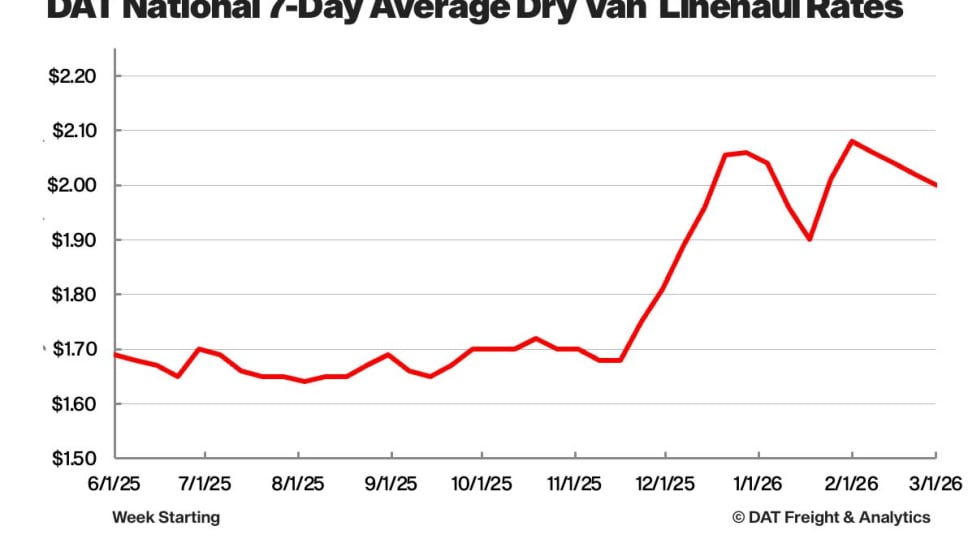
DAT Freight & Analytics data shows tightening flatbed capacity, easing produce markets, and softening van and reefer rates.
Read More →
NACFE's Run on Less - Messy Middle project demonstrates the power of data in helping to guide the future of alternative fuels and powertrains for heavy-duty trucks.
Read More →