




Keith Tuttle, president of Motor Carrier Services Inc., Northwood, Ohio, told the House Transportation and Infrastructure Committee that congestion is choking the nation's supply chain and economy.
"As the owner of a small trucking company of 90 trucks, I know our nation's inventory moves in our industry's trailers," Tuttle said Feb. 19 at a committee field hearing overseen by Chairman John Mica. "We can talk about shifting goods to rail or boosting intermodal freight, but the great majority of this country's cities are still served only by trucks."
Tuttle, chairman of American Trucking Associations' Small Carrier Advisory Committee, said that congestion across the country can prevent his trucks from making their appointed rounds.
"From our headquarters in northwest Ohio, if we have to send trucks to deep into Chicago - near the airports or to the north side - it is impossible for us to drop our load, pick up a new load and return home because of the congestion," he said. "Our primary run takes us to New Jersey, where we deliver cans that are used in production the next day typically, and congestion can prevent those trucks from getting there on time."
Tuttle told the panel that those congestion problems would only be exacerbated by proposed changes to the hours-of-service rules that govern truckers since the Obama administration is contemplating reducing the allowable driving time to 10 hours from the current limit of 11 and making changes to the 34-hour restart that would require it be taken over two nights.
Those changes he said would put more trucks on the road adding to already congested roads.
Tuttle said it was important to increase funding for infrastructure and that as an industry "trucking supports raising the fuel tax if it is used on things that improve efficiency."
"The fuel tax is by far the most efficient system for raising the funds we need," he said, adding that ATA was opposed to use of tolls to pay for needed infrastructure improvements.
Ohio Trucking Exec Says Traffic Congestion is Choking Nation's Economy
Keith Tuttle, president of Motor Carrier Services Inc., Northwood, Ohio, told the House Transportation and Infrastructure Committee that congestion is choking the nation's supply chain and economy
More Drivers

FMCSA Extends Paper Medical Card Exemption … Again
Five states still aren't ready to accept commercial driver medical exam information directly from the medical examiner's registry.
Read More →
Mack Launches Digital Driver Guide for Chassis-Specific Truck Info
Mack’s new, virtual owner’s manual delivers VIN-based, on-demand guidance for vehicle systems via web, app, and soon in-cab displays.
Read More →
Western Star Showcases Truckers' Pride and Skill
Western Star is expanding its Star Nation Experience in 2026, adding new competitions and dealer participation to highlight operator skills and promote careers in trucking.
Read More →
Best Fleets to Drive For: Two Carriers Earn Overall Award for First Time
CarriersEdge announced the 2026 Best Fleets to Drive For overall winners, with Crawford Trucking, Fortigo Freight Services, and FTC Transportation receiving top awards.
Read More →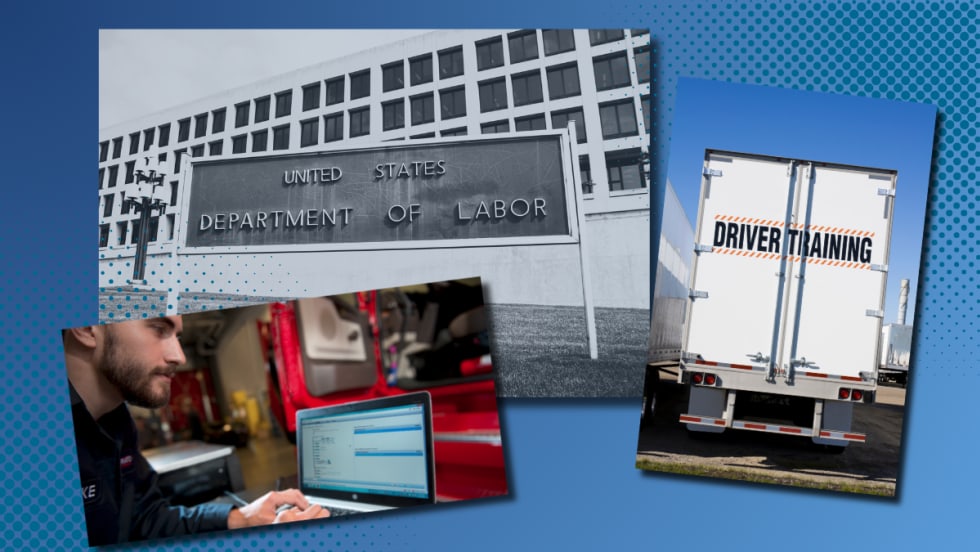
Federal Proposal Would Allow Pell Grants for Shorter-Term Job Training
The Department of Labor plans to expand Pell Grant eligibility to some shorter workforce training programs, a move the American Trucking Associations said will help strengthen commercial driver training schools and diesel technician training programs.
Read More →
Owner-Operator Model Gets Boost as DOL Proposes 2024 Independent Contractor Definition Reversal
For an industry that has watched this issue go back and forth for years, the independent contractor proposal marks the latest swing in the regulatory pendulum.
Read More →
FMCSA Reinstates Field Warrior ELD to Registered Device List
One electronic logging device has been reinstated to the FMCSA's list of registered ELDs.
Read More →
How One Company is Using Smart Suspension Technology to Reduce Driver Injuries and Improve Retention
America’s Service Line adopted Link’s SmartValve and ROI Cabmate systems to address whole-body vibration, repetitive strain, and driver turnover. The trucking fleet is already seeing measurable results.
Read More →
CarriersEdge Announces 2026 Best Fleets to Drive For
The 18th annual contest recognizing the best workplaces for truck drivers sees changes to Top 20, Hall of Fame
Read More →
FMCSA Targets 550+ ‘Sham’ CDL Schools in Nationwide Sting Operation
The Federal Motor Carrier Safety Administration issued more than 550 notices of proposed removal to commercial driver training providers following a five-day nationwide enforcement sweep. Investigators cited unqualified instructors, improper training vehicles, and failure to meet federal and state requirements.
Read More →