




The Owner-Operator Independent Drivers Association has flung a Hail Mary pass in its quest to overturn the electronic logging device mandate, petitioning the U.S. Supreme Court to rule on whether the regulation violates the Fourth Amendment.
 MENU
MENU SEARCH
The Owner Operator Independent Drivers Association has flung a Hail Mary pass in its quest to overturn the electronic logging device mandate, petitioning the U.S. Supreme Court to rule on whether the regulation violates the Fourth Amendment.

Image: www.supremecourt.gov
The Owner-Operator Independent Drivers Association has flung a Hail Mary pass in its quest to overturn the electronic logging device mandate, petitioning the U.S. Supreme Court to rule on whether the regulation violates the Fourth Amendment.
The April 12 filing came three months to the day after OOIDA was denied a rehearing by the full U.S. Court of Appeals for the Seventh Circuit of an October ruling by a panel of that court.
The panel had found against the association, determining that the ELD rule would not violate drivers’ rights to privacy under the Fourth Amendment.
But along with the issue of protecting driver privacy, in its petition to the Supreme Court, OOIDA is also seeking a ruling on whether the ELD rule violates the Fourth Amendment by failing to establish a regulatory structure at the state and federal levels that serves as a substitute for a warrant.
“We believe that the Seventh Circuit erred in allowing warrantless searches of 3.5 million drivers, designed specifically to uncover evidence of criminal activity,” Jim Johnston, president and CEO of OOIDA said. “In doing so, the Seventh Circuit decision splits directly with rulings by both the Fifth and Eleventh Circuit Courts.
“This is also the first time that the pervasively regulated industry exception has been applied directly to the search of an individual to serve the ordinary needs of criminal law enforcement,” he added.
Johnston also said that OOIDA was “very disappointed and surprised by the ruling against us by the Seventh Circuit Court of Appeals [in January]. “That same court had ruled in our favor on a previous lawsuit of ours on this same issue.”
He added that OOIDA will also continue “to pursue the [ELD] issue on the congressional side” as part of its “Knock Out Bad Regs” campaign and it will “continue to communicate with the Trump administration about this and other regulations.”
According to OOIDA, requiring electronic monitoring devices on commercial vehicles “does not advance safety since they are no more reliable than paper logbooks for recording compliance with hours-of-service regulations.”
As it stands now, the ELD regulation is a final federal rule. Compliance will start to kick in this December.
Related: 14 Things You Need to Know Before ELDs Become Mandatory

ACT Research data shows volumes hitting a four-year high and supply-demand balance strengthening, but higher oil prices are undercutting tariff relief and tempering optimism.
Read More →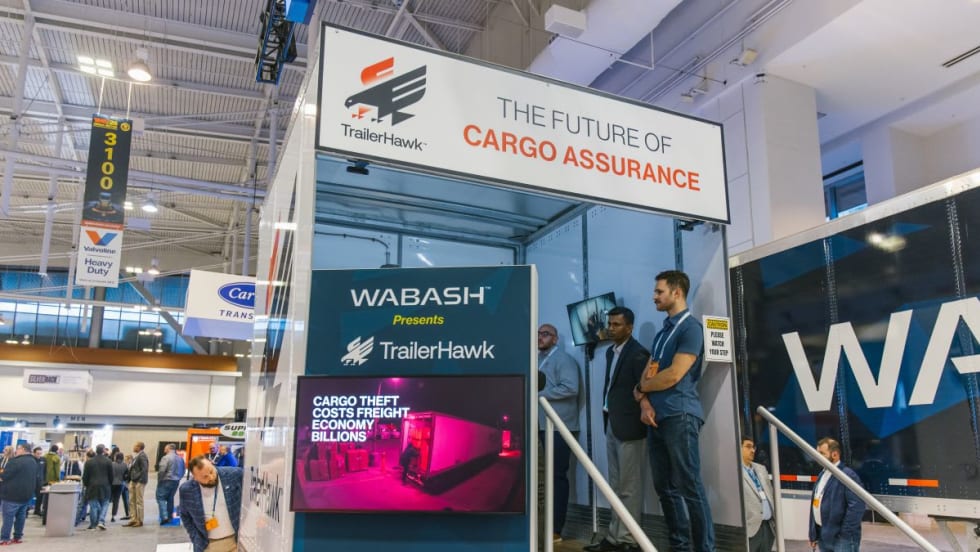
The patent-pending cargo solution integrates a digitally connected cargo door and an intelligent locking system with the TrailerHawk.AI technology platform.
Read More →
The impact of the Iran conflict extends beyond fuel costs, bringing more fraud and cybersecurity risks to the trucking industry.
Read More →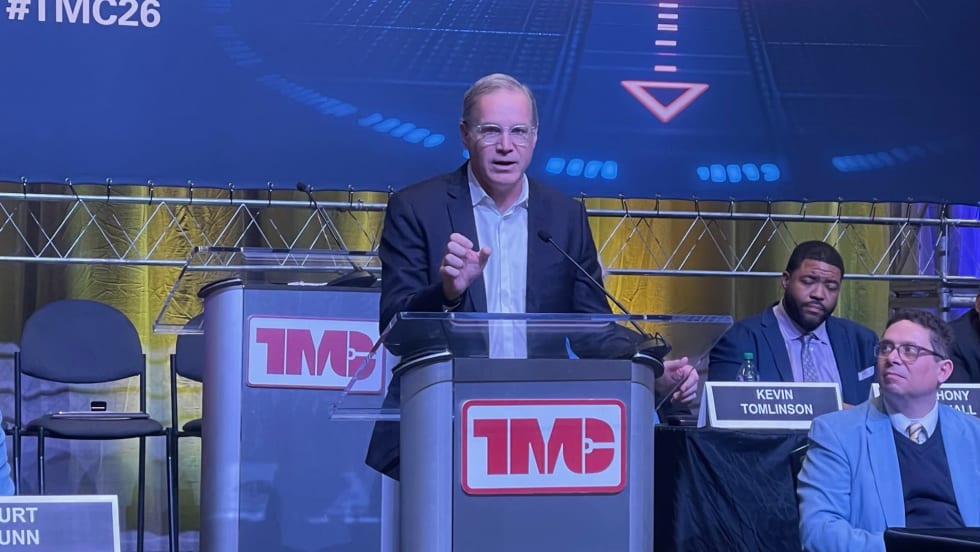
Speaking at the TMC Annual Meeting in Nashville, ATA President Chris Spear said trucking faces mounting pressure from rising fuel prices, geopolitical instability, and uncertainty around trade policy.
Read More →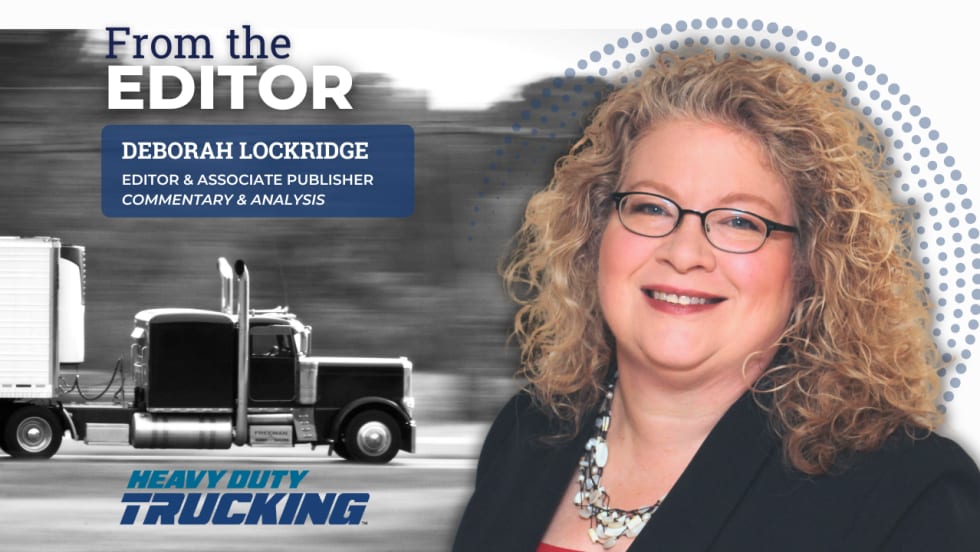
More than 100,000 new trucking companies enter the industry each year, but regulators manage to audit only a fraction of them. That churn creates opportunities for inexperienced startups — and for “chameleon carriers” that shut down after safety violations and reappear under new identities. Read more from Deborah Lockridge in this commentary.
Read More →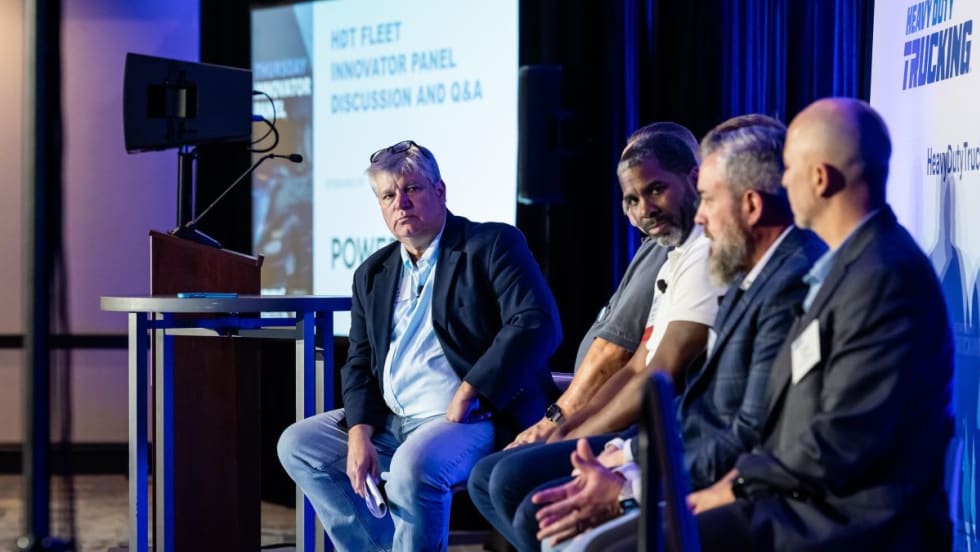
HDTX is an intimate event that connects heavy-duty trucking fleet managers with industry suppliers through small-group discussions, educational sessions, and structured one-on-one meetings.
Read More →
New DAT One feature shows top-paying loads directly on an iPhone’s home screen, helping carriers react faster to spot-market opportunities.
Read More →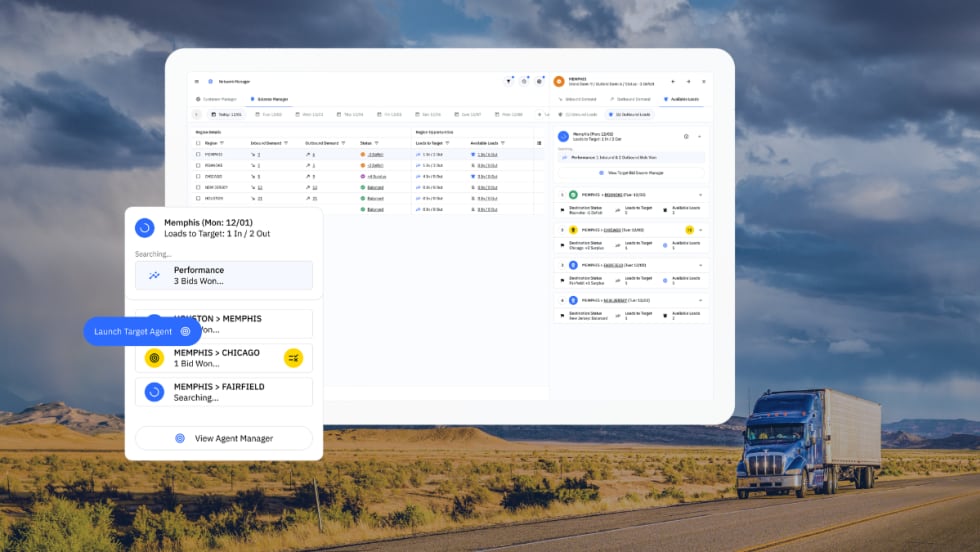
Optimal Dynamics says its new Scale platform uses AI agents and optimization to help carriers find and secure freight that improves network balance and profitability.
Read More →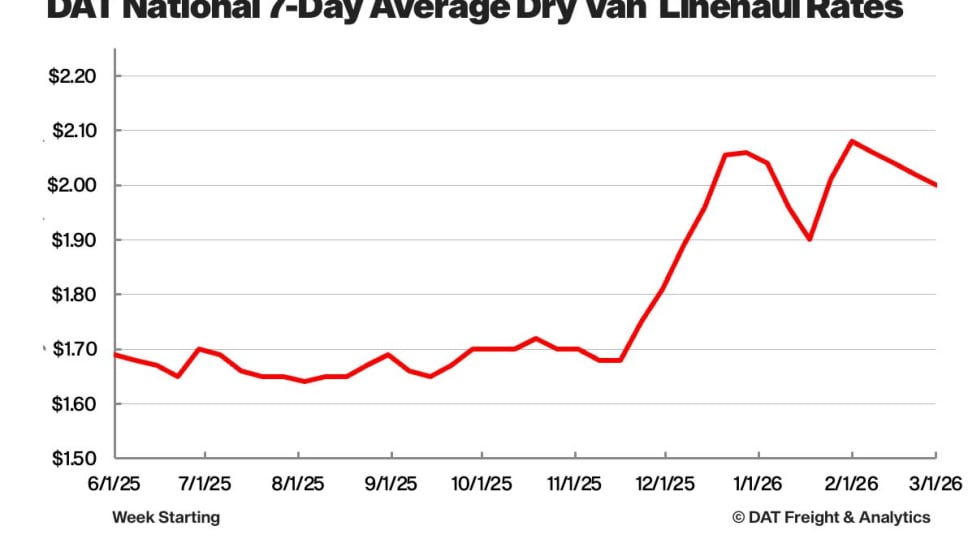
DAT Freight & Analytics data shows tightening flatbed capacity, easing produce markets, and softening van and reefer rates.
Read More →
NACFE's Run on Less - Messy Middle project demonstrates the power of data in helping to guide the future of alternative fuels and powertrains for heavy-duty trucks.
Read More →