




Railroads are becoming more brazen about accepting public money to fund track expansions. According to The Wall Street Journal, Norfolk Southern Corp. wants the state of Virginia to help it pay the projected $900 million to add a second track to the company's mostly single-track route that parallels Interstate 81. The railroad would then be able to handle much of the freight that now travels by truck on I-81, easing traffic and putting off an expensive highway-widening project.
In the past, railroads shied away from such ideas, for fear that public funding would come with strings attached. "They were clearly reluctant to work with the government," Anthony Hatch, an independent analyst in New York told WSJ. "Now, they are beginning to realize there are lots of common interests."
Several years ago, Conrail and the state of Pennsylvania jointly funded expansion of rail tunnels to handle more efficient freight trains. And in California, a public-private partnership is building a 20 mile rail corridor from the ports of Long Beach and Los Angeles to freight yards near downtown Los Angeles. The railroads, Union Pacific Corp. and Burlington Northern Santa Fe Corp., will pay back $1.5 billion of the total $2.4 billion over a 30 year period through fees on the freight that's handled.
Some economists are supporting the railroad cause.
They acknowledge that trucks are faster and more reliable, but believe rail is generally more efficient than road for hauling freight long distances. And they say rail has some environmental advantages because trains generally consume less fuel and create less pollution to move freight than trucks.
"It's a pure productivity gain," David Wyss, chief economist of Standard & Poor's told WSJ. "If you can move more goods with fewer people and less oil, the economy can grow faster."
But other railroads are suspicious of government funding. "If you get into a situation where you are accepting public funds for freight infrastructure, it allows other parties to have a say in your core business. Obviously, we are opposed to that," said Mark Hallman, a spokesman for Canadian National Railway Co., which until recent years was owned by the Canadian government.
An official of Burlington Northern Santa Fe said the company has become more "receptive to exploring these types of possibilities." Analysts said the change reflects railroads' massive capital needs, as well as the fact that they have spent so much of their own money to buy each other.
"The returns in the railroad business are still not enough to sustain the country's track network," said Scott Flower, an analyst at Salomon Smith Barney. "The railroads must thoroughly rethink how they operate and potentially how they are funded."
In Virginia, Norfolk Southern's proposal comes as the state plans to spend $3.5 billion of federal and state funds to add a lane in each direction on I-81. One reason for the widening is the heavy truck traffic -- about five million tractor-trailers a year -- on the highway.
Officials of Norfolk Southern in Norfolk, Va., noted that one of the company's rail routes closely parallels I-81 through Virginia.
With the company's takeover of Conrail track in the Northeast, the route could haul trucks on rail cars between the Gulf States and the New York market. The route would need a second track, new freight terminals and some straightening for a total cost of about a third of widening the interstate.
"If we are ever going to be truly competitive, we have to have an even playing field," said Wiley Mitchell Jr., a senior general counsel of Norfolk Southern. "That is just as fair and should be just as much acceptable policy to invest money in a right-of-way for a railroad as it is to invest money in a right-of-way for trucks."
But trucking interests are skeptical of the Norfolk Southern proposal. "At this stage, we have a problem with diverting scarce highway construction resources to an untried endeavor," said Mike Russell, a spokesman for the American Trucking Assn. "Regardless of the response to the Norfolk Southern proposal, I-81 will need work."
Officials at the Virginia Department of Transportation said they will study the Norfolk Southern proposal. They will gather information about the origins and destinations of trucks on I-81 to help determine how many trucks the railroad could divert from the highway.
Public Money May Be Used to Fund Railway Expansion
Railroads are becoming more brazen about accepting public money to fund track expansions. According to The Wall Street Journal, Norfolk Southern Corp. wants the state of Virginia to help it pay the projected $900 million to
More Fleet Management

'Beyond Compliance,' Regulations, Driver Coaching on ATRI’s 2026 Research List
The American Transportation Research Institute will examine driver coaching, regulatory impacts — including the "Beyond Compliance" concept —and weather disruptions that shape trucking operations.
Read More →
Fleet Advantage's Brian Antonellis on the Growing Need to Replace Old Trucks
Fleet Advantage's Brian Antonellis says it's time for fleets to get back to the fundamentals of good maintenance practices. And that includes replacing older, inefficient equipment.
Read More →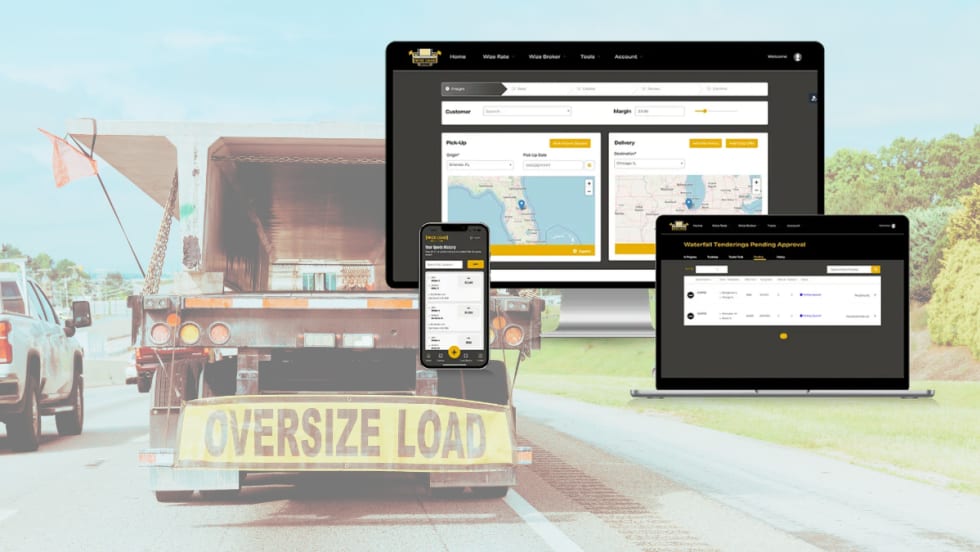
Truckstop.com Adding to Open Deck, Heavy Haul Offerings
Load matching for flatbed, lowbed, oversize and overweight loads can't be automated like basic van freight, but Truckstop.com is adding more high-tech tools to help.
Read More →
Trucker Path, Truckstop.com Expand Load Access Partnership
An expanded Trucker Path and Truckstop.com integration brings more freight opportunities into the TruckLoads app while emphasizing security and network quality.
Read More →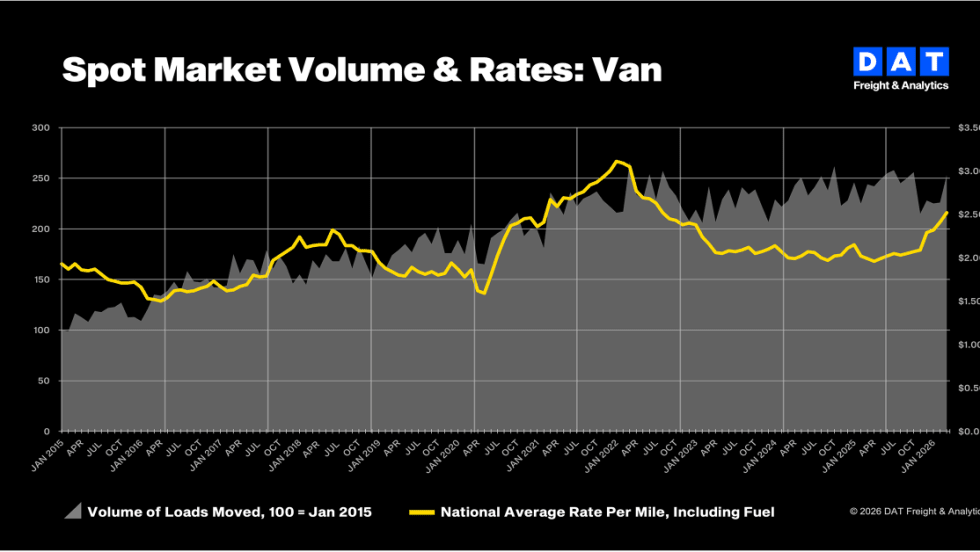
Truckload Rates Hit Two-Year Highs as Diesel Costs Surge, DAT Says
Strong March freight demand combined with a spike in fuel costs pushed both spot and contract truckload rates to their highest levels in more than two years.
Read More →
The AI Conversation You Need to Have with Your TMS Provider
Everyone’s talking about AI — but is your transportation management system actually built for it?
Read More →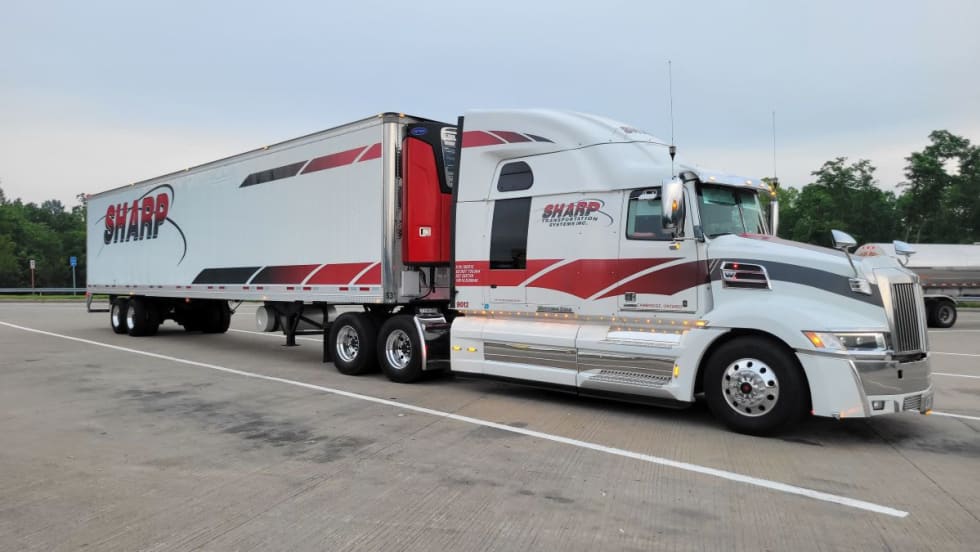
Kriska Buys Fellow Canadian Carrier Sharp Transportation Systems
Being part of KTG will allow Sharp to expand and improve its services.
Read More →
Bill in House Would Raise Minimum Insurance for Motor Carriers to $5 Million
The Fair Compensation for Truck Crash Victims Act would increase insurance requirements for interstate motor carriers by nearly seven times.
Read More →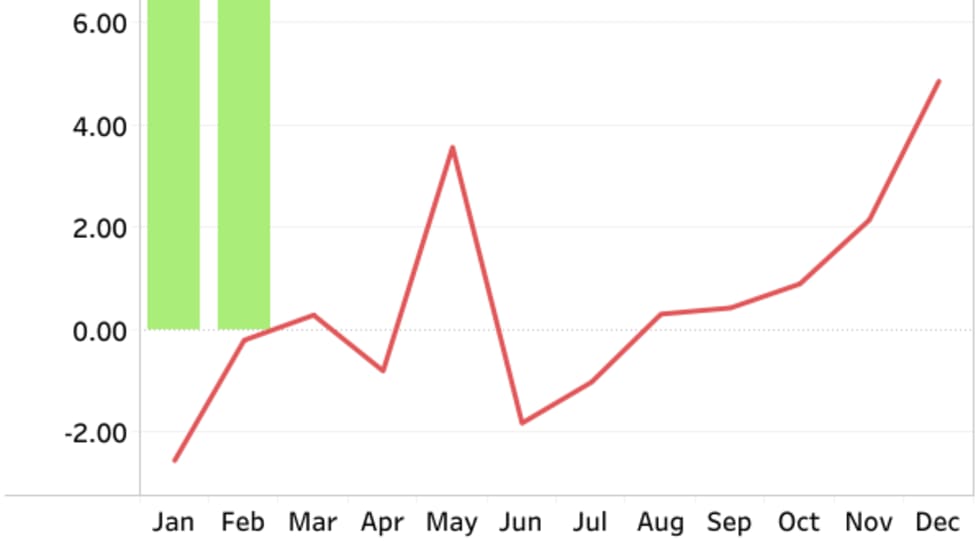
FTR Trucking Conditions Index Hits Four-Year High in February
Strong freight rates push TCI to 10.2, but FTR expects fuel-price volatility to skew March results.
Read More →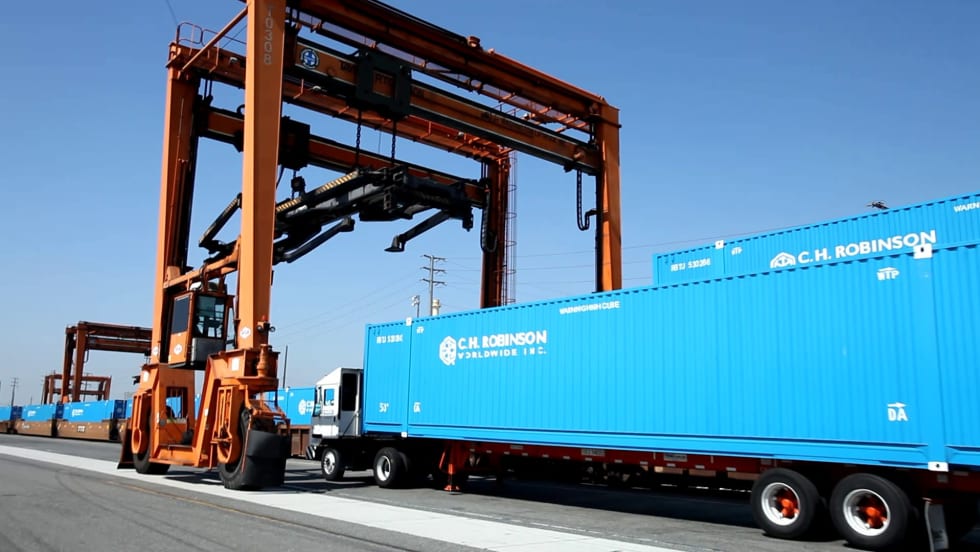
C.H. Robinson Offers Carriers Relief as Diesel Prices Surge
C.H. Robinson is waiving fees on fuel cards and cash advances for April and May, aiming to help carriers offset rising diesel costs tied to geopolitical instability.
Read More →