




The difference between an intersection controlled by flashing lights and one controlled by a stop sign can play a big role in accident prevention, according to a new study by researchers at The University of Texas at Austin.
The presence of flashing lights increases the probability of an accident by more than threefold, and intersections on frontage roads are among the most crash-prone for motorists.
The study, led by Cockrell School of Engineering Professor Chandra Bhat and his graduate students, Marisol Castro and Rajesh Paleti, examines which types of intersections are most dangerous for drivers, and its findings could lead to improved guidelines on how to design and construct safer intersections.
Bhat's study, which will be presented at the annual National Transportation Research Board Meeting in Washington, D.C., Jan. 22-26, used crash data collected by the Texas Department of Transportation.
One fatality occurs on U.S. roadways every 16 minutes, and the frequency of crashes typically increases over the holiday season. December and January are the months with the highest rates (per vehicle mile traveled) of traffic crashes, Bhat said.
"Intersection and intersection-related crashes account for roughly 40 percent of all crashes," said Bhat, a leading authority on transportation engineering and a professor in the school's Department of Civil, Architectural and Environmental Engineering. "Understanding their causes should be a priority for transportation and safety professionals, so that we can develop countermeasures to reduce the high incidence of crashes and resulting deaths and injuries at intersections."
Bhat said drivers may be confused about how to respond to flashing lights, or the results could be linked to the fact that flashing lights are typically installed at intersections that can be dangerous to begin with, such as on roads with high speeds or at intersection approaches with a poor line of sight.
Research Could Lead to Fewer Accident-Prone Intersections
The difference between an intersection controlled by flashing lights and one controlled by a stop sign can play a big role in accident prevention, according to a new study by researchers at The University of Texas at Austin
Until now intersection crashes have been typically viewed by researchers as isolated events unrelated related to the surrounding roadway system. Bhat's study is the first of its kind to comprehensively connect the cause-and-effect relationship among the crashes at different intersections.
A positive finding of his research -- and an outcome of studying the interconnectivity of intersection crashes -- is that making improvements at one intersection can have a ripple effect on reducing crashes at neighboring intersections.
"Improving just one intersection could have broader region-wide benefits," Bhat said. "If you don't account for this dependence, which is what almost all earlier studies have done, you underestimate the value of roadway and traffic control improvements."
Bhat's study also introduces a unique way to capture the effect of the traffic volume splits on major and minor roadways at intersections. The study found that when the amount of traffic on a minor roadway is close to the amount of traffic on an intersecting major roadway, the chances of a crash are significantly increased. If the traffic volume is disproportionate, however, (with the smaller roadway having far less traffic than a heavily traveled, major road) crash risks are reduced.
Intersections along frontage roads also pose the greatest risks for crashes, attributable to drivers not slowing enough upon exiting a freeway or because drivers may need to switch lanes quickly as they approach the intersection.
Signal controlled intersections pose the lowest risk for crashes because of reduced traffic conflicts, but it is more difficult to prevent a crash at these intersections as one starts to develop.
"Drivers have less of an out," Bhat said. "Say you have two left-turning lanes and to avoid a crash you have to veer out of your lane. For drivers in this scenario, they face hitting the vehicle next to them or swerving into lanes already occupied by other traffic."
According to the study, almost 8 percent of intersections do not have any traffic control or only minimal forms, such as turn marks and marked lanes. Such intersections are common in residential areas, where Bhat said crash risks could be underestimated and need further study.
More Drivers

FMCSA Extends Paper Medical Card Exemption … Again
Five states still aren't ready to accept commercial driver medical exam information directly from the medical examiner's registry.
Read More →
Mack Launches Digital Driver Guide for Chassis-Specific Truck Info
Mack’s new, virtual owner’s manual delivers VIN-based, on-demand guidance for vehicle systems via web, app, and soon in-cab displays.
Read More →
Western Star Showcases Truckers' Pride and Skill
Western Star is expanding its Star Nation Experience in 2026, adding new competitions and dealer participation to highlight operator skills and promote careers in trucking.
Read More →
Best Fleets to Drive For: Two Carriers Earn Overall Award for First Time
CarriersEdge announced the 2026 Best Fleets to Drive For overall winners, with Crawford Trucking, Fortigo Freight Services, and FTC Transportation receiving top awards.
Read More →
Federal Proposal Would Allow Pell Grants for Shorter-Term Job Training
The Department of Labor plans to expand Pell Grant eligibility to some shorter workforce training programs, a move the American Trucking Associations said will help strengthen commercial driver training schools and diesel technician training programs.
Read More →
Owner-Operator Model Gets Boost as DOL Proposes 2024 Independent Contractor Definition Reversal
For an industry that has watched this issue go back and forth for years, the independent contractor proposal marks the latest swing in the regulatory pendulum.
Read More →
FMCSA Reinstates Field Warrior ELD to Registered Device List
One electronic logging device has been reinstated to the FMCSA's list of registered ELDs.
Read More →
How One Company is Using Smart Suspension Technology to Reduce Driver Injuries and Improve Retention
America’s Service Line adopted Link’s SmartValve and ROI Cabmate systems to address whole-body vibration, repetitive strain, and driver turnover. The trucking fleet is already seeing measurable results.
Read More →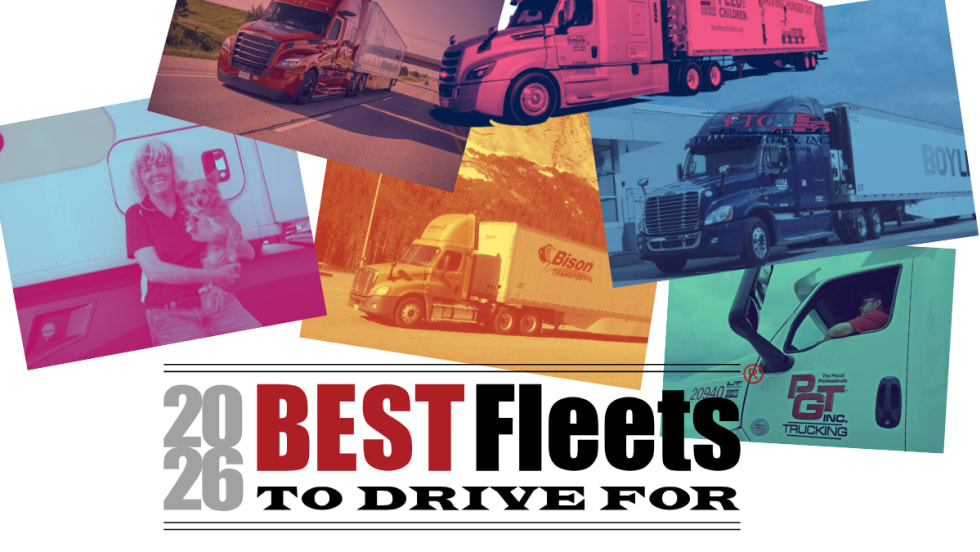
CarriersEdge Announces 2026 Best Fleets to Drive For
The 18th annual contest recognizing the best workplaces for truck drivers sees changes to Top 20, Hall of Fame
Read More →
FMCSA Targets 550+ ‘Sham’ CDL Schools in Nationwide Sting Operation
The Federal Motor Carrier Safety Administration issued more than 550 notices of proposed removal to commercial driver training providers following a five-day nationwide enforcement sweep. Investigators cited unqualified instructors, improper training vehicles, and failure to meet federal and state requirements.
Read More →