



The Senate passed a short-term patch to keep the Highway Trust Fund solvent until December 19, in effect setting up a vote this year on a long-term highway program.
 MENU
MENU SEARCH
The Senate passed a short-term patch to keep the Highway Trust Fund solvent until December 19, in effect setting up a vote this year on a long-term highway program. The $8 billion bill now goes to the House, which must act quickly if Congress is to keep the fund from going over the precipice.


File photo.
The Senate passed a short-term patch to keep the Highway Trust Fund solvent until December 19, in effect setting up a vote this year on a long-term highway program.
The $8 billion bill now goes to the House, which must act quickly if Congress is to keep the fund from going over the precipice.
Unless a patch is signed into law before August 1, the Department of Transportation will be forced to cut reimbursements to states for highway projects that are planned and under way. Thousand of projects and hundreds of thousands of jobs are at stake.
Speaker John Boehner has said the House will move quickly, Sen. Bob Corker, R-Tenn., reported.
In the same Tuesday session, the Senate rejected an amendment by Sen. Mike Lee, R-Utah, that would have gradually reduced federal fuel taxes and devolved highway funding responsibility to the states.
It also rejected a bid by Sen. Pat Toomey, R-Pa., to accelerate highway repairs by cutting environmental and permitting requirements.
The session began with a 71-26 vote in favor of a bill passed by the Senate Finance Committee that would have patched the Highway Trust Fund through next May.
This bill was based on a measure already passed by the House, but changed some provisions of that proposal. Both bills had the same funding, $10.6 billion, and set May as the end of the funding period. The Senate version, however, reduced the amount of funding that would be covered by so-called “pension smoothing.”
“Smoothing” refers to a temporary lowering of pension funding requirements to increase business profits. Those presumed profits are taxed, producing a presumed increase in government revenue.
The House bill overused “smoothing,” said Sen. Ron Wyden, D-Ore., chair of the Senate Finance Committee and co-author with Sen. Orrin Hatch, R-Utah, of the Senate bill.
But in the end, the Senate decided to dispense with “smoothing” altogether.
By a 66-31 vote it passed the $8 billion December patch pushed by Sens. Corker, Barbara Boxer, D-Calif., and Tom Carper, D-Del. It contains no “smoothing” money, relying instead on transfers from the general fund and from the Leaking Underground Storage Tank Trust Fund, among other sources.
“Smoothing is a total gimmick that loses money,” said Corker in a passionate speech that Boxer described as the “most honest” she has heard on the Senate floor.
“It’s an embarrassment that the Senate has not come together to pass a long-term solution (to highway funding),” Corker said.
The bill will force the Senate to act responsibly before year-end, he said.
“When people say they just don’t think we can find a solution – you gotta be kidding me!” he said.
Lee described his amendment to devolve funding to the states as a “new approach” to get around the “centralized bureaucratic status quo.”
Boxer replied that he was proposing “the complete and utter destruction of a system that the states support.”
His amendment failed 69 – 28.
The overall bill passed by a wide margin: 79 – 18.
Reaction from the industry was quick and positive.
American Trucking Associations President and CEO Bill Graves said the short-term patch is the best way to get to a long-term highway bill. “The Senate has put Congress on a path to solving these issues this year,” he said in a statement.
“We urge the House to follow suit and to pass the Senate’s Highway Trust Fund fix and then get on to the work of passing a long-term highway bill when Congress returns from recess.”

ACT Research data shows volumes hitting a four-year high and supply-demand balance strengthening, but higher oil prices are undercutting tariff relief and tempering optimism.
Read More →
The patent-pending cargo solution integrates a digitally connected cargo door and an intelligent locking system with the TrailerHawk.AI technology platform.
Read More →
The impact of the Iran conflict extends beyond fuel costs, bringing more fraud and cybersecurity risks to the trucking industry.
Read More →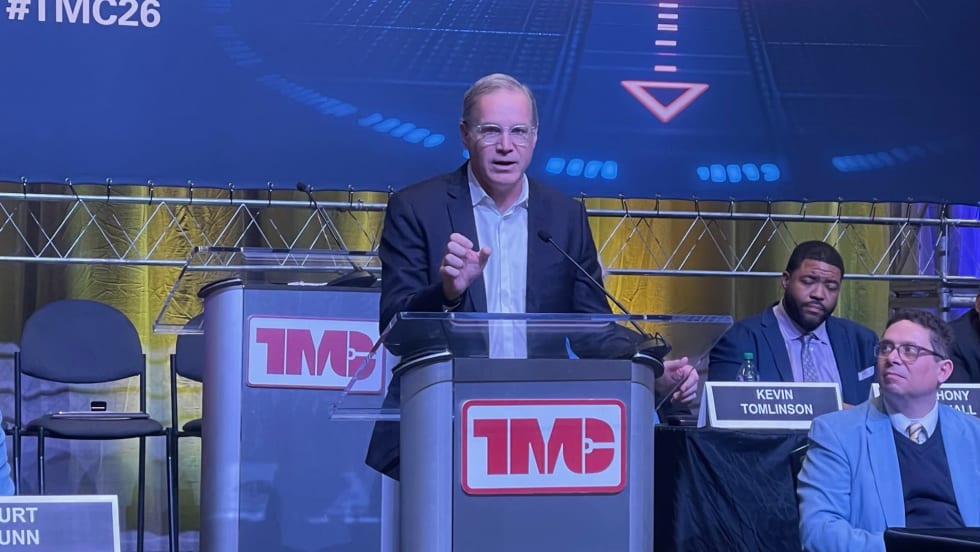
Speaking at the TMC Annual Meeting in Nashville, ATA President Chris Spear said trucking faces mounting pressure from rising fuel prices, geopolitical instability, and uncertainty around trade policy.
Read More →
More than 100,000 new trucking companies enter the industry each year, but regulators manage to audit only a fraction of them. That churn creates opportunities for inexperienced startups — and for “chameleon carriers” that shut down after safety violations and reappear under new identities. Read more from Deborah Lockridge in this commentary.
Read More →
HDTX is an intimate event that connects heavy-duty trucking fleet managers with industry suppliers through small-group discussions, educational sessions, and structured one-on-one meetings.
Read More →
New DAT One feature shows top-paying loads directly on an iPhone’s home screen, helping carriers react faster to spot-market opportunities.
Read More →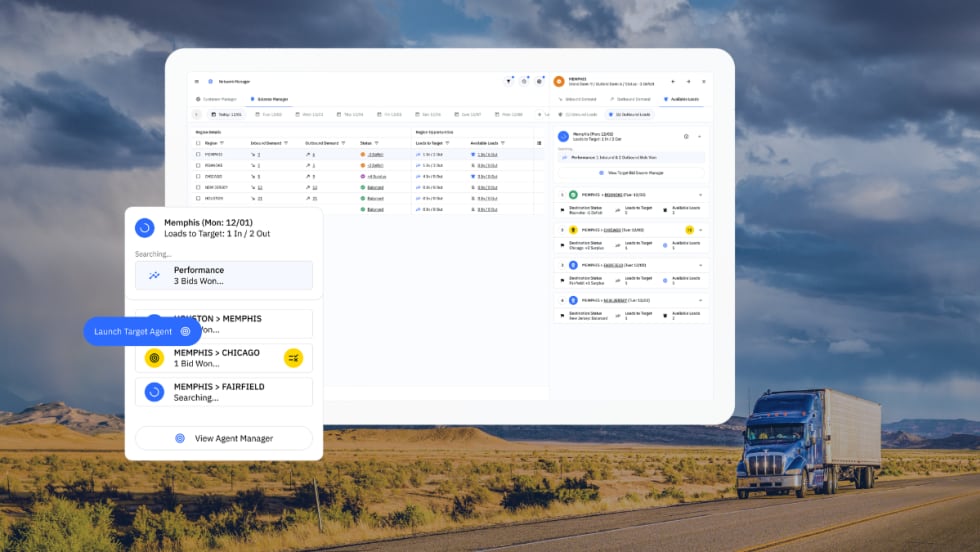
Optimal Dynamics says its new Scale platform uses AI agents and optimization to help carriers find and secure freight that improves network balance and profitability.
Read More →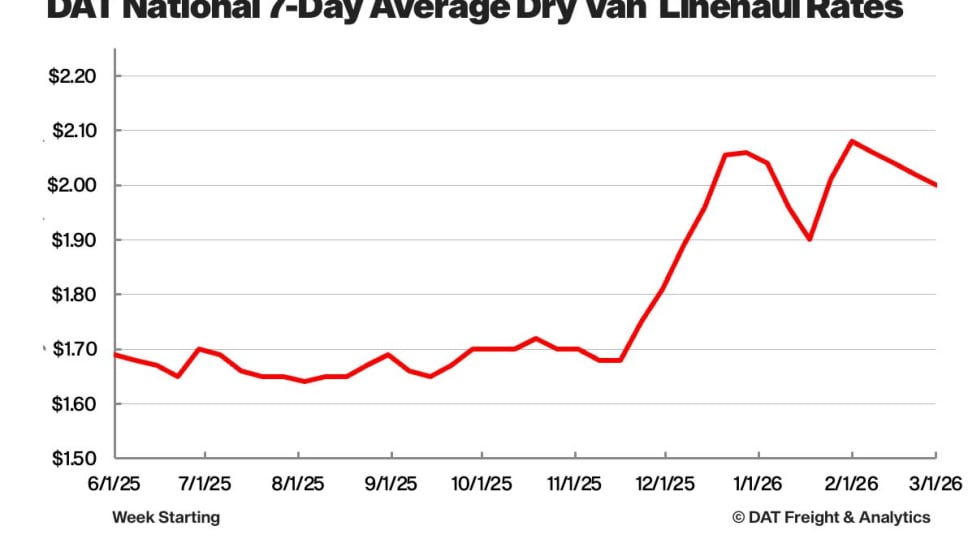
DAT Freight & Analytics data shows tightening flatbed capacity, easing produce markets, and softening van and reefer rates.
Read More →
NACFE's Run on Less - Messy Middle project demonstrates the power of data in helping to guide the future of alternative fuels and powertrains for heavy-duty trucks.
Read More →