





SAN ANTONIO. The industry campaign to develop not one but two new API oil-service categories to eventually replace the current CJ-4 spec for heavy-duty diesel engines is on a fast track for new formulations to be licensed starting in late 2016, according to Shell Lubricants.
Shell Lubricants: All Cylinders Firing for Two New Diesel Oil Categories
The industry campaign to develop not one but two new API oil-service categories to eventually replace the current CJ-4 spec for heavy-duty diesel engines is on a fast track for new formulations to be licensed starting in late 2016, according to Shell Lubricants.
June 11, 2015

Extensive lab work is proceeding on track to complete the two new API oil-service categories for heavy-duty diesels. Photo: Shell
3 min to read
What had started out as the single PC-11 (Proposed Category 11 in the initial stage, thus PC-11) was split into PC-11A and PC11-B categories once supplier consensus determined that two distinct categories would be needed to address the needs of the next generation of fuel-efficient engines. To meet the twin goals of decreased fuel consumption and reduced GHG emissions, many of those engines will operate at higher temperatures, so the oil protecting them will have to be formulated to withstand more heat.
As Shell explained during a media briefing here at the Southwest Research Institute (SwRI), PC-11A oils will directly replace oils now in use. These products will conform to the new PC-11 performance standards and will be offered in the same viscosity grades and oil types (conventional, full synthetic, synthetic blend) as CJ-4 oils are and they will be backwards-compatible for use in all current vehicles.
By contrast, PC-11B oils will be formulated primarily to help increase the fuel efficiency of next-generation engines without sacrificing engine protection. PC-11B engine oils will be offered in lower viscosity grades and may attain “limited” backwards-compatibility, which would be determined by OEMs acting individually.

In short, while PC-11B oils will have to pass the same category performance tests as PC11-A products, they will be formulated with thinner viscosity fluids to provide greater fuel economy than both CJ-4 and PC-11A oils.
Although it’s not official yet, it is expected that once the category process is completed, PC-11A oil will be given the API ‘donut’ designation of CK-4 and PC-11B that of FA-4, advised Dan Arcy, Shell’s Global OEM Technical Manager, who chairs the industry’s Heavy Duty Engine Oil Classification Panel.
Originally, the goal was to have new category in place by January 2016.
"Consensus eventually put first licensing [of oils with their API 'donuts'] during 2017," Arcy explained. “But OEMs wanted to see that pushed into late 2016, likely December.” He added that a stakeholder meeting on that timing is scheduled for Friday, June 12.
According to Arcy, the “key driver” for PC-11 oil is improving oxidation stability, as “engines will be running hotter.”
Oxidation rises with temperature and can raise the oil’s viscosity as well as increase acidic compounds, which can cause corrosion, and deposits of varnish and sludge. Concern about all that led to the development of the new Volvo/Mack T-13 Oxidation Test, the toughest nut to crack for oil formulations seeking to qualify for the dual categories, pointed out Martin Thompson, research engineer with SwRI, which helped develop all three of the category’s new tests.
There is also a new Caterpillar aeration test and one to measure the shear stability of the oil. Arcy pointed out that aeration can impede the oil’s ability to protect the engine and that oil shearing reduces viscosity, which can affect how well the oil can protect engine parts.
“While emission rules drove the development of engine and oil technology over the past 20 years,” Arcy said summing up PC-11, “the focus has now moved to delivering fuel efficiency benefits while keeping emissions low and delivering the same or better [engine] durability.”
Updated 11:40 EDT 6/11 to clarify information on completion schedule
More Fleet Management

ACT: Trucking Volumes Rise, Capacity Tightens as Fuel Prices Cloud Outlook
ACT Research data shows volumes hitting a four-year high and supply-demand balance strengthening, but higher oil prices are undercutting tariff relief and tempering optimism.
Read More →
Wabash Teams Physical Security With Digital Tech For Better Cargo Visibility
The patent-pending cargo solution integrates a digitally connected cargo door and an intelligent locking system with the TrailerHawk.AI technology platform.
Read More →
From Diesel Prices to Cyberattacks: How the Iran War Is Affecting Trucking
The impact of the Iran conflict extends beyond fuel costs, bringing more fraud and cybersecurity risks to the trucking industry.
Read More →
ATA’s Spear Warns Fuel Prices, Trade Policy, and Global Conflict Could Stall Trucking Recovery
Speaking at the TMC Annual Meeting in Nashville, ATA President Chris Spear said trucking faces mounting pressure from rising fuel prices, geopolitical instability, and uncertainty around trade policy.
Read More →
New Entrants, Chameleon Carriers, and Safety: Is It Too Easy to Start a Trucking Company?
More than 100,000 new trucking companies enter the industry each year, but regulators manage to audit only a fraction of them. That churn creates opportunities for inexperienced startups — and for “chameleon carriers” that shut down after safety violations and reappear under new identities. Read more from Deborah Lockridge in this commentary.
Read More →
Fleet Managers Invited to Apply for Exclusive HDT Exchange Event
HDTX is an intimate event that connects heavy-duty trucking fleet managers with industry suppliers through small-group discussions, educational sessions, and structured one-on-one meetings.
Read More →
DAT Launches iPhone Widget to Help Owner-Operators Find Loads Faster
New DAT One feature shows top-paying loads directly on an iPhone’s home screen, helping carriers react faster to spot-market opportunities.
Read More →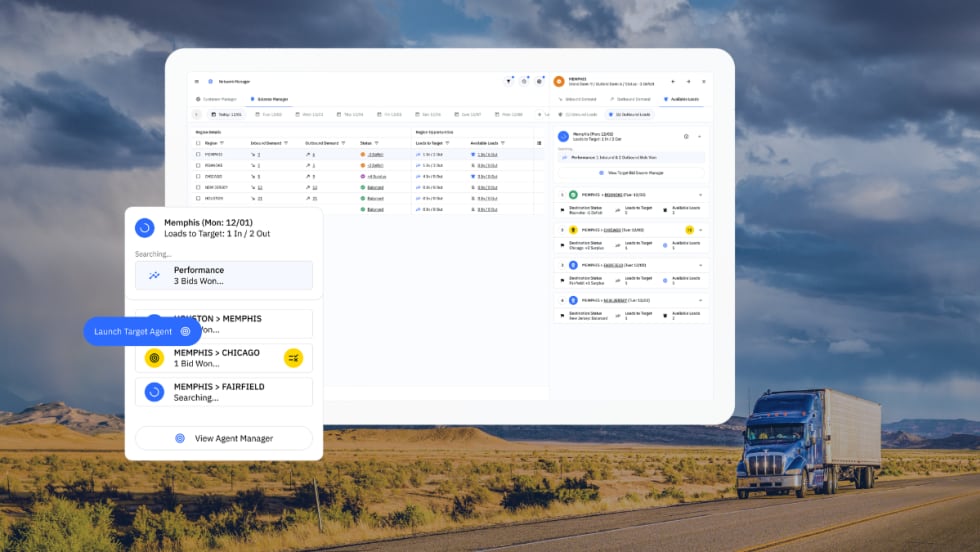
Optimal Dynamics Launches AI System to Help Carriers Choose Better Freight
Optimal Dynamics says its new Scale platform uses AI agents and optimization to help carriers find and secure freight that improves network balance and profitability.
Read More →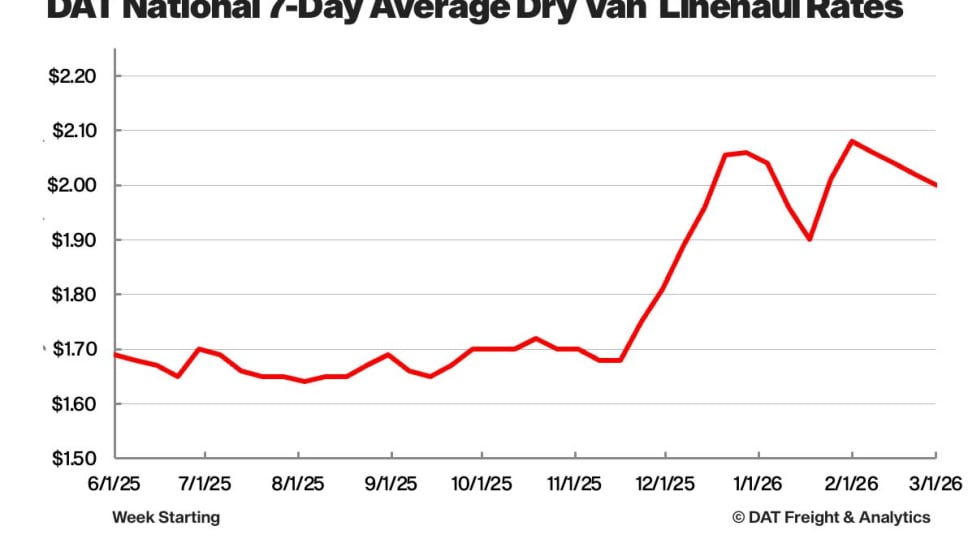
DAT: Flatbed Demand Climbs as Van and Reefer Rates Soften
DAT Freight & Analytics data shows tightening flatbed capacity, easing produce markets, and softening van and reefer rates.
Read More →
Run on Less “Messy Middle” Data Shows Multiple Paths Forward for Truck Powertrains [Watch]
NACFE's Run on Less - Messy Middle project demonstrates the power of data in helping to guide the future of alternative fuels and powertrains for heavy-duty trucks.
Read More →