



The number of available loads on the spot truckload market decreased 2.9% and capacity fell 1.8%, according to DAT Solutions, which operates the DAT network of load boards.
 MENU
MENU SEARCH
The number of available loads on the spot truckload market decreased 2.9% and capacity fell 1.8%, according to DAT Solutions, which operates the DAT network of load boards.

Graphic: DAT
The number of available loads on the spot truckload market decreased 2.9% and capacity fell 1.8%, according to DAT Solutions, which operates the DAT network of load boards.
This happened April 26 through May 2 compared to the previous week, and continues a trend of softer spot rates for van and flatbed freight amid weaker demand.
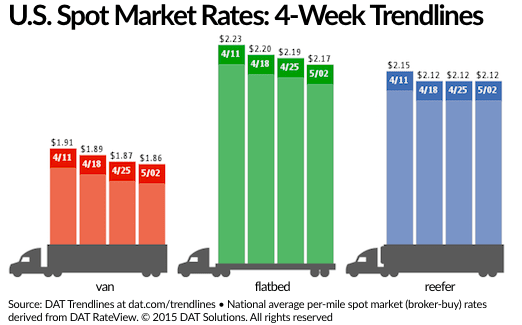
Nationally, the average spot rate for refrigerated freight was unchanged for the third straight week at $2.12 per mile
The number of available reefer loads fell 5.5% and available capacity was unchanged with the reefer load-to-truck ratio falling, meaning there were 5.4 available reefer loads for every truck posted on the DAT network.
Regionally, reefer demand and rates are rising in the Southeast. As May harvests kick off in Florida, the average outbound rate from Lakeland rates surged 17 cents to $2.17 per mile, and Miami added 12 cents to $2.49 per mile.
Nationally, the average van rate lost 0.5% to $1.86 per mile, continuing a trend of softer prices. Van freight availability declined 5.3% and capacity fell 2.6% compared to the previous week. The national van load-to-truck ratio slipped 2.8% to 2.5 loads per truck.
The national average rate for flatbeds fell 0.9% to $2.17 per mile. The decline was in the line-haul rate while the fuel surcharge was unchanged. The availability of flatbed loads and capacity actually increased last week, which sent the flatbed load-to-truck ratio up 0.5% to 20.8 loads per truck.
Despite the declines in rates, DAT is optimistic rates will soon head higher, according to Peggy Dorf, market analyst, writing in the DAT blog.
“Rates typically rise in May and peak in June, especially for reefers, due to high demand generated by fruit and vegetable harvests in the Southeast, Texas, Southwest and parts of California,” she said. “Fresh produce can't wait for a train, and it can't sit in a warehouse too long, so both the volume and the urgency drive up freight load quantity and prices.
According to Dorf, the surge in demand for reefers also puts a squeeze on van capacity.
“Carriers who have both dry and refrigerated van trailers will prefer to haul reefer freight in produce season, so available power units and drivers will park dry box trailers in the yard until demand is more slack,” she said.
DAT expects seasonal volume to kick in within a week or two, which should boost rates with vans likely getting closer to $2.00 a mile, at least for a few weeks. What does not seem likely is a repeat of the record highs of 2014, when the national average rate exceeded $2.00 from the first week in June through the end of the year.

The American Transportation Research Institute will examine driver coaching, regulatory impacts — including the "Beyond Compliance" concept —and weather disruptions that shape trucking operations.
Read More →
Fleet Advantage's Brian Antonellis says it's time for fleets to get back to the fundamentals of good maintenance practices. And that includes replacing older, inefficient equipment.
Read More →
Load matching for flatbed, lowbed, oversize and overweight loads can't be automated like basic van freight, but Truckstop.com is adding more high-tech tools to help.
Read More →
An expanded Trucker Path and Truckstop.com integration brings more freight opportunities into the TruckLoads app while emphasizing security and network quality.
Read More →
Strong March freight demand combined with a spike in fuel costs pushed both spot and contract truckload rates to their highest levels in more than two years.
Read More →
Everyone’s talking about AI — but is your transportation management system actually built for it?
Read More →
Being part of KTG will allow Sharp to expand and improve its services.
Read More →
The Fair Compensation for Truck Crash Victims Act would increase insurance requirements for interstate motor carriers by nearly seven times.
Read More →
Strong freight rates push TCI to 10.2, but FTR expects fuel-price volatility to skew March results.
Read More →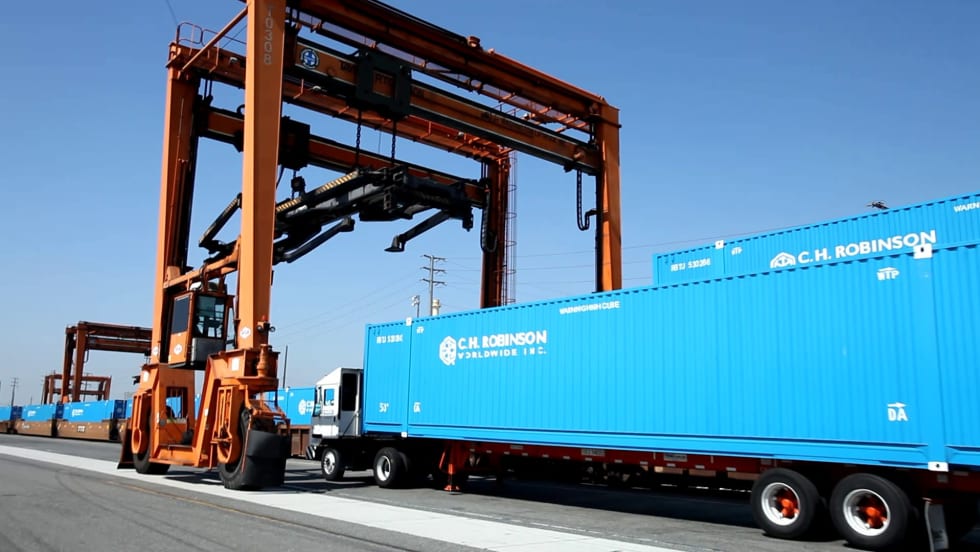
C.H. Robinson is waiving fees on fuel cards and cash advances for April and May, aiming to help carriers offset rising diesel costs tied to geopolitical instability.
Read More →