



The availability of spot truckload freight dipped 1.8% while the number of trucks posted fell 2.4% during the week ending Oct. 28, according to DAT Solutions and its network of load boards.
 MENU
MENU SEARCH
The availability of spot truckload freight dipped 1.8% while the number of trucks posted fell 2.4% during the week ending Oct. 28, according to DAT Solutions and its network of load boards.

Graphic: DAT
The availability of spot truckload freight dipped 1.8% while the number of trucks posted fell 2.4% during the week ending Oct. 28, according to DAT Solutions and its network of load boards.
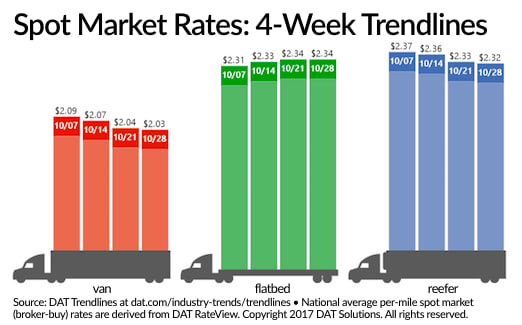
National average spot van and reefer rates declined for the third week in a row while the flatbed rate held steady after nearly two months of steady gains. Rates remain elevated for this time of year for all three equipment types:
Van: $2.03 per mile, down 1 cent from last week
Flatbed: $2.34 per mile, unchanged from week before
Reefer: $2.36 per mile, down 1 cent from last week
Spot truckload rates may pick up before Thanksgiving, as retail sales are projected to grow by 6% this holiday season and demand for capacity is solid, according to the freight matching provider.
Volumes for the top van markets rebounded 5% last week as shippers moved freight out the door before month’s end. Nationally, van load posts increased 1% and truck posts declined 3%, which caused the van load-to-truck ratio to increase from 5.4 to 5.9 loads per truck. In line with seasonal expectations during October, van load-to-truck ratios have declined since hitting a peak of 7.0 loads per truck during the final week of September.
Several key van lanes showed solid rates, including Dallas-Houston, $2.62 per mile, up 8 cents from last week, and Atlanta-Lakeland, Florida, $3.02 per mile, up 4 cents from the week before.
Reefer load posts held steady and truck posts declined 2%, causing the load-to-truck ratio to increase 1% to 9.7 loads per truck. The reefer load-to-truck ratio has fallen after hitting the highest average ratio in years in late September before turning upward again last week.
Flatbed load posts declined 6% and truck posts declined 2%, which caused the load-to-truck ratio to slip to 35.9 loads per truck, still a high ratio. After hitting the highest load-to-truck ratio in years during the last week of September, 50.2 loads per truck, the flatbed ratio has generally eased off in October.

ACT Research data shows volumes hitting a four-year high and supply-demand balance strengthening, but higher oil prices are undercutting tariff relief and tempering optimism.
Read More →
The patent-pending cargo solution integrates a digitally connected cargo door and an intelligent locking system with the TrailerHawk.AI technology platform.
Read More →
The impact of the Iran conflict extends beyond fuel costs, bringing more fraud and cybersecurity risks to the trucking industry.
Read More →
Speaking at the TMC Annual Meeting in Nashville, ATA President Chris Spear said trucking faces mounting pressure from rising fuel prices, geopolitical instability, and uncertainty around trade policy.
Read More →
More than 100,000 new trucking companies enter the industry each year, but regulators manage to audit only a fraction of them. That churn creates opportunities for inexperienced startups — and for “chameleon carriers” that shut down after safety violations and reappear under new identities. Read more from Deborah Lockridge in this commentary.
Read More →
HDTX is an intimate event that connects heavy-duty trucking fleet managers with industry suppliers through small-group discussions, educational sessions, and structured one-on-one meetings.
Read More →
New DAT One feature shows top-paying loads directly on an iPhone’s home screen, helping carriers react faster to spot-market opportunities.
Read More →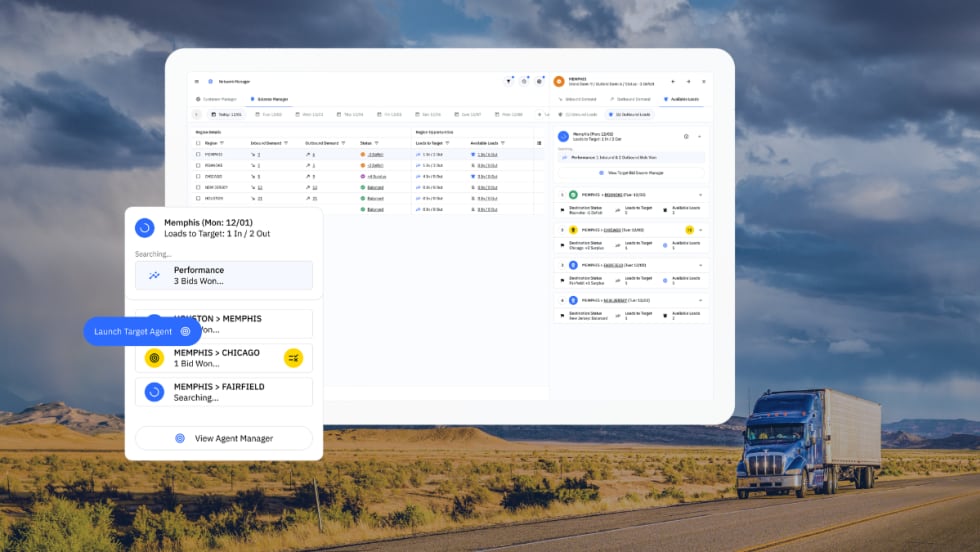
Optimal Dynamics says its new Scale platform uses AI agents and optimization to help carriers find and secure freight that improves network balance and profitability.
Read More →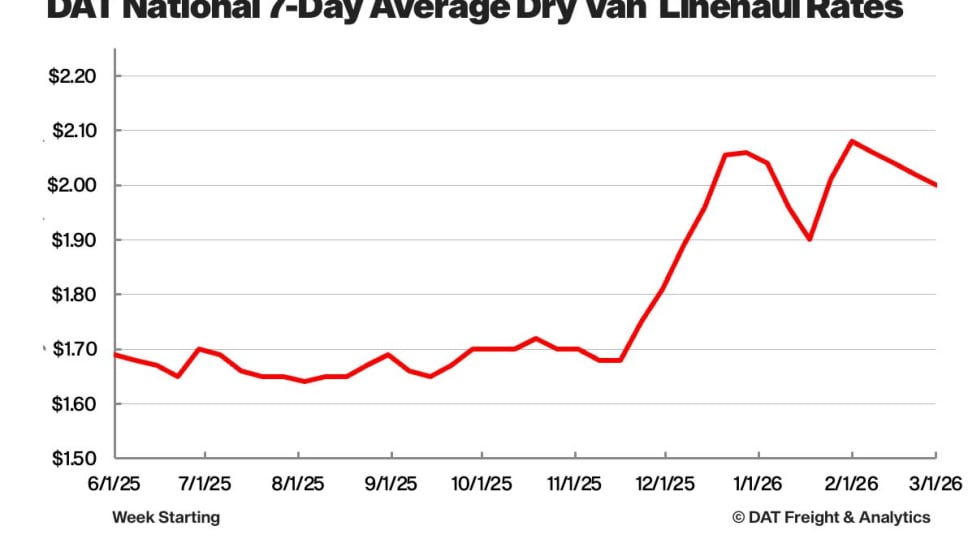
DAT Freight & Analytics data shows tightening flatbed capacity, easing produce markets, and softening van and reefer rates.
Read More →
NACFE's Run on Less - Messy Middle project demonstrates the power of data in helping to guide the future of alternative fuels and powertrains for heavy-duty trucks.
Read More →