





Dedicated truckload capacity has been growing more than five times the rate of traditional dedicated contract carriage, according to Armstrong & Associates.
The Growth of Dedicated Truckload Capacity
Dedicated truckload capacity has been growing more than five times the rate of traditional dedicated contract carriage, according to Armstrong & Associates.
November 29, 2021
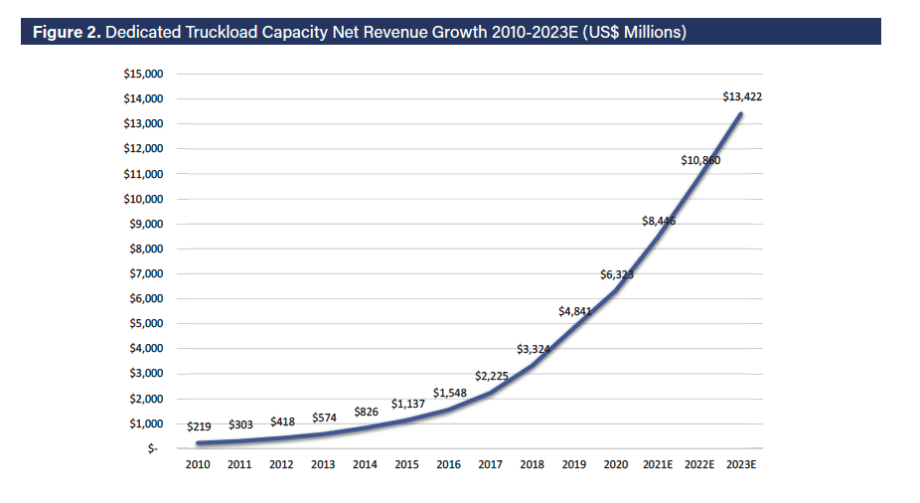
Shippers' need for flexibility has been driving dedicated truckload capacity growth.
Graph: Armstrong & Associates
2 min to read
Image: Armstrong & Associates
In its report, “Dedicated Contract Carriage vs. Dedicated Truckload Capacity – The Search for Untapped Capacity,” Armstrong explains that dedicated truckload capacity, or DTC, is where a provider agrees to providing ongoing trucking capacity to a customer account in specific lanes or routes and equipment can be shared between customers. This kind of dedicated business has seen tremendous growth over the past 10 years. In 2020 alone, DTC net revenues jumped 30.6% to $6.3 billion among dedicated transportation providers.
This differs from the traditional, asset-heavy dedicated contract carriage third-party logistics segment, where specific trucking assets are dedicated to a customer account for a given contract length. This segment provides core trucking capacity to buyers in a market subject to cyclical driver/tractor shortages. In 2020, Armstrong reports, the DCC segment had the second highest net revenue growth of the four 3PL market segments, but it was just 0.3% to $20 billion. The negative effect of COVID-10 made 2020 a volatile and lower-volume year versus 2019 when DCC net revenues grew 12.1%.
DCC is an outgrowth of the way contract carriage used to be regulated. Up until deregulation in 1980, contract carriers were limited to a maximum of eight customers. Today, nearly all of truck transportation in the U.S. is done on some type of contract carriage, Armstrong explains. Over time, exclusive DCC has been supplemented by dedicated truckload capacity. DTC agreements tend to be shorter than those for DCC, as dedicated contract carriage relationships tend to be more long-term and “stickier,” to use Armstrong’s term. Food and groceries are the top industry served and also the top industry for revenue growth, according to the report.
Some of the largest DCC carriers are J.B. Hunt Dedicated, Penske Logistics, and Werner Dedicated, according to Armstrong.
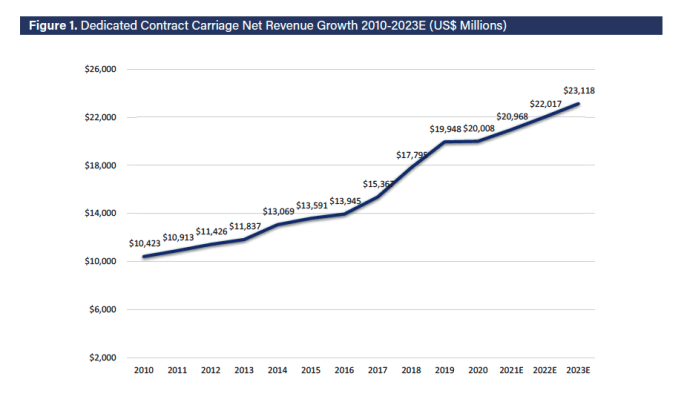
Dedicated contract carriage relationships tend to be more long-term and “stickier,” to use Armstrong’s term.
Graph: Armstrong & Associates
Armstrong survey respondents noted that when capacity tightens, the demand for dedicated seems to increase. The COVID-19 pandemic and its effects have tightened capacity and made it very difficult for companies who usually rely on the spot market. Customers want more committed capacity to combat rising spot market rates. In addition, the driver shortage is resulting in traditional truckload customers exploring a change to the dedicated model.
More Fleet Management

ACT: Trucking Volumes Rise, Capacity Tightens as Fuel Prices Cloud Outlook
ACT Research data shows volumes hitting a four-year high and supply-demand balance strengthening, but higher oil prices are undercutting tariff relief and tempering optimism.
Read More →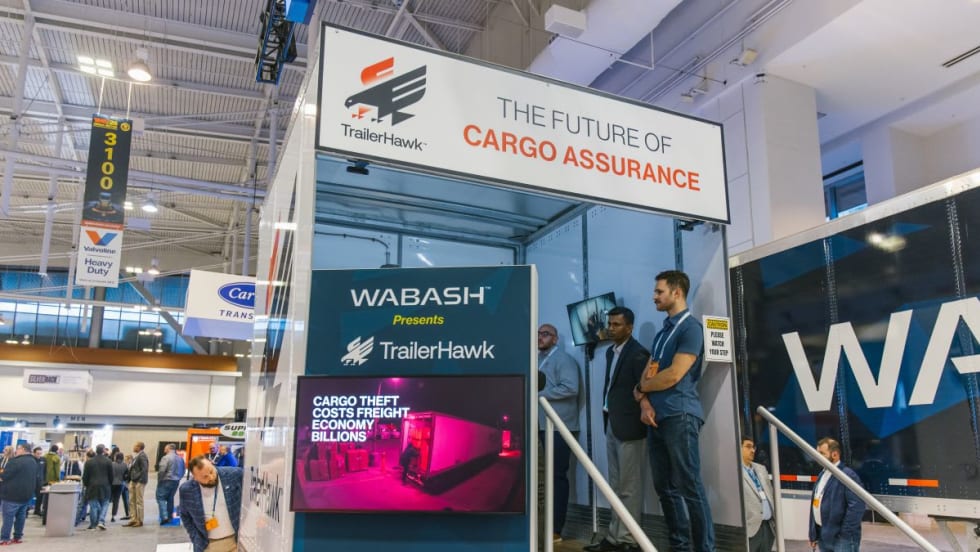
Wabash Teams Physical Security With Digital Tech For Better Cargo Visibility
The patent-pending cargo solution integrates a digitally connected cargo door and an intelligent locking system with the TrailerHawk.AI technology platform.
Read More →
From Diesel Prices to Cyberattacks: How the Iran War Is Affecting Trucking
The impact of the Iran conflict extends beyond fuel costs, bringing more fraud and cybersecurity risks to the trucking industry.
Read More →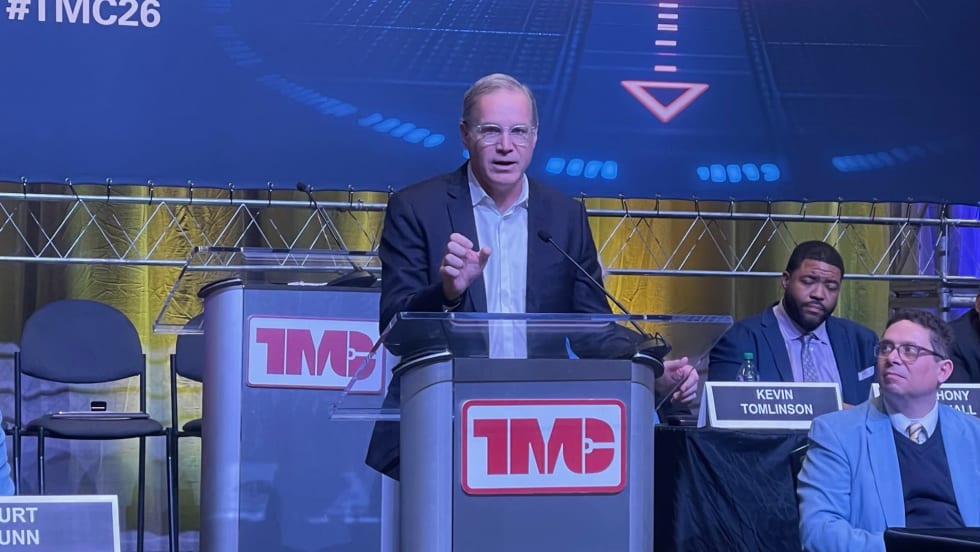
ATA’s Spear Warns Fuel Prices, Trade Policy, and Global Conflict Could Stall Trucking Recovery
Speaking at the TMC Annual Meeting in Nashville, ATA President Chris Spear said trucking faces mounting pressure from rising fuel prices, geopolitical instability, and uncertainty around trade policy.
Read More →
New Entrants, Chameleon Carriers, and Safety: Is It Too Easy to Start a Trucking Company?
More than 100,000 new trucking companies enter the industry each year, but regulators manage to audit only a fraction of them. That churn creates opportunities for inexperienced startups — and for “chameleon carriers” that shut down after safety violations and reappear under new identities. Read more from Deborah Lockridge in this commentary.
Read More →
Fleet Managers Invited to Apply for Exclusive HDT Exchange Event
HDTX is an intimate event that connects heavy-duty trucking fleet managers with industry suppliers through small-group discussions, educational sessions, and structured one-on-one meetings.
Read More →
DAT Launches iPhone Widget to Help Owner-Operators Find Loads Faster
New DAT One feature shows top-paying loads directly on an iPhone’s home screen, helping carriers react faster to spot-market opportunities.
Read More →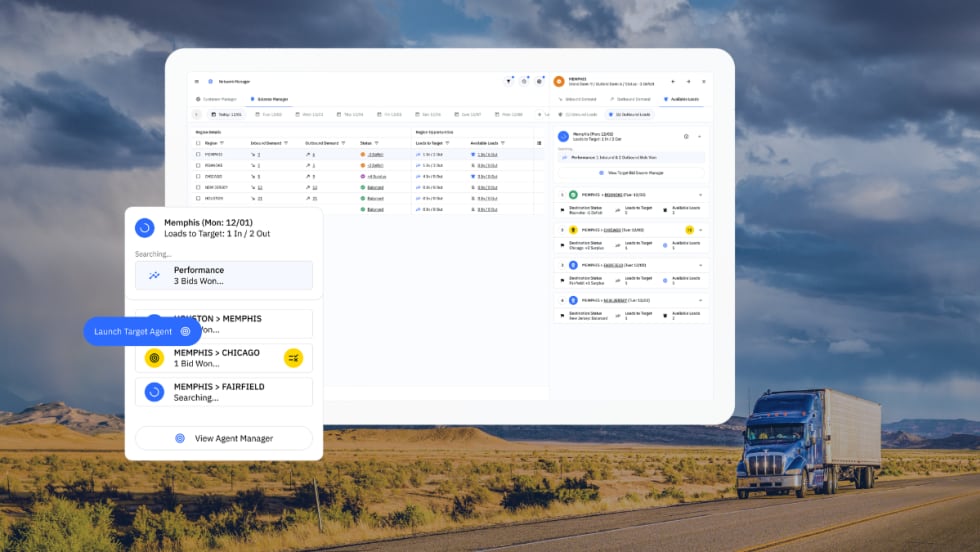
Optimal Dynamics Launches AI System to Help Carriers Choose Better Freight
Optimal Dynamics says its new Scale platform uses AI agents and optimization to help carriers find and secure freight that improves network balance and profitability.
Read More →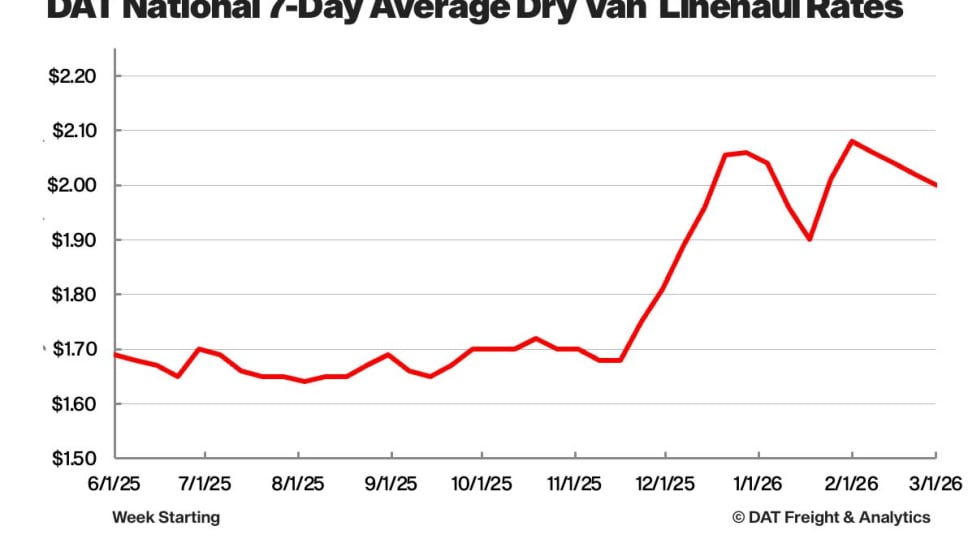
DAT: Flatbed Demand Climbs as Van and Reefer Rates Soften
DAT Freight & Analytics data shows tightening flatbed capacity, easing produce markets, and softening van and reefer rates.
Read More →
Run on Less “Messy Middle” Data Shows Multiple Paths Forward for Truck Powertrains [Watch]
NACFE's Run on Less - Messy Middle project demonstrates the power of data in helping to guide the future of alternative fuels and powertrains for heavy-duty trucks.
Read More →