




Stifel, Nicolaus & Company, an equity research firm, predicted a good future for the freight transportation industry, despite the bad economy, in its Transportation and Logistics Outlook for 2011 and Beyond.
Transportation and Logistics Outlook: Slow but Positive, with Significant Change
Stifel, Nicolaus & Company, an equity research firm, predicted a good future for the freight transportation industry, despite the bad economy, in its Transportation and Logistics Outlook for 2011 and Beyond
by Staff
September 9, 2011
4 min to read
First the bad: There is no question the economy is still awful, with the recovery progressing at a snail's pace from the worst economic downturn since the 1930s and an unemployment rate seemingly impervious to stimulus.
The economy isn't doing nearly as well as hoped. Manufacturing began to recover earlier this year, but has slowed, and retail spending follows a similar pattern; housing can barely manage a limp. Fear seems to be on the rise again recently, with the first national credit downgrade in history and financial meltdown looming in Europe.
As a result, volume is barely holding onto growth in most sectors. The Ceridian-UCLA Pulse of Commerce Index is down 5.4% relative to its peak in the middle of last year. LTL tonnage was growing, but is beginning to flatten out. Rail has also flattened out, as has ocean freight.
In the wake of the recession, trucking lost about 20% capacity. Moreover, it faces still more shrinkage. According to John Larkin, managing director of the Transportation and Logistics Group at Stifel, the government is playing a large part in that. The new CSA enforcement regime, he says, is reducing the driver pool, and hours-of-service regulations threaten to take out 3-6% more capacity. Additionally, trucking fleets continue to age, which further threatens capacity. Large-scale fleet replacements are not expected until 2013.
In Larkin's words, we're facing "the mother of all capacity shortages," although that has been delayed somewhat due to slow economic growth. Seeing as there is already a shortage with unemployment north of 9%, Larkin fears that if manufacturing and construction were to suddenly boom, the industry might face a crisis.
There is a bright spot here for trucking. Precisely because capacity is tight, rates are going up, and will continue to go up. Less-than-truckload has already seen general rate increases this year between 4.5% and 6.9%. Truckload revenues per mile have been climbing steadily since the bottom of the recession and are expected to continue to do so, gaining 10% by 2013.
Other segments are faring similarly. Rail pricing, which was solid throughout the recession, is expected to continue rising. Intermodal prices, which declined during the recession due to lost capacity to trucking, are coming back as trucking capacity tightens.
The Next Decade
Although the next five to 10 years are expected to be good for the transportation industry, they come with challenges and are sure to be interesting. In the near term, the 2012 elections will be of major importance to the industry and will be a significant force in shaping policy - including the hotly debated infrastructure bill. But no matter the outcome, stricter regulations on safety and fuel efficiency will almost certainly be a challenge driving up costs and decreasing capacity.
Fuel prices are a huge question mark. The past few years they have been all over the map. Looking forward, oil is likely to become more expensive, and will probably continue the wild ride of ups and downs.
Some significant structural changes to the industry have already begun. A shift in manufacturing from overseas to near-shoring and re-shoring is becoming a reality as countries like China lose their price advantage.
"Mexico is cheaper than China right now," said Larkin, who claimed that manufacturing to the south will grow at a very rapid rate. Some manufacturing will even return to the United States.
A more important change will be to the supply chain. In the wake of supply woes following the earthquake and tsunami in Japan, companies are looking to shorten supply lines, and diversify source countries. Shippers are also redesigning products as well to make them easier to ship. This will reduce transit volume, which is bad for trucking, although perhaps good for the world.
Finally, there is big growth in 3PLs, and that trend will continue. Companies are moving away from in-house logistics operations as pooled freight allows for cheaper rates.
Overall, carriers should expect to keep improving, but should be ready for a changing future: more regulations, more costs and a shifting face of the industry.
More Fleet Management

'Beyond Compliance,' Regulations, Driver Coaching on ATRI’s 2026 Research List
The American Transportation Research Institute will examine driver coaching, regulatory impacts — including the "Beyond Compliance" concept —and weather disruptions that shape trucking operations.
Read More →
Fleet Advantage's Brian Antonellis on the Growing Need to Replace Old Trucks
Fleet Advantage's Brian Antonellis says it's time for fleets to get back to the fundamentals of good maintenance practices. And that includes replacing older, inefficient equipment.
Read More →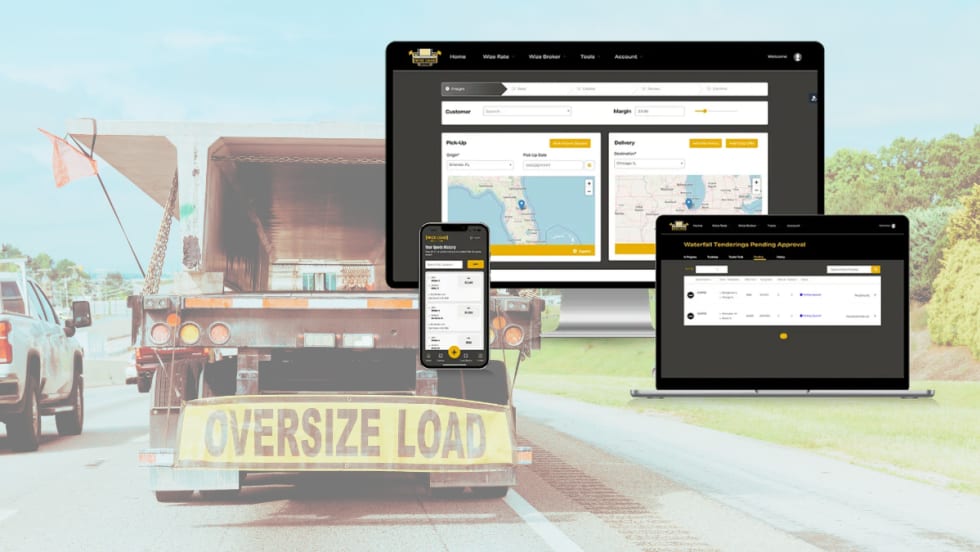
Truckstop.com Adding to Open Deck, Heavy Haul Offerings
Load matching for flatbed, lowbed, oversize and overweight loads can't be automated like basic van freight, but Truckstop.com is adding more high-tech tools to help.
Read More →
Trucker Path, Truckstop.com Expand Load Access Partnership
An expanded Trucker Path and Truckstop.com integration brings more freight opportunities into the TruckLoads app while emphasizing security and network quality.
Read More →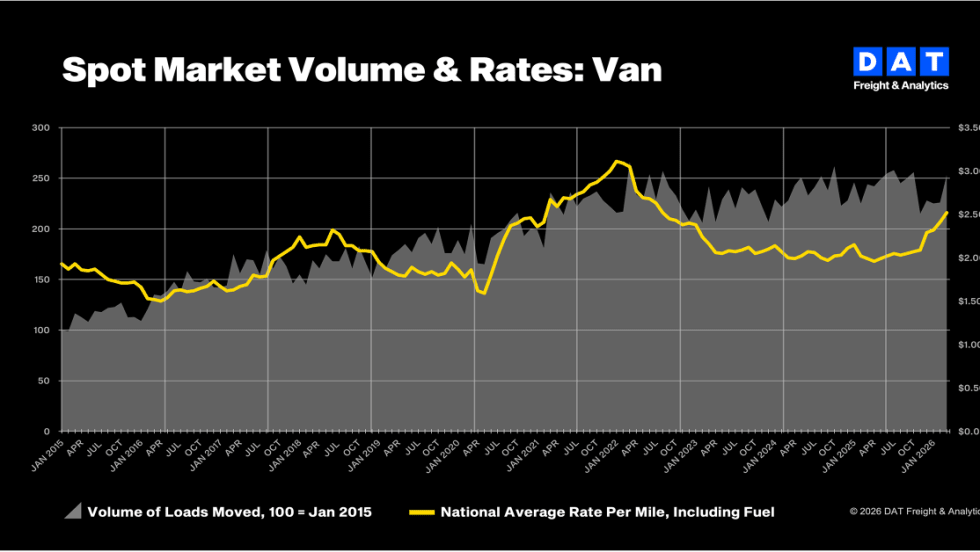
Truckload Rates Hit Two-Year Highs as Diesel Costs Surge, DAT Says
Strong March freight demand combined with a spike in fuel costs pushed both spot and contract truckload rates to their highest levels in more than two years.
Read More →
The AI Conversation You Need to Have with Your TMS Provider
Everyone’s talking about AI — but is your transportation management system actually built for it?
Read More →
Kriska Buys Fellow Canadian Carrier Sharp Transportation Systems
Being part of KTG will allow Sharp to expand and improve its services.
Read More →
Bill in House Would Raise Minimum Insurance for Motor Carriers to $5 Million
The Fair Compensation for Truck Crash Victims Act would increase insurance requirements for interstate motor carriers by nearly seven times.
Read More →
FTR Trucking Conditions Index Hits Four-Year High in February
Strong freight rates push TCI to 10.2, but FTR expects fuel-price volatility to skew March results.
Read More →
C.H. Robinson Offers Carriers Relief as Diesel Prices Surge
C.H. Robinson is waiving fees on fuel cards and cash advances for April and May, aiming to help carriers offset rising diesel costs tied to geopolitical instability.
Read More →