



The Owner-Operator Independent Drivers Association is asking the Federal Motor Carrier Safety Administration to be transparent about its findings and conclusions on a failed border crossing program that ended this year.
 MENU
MENU SEARCH
The Owner-Operator Independent Drivers Association is asking the Federal Motor Carrier Safety Administration to be transparent about its findings and conclusions on a failed border crossing program that ended this year.

The Owner-Operator Independent Drivers Association is asking the Federal Motor Carrier Safety Administration to be transparent about its findings and conclusions on a failed border crossing program that ended this year.
The United States-Mexico Cross Border Long-Haul Trucking Pilot Program was created to assess long-distance trucking across the U.S.-Mexico border.
In a letter to the FMCSA by OOIDA Executive Vice President Todd Spencer, he listed out their concerns about the validity of data collected during the program. Initially, the FMCSA said that 46 carriers would need to participate in the program for the results to be valid but only managed to get 13 carriers.
“It is the OOIDA’s view that because most of the inspection data collected comes from just a few carriers, the data is biased and does not accurately reflect the safety performance of the trucks in the Pilot much less the broader Mexican truck fleet,” stated Spencer.
The OOIDA was also concerned about the regulation of Mexican fleets related to violations. The inspection data showed that Mexican trucks were not being placed out of service for violations that warranted it and were being cited at a much lower rate.
“This disparity in enforcement action raises safety concerns in general, but especially about the Pilot Program,” stated Spencer.
The OOIDA wrote several questions in the letter to the FMCSA asking what actions they would take going forward. They asked who has authority over violations, if the findings from the program would be released and if there would even be a Pilot Program in the future.
“The data generated by the program clearly shows that the program should not be renewed or made permanent,” said Spencer. “What we would like to know is the agency’s plan going forward and we request that they be transparent about communications with Mexico and analysis of their data, or lack thereof.”

ACT Research data shows volumes hitting a four-year high and supply-demand balance strengthening, but higher oil prices are undercutting tariff relief and tempering optimism.
Read More →
The patent-pending cargo solution integrates a digitally connected cargo door and an intelligent locking system with the TrailerHawk.AI technology platform.
Read More →
The impact of the Iran conflict extends beyond fuel costs, bringing more fraud and cybersecurity risks to the trucking industry.
Read More →
Speaking at the TMC Annual Meeting in Nashville, ATA President Chris Spear said trucking faces mounting pressure from rising fuel prices, geopolitical instability, and uncertainty around trade policy.
Read More →
More than 100,000 new trucking companies enter the industry each year, but regulators manage to audit only a fraction of them. That churn creates opportunities for inexperienced startups — and for “chameleon carriers” that shut down after safety violations and reappear under new identities. Read more from Deborah Lockridge in this commentary.
Read More →
HDTX is an intimate event that connects heavy-duty trucking fleet managers with industry suppliers through small-group discussions, educational sessions, and structured one-on-one meetings.
Read More →
New DAT One feature shows top-paying loads directly on an iPhone’s home screen, helping carriers react faster to spot-market opportunities.
Read More →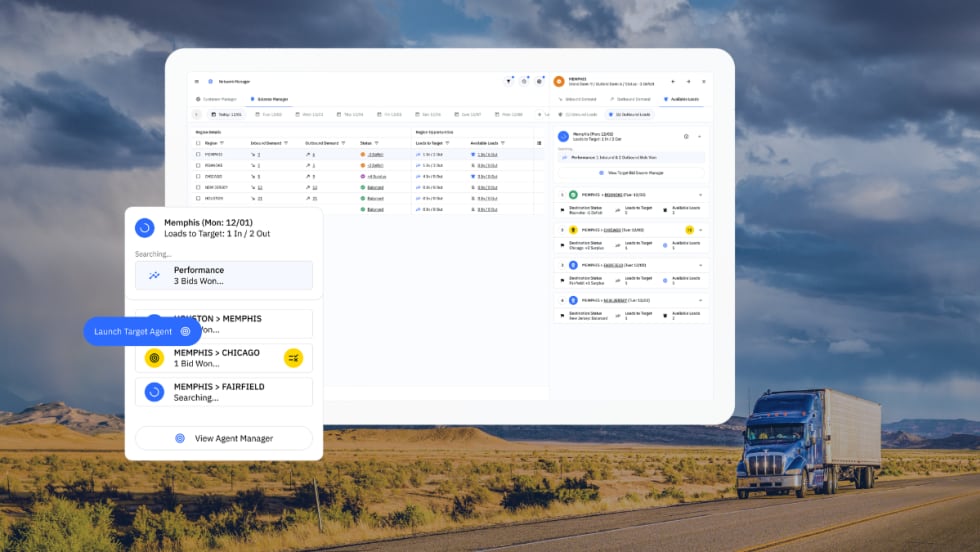
Optimal Dynamics says its new Scale platform uses AI agents and optimization to help carriers find and secure freight that improves network balance and profitability.
Read More →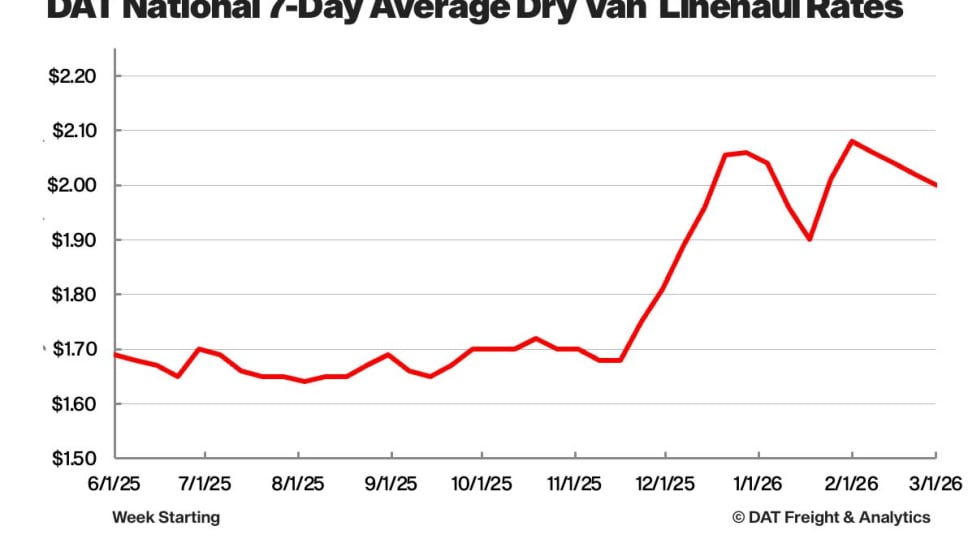
DAT Freight & Analytics data shows tightening flatbed capacity, easing produce markets, and softening van and reefer rates.
Read More →
NACFE's Run on Less - Messy Middle project demonstrates the power of data in helping to guide the future of alternative fuels and powertrains for heavy-duty trucks.
Read More →