



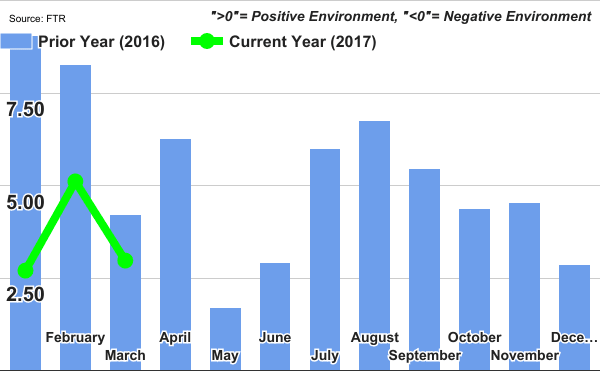
FTR’s Trucking Conditions Index fell slightly in March despite positive economic conditions, reversing an upturn from the previous month.
 MENU
MENU SEARCH
FTR’s Trucking Conditions Index fell slightly in March despite positive economic conditions, reversing an upturn from the previous month – but capacity is expected to tighten.
Source: FTR
FTR’s Trucking Conditions Index fell slightly in March despite positive economic conditions, reversing an upturn from the previous month.
The March TCI fell back to a reading of 2.97 after hitting 5.11 in February. However, FTR analysts say steady improvement in spot rates indicates that a market-wide move to capacity tightness is on the way. Tightening capacity is expected to correlate with an upswing in the TCI throughout 2017 and into 2018.
“The TCI has settled into a positive, but not robust, level of market conditions over the last 12 months,” said Jonathan Starks, chief operating officer at FTR. “The main reasons for the reduction in the March TCI stems from slightly weaker freight activity, reduced estimates of capacity tightness, and continued weaker-than-expected conditions for contract rates.”
FTR is confident in the freight market for 2017, which started off the year strong in the first quarter. FTR’s forecast has moderated somewhat for the regulatory headwinds affecting trucking, but it still expects them to have a significant effect toward the end of 2017 and for most of 2018.
“Trucking conditions are likely to stay in this moderate range until late this year when the ELD mandate comes into effect,” said Starks. “Once you combine the productivity hit coming from full implementation of ELDs with continued freight growth and the capacity reductions that have already occurred, you get a market that is poised to see significant movement in rates.”
The Trucking Conditions Index tracks the changes representing six major conditions in the U.S. truck market. These conditions are freight volumes, freight rates, fleet capacity, fleet bankruptcies, fuel price, and financing. The individual metrics are combined into a single index that tracks the market conditions that influence fleet behavior.

ACT Research data shows volumes hitting a four-year high and supply-demand balance strengthening, but higher oil prices are undercutting tariff relief and tempering optimism.
Read More →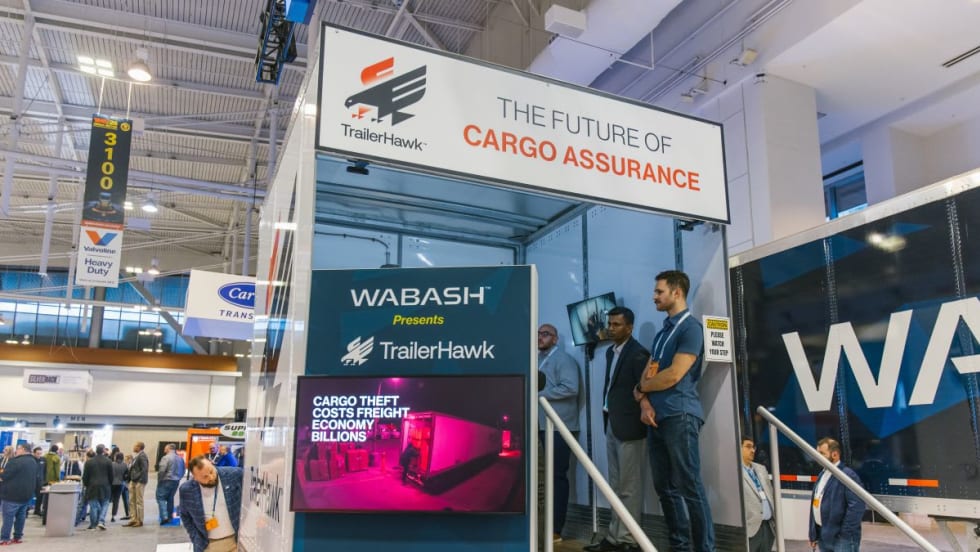
The patent-pending cargo solution integrates a digitally connected cargo door and an intelligent locking system with the TrailerHawk.AI technology platform.
Read More →
The impact of the Iran conflict extends beyond fuel costs, bringing more fraud and cybersecurity risks to the trucking industry.
Read More →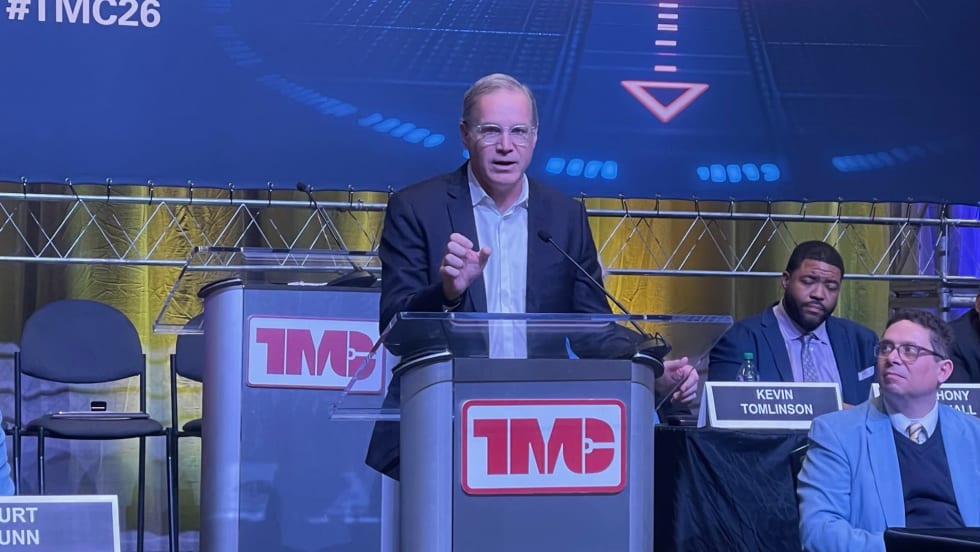
Speaking at the TMC Annual Meeting in Nashville, ATA President Chris Spear said trucking faces mounting pressure from rising fuel prices, geopolitical instability, and uncertainty around trade policy.
Read More →
More than 100,000 new trucking companies enter the industry each year, but regulators manage to audit only a fraction of them. That churn creates opportunities for inexperienced startups — and for “chameleon carriers” that shut down after safety violations and reappear under new identities. Read more from Deborah Lockridge in this commentary.
Read More →
HDTX is an intimate event that connects heavy-duty trucking fleet managers with industry suppliers through small-group discussions, educational sessions, and structured one-on-one meetings.
Read More →
New DAT One feature shows top-paying loads directly on an iPhone’s home screen, helping carriers react faster to spot-market opportunities.
Read More →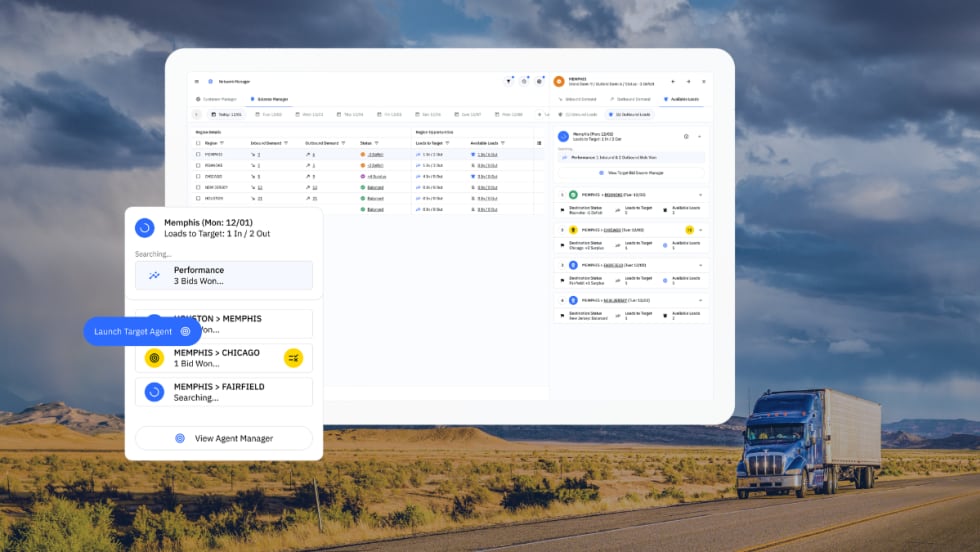
Optimal Dynamics says its new Scale platform uses AI agents and optimization to help carriers find and secure freight that improves network balance and profitability.
Read More →
DAT Freight & Analytics data shows tightening flatbed capacity, easing produce markets, and softening van and reefer rates.
Read More →
NACFE's Run on Less - Messy Middle project demonstrates the power of data in helping to guide the future of alternative fuels and powertrains for heavy-duty trucks.
Read More →