




The mandated use of employee drivers at the ports would result in a huge disruption to interstate commerce, one the trucking industry does not have deep enough pockets for
Trucking Industry Doesn't Have Deep Enough Pockets For Employee-Based Port Model
The mandated use of employee drivers at the ports would result in a huge disruption to interstate commerce, one the trucking industry does not have deep enough pockets fo
by Staff
March 2, 2010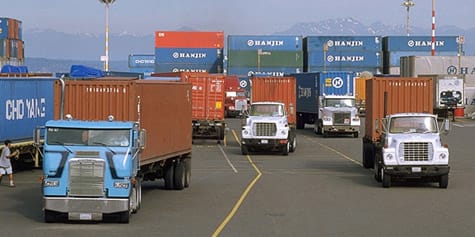
Labor interests and the trucking industry continue to battle it out over harbor trucking. (Photo courtesy of the Port of Seattle)
4 min to read
, said Curtis Whalen, executive director of the Intermodal Motor Carriers Conference of the American Trucking Associations.
The debate over harbor trucking and the issue of whether the ports should ban owner-operators continued Tuesday during a presentation at the 10th Annual Trans-Pacific Maritime Conference in Long Beach, Calif.
Whalen argued that if the ban on independent contractors gets through court challenges and becomes part of the Port of Los Angeles' Clean Truck Program, it would result in a fundamental restructuring of the business surrounding port commerce.
Some ports, including the Port of Los Angeles, are trying to get Congress to amend the Federal Aviation Administration Authorization Act, which prohibits states from enacting and enforcing laws that are "related to" motor carrier prices, routes, or services in order to maximize competitive forces in the trucking industry. These ports wish to have the authority to regulate trucking operations at the ports, such as security, congestion and the environment.
If the FAAAA is amended, it would mean the end of the federal pre-emption structure, which protects and enhances interstate commerce, Whalen said. State regulation of trucking would cause significant inefficiencies, increase costs and decrease the level of competition for the industry, he added.
Does it Make Sense for Trucking?
Whalen told attendees that an employee-based model would not be appropriate for the trucking industry, as 72.1 percent of carriers operate six or fewer trucks. Finding the larger companies that would employ these port drivers is not in the numbers, he said.
In addition, port drivers can afford to buy cleaner trucks, Whalen said. He referred to a California Air Resources Board report that found port drivers make 11 percent above the 2006 California per capita income of $38,127 a year. In addition, the bulk of motor carriers' costs, about 70+ percent of their revenue, goes to paying drivers, he said. "This is a different kind of industry than those supporting the owner-operator ban think it is."
The Labor Dispute
When the Ports of Los Angeles and Long Beach first adopted their Clean Truck Programs, they aimed to cut emissions by 80 percent by 2012. Today, both are nearing their goal, with about 8,000 clean trucks in their harbors, Whalen said. Even with the injunction against the Port of Los Angeles' owner-operator ban, the ports are cleaning the air. Whalen said that with the environmental issues falling into place, the key issue at play is that owner-operators cannot be organized under law. "It's the classic battle between labor versus management," Whalen said.
"It's been said that ports are the place old trucks go to die," said Chuck Mack, chair of the Western Conference Teamster Pension Trust for the Teamsters union, who also presented at TPM.
Mack argued that after deregulation of the trucking industry in the 1980s, union workers were pushed out of good jobs, as the industry was flooded by "fly-by-night" small companies battling over who could pay workers less. "This system has brought deadly consequences, not just economic."
He said the owner-operator model was a scheme concocted by motor carriers to get drivers to pay for the trucks. According to Mack, trucking companies essentially shift all costs and responsibility of owning a truck onto drivers. And with the Clean Truck Programs, those independent contractors are essentially paying for the clean trucks, he added.
"Today, the nation's port drivers are on the front lines," he said. "They should be proud of their jobs, but they're the most exploited drivers in the nation."
Mack argued that port drivers work 70 to 80 hours a week for low wages, have no health insurance, breathe in diesel fumes and operate in dangerous conditions.
Having a Choice
"Why would someone become an owner-operator if it's as bad as my colleague makes it out to be?" asked Whalen. "Go do something else."
Whalen disagreed with Mack's take on the owner-operator model. He noted the current system is not just made up of owner-operators, but is a mixture of independent contractors and employee drivers.
"What we want is to maintain that choice," Whalen said. "[Owner-operators] like their trucks, and they don't want to be employees."
Conference attendees also seemed to believe that the current model is working. When asked, "Is the current harbor trucking regime based on owner-operator drivers adequately serving the needs of cargo interests?," 78.4 percent answered yes, while 19.6 percent responded no. When asked if a clean truck program should mandate the use of employee drivers, 86.7 percent of attendees said no, while 11.3 percent answered yes.
More Fleet Management

'Beyond Compliance,' Regulations, Driver Coaching on ATRI’s 2026 Research List
The American Transportation Research Institute will examine driver coaching, regulatory impacts — including the "Beyond Compliance" concept —and weather disruptions that shape trucking operations.
Read More →
Fleet Advantage's Brian Antonellis on the Growing Need to Replace Old Trucks
Fleet Advantage's Brian Antonellis says it's time for fleets to get back to the fundamentals of good maintenance practices. And that includes replacing older, inefficient equipment.
Read More →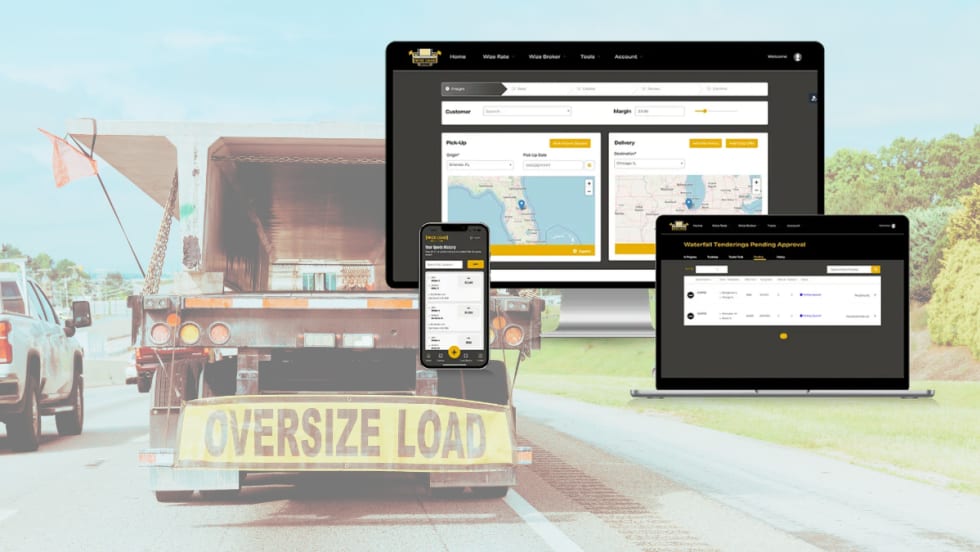
Truckstop.com Adding to Open Deck, Heavy Haul Offerings
Load matching for flatbed, lowbed, oversize and overweight loads can't be automated like basic van freight, but Truckstop.com is adding more high-tech tools to help.
Read More →
Trucker Path, Truckstop.com Expand Load Access Partnership
An expanded Trucker Path and Truckstop.com integration brings more freight opportunities into the TruckLoads app while emphasizing security and network quality.
Read More →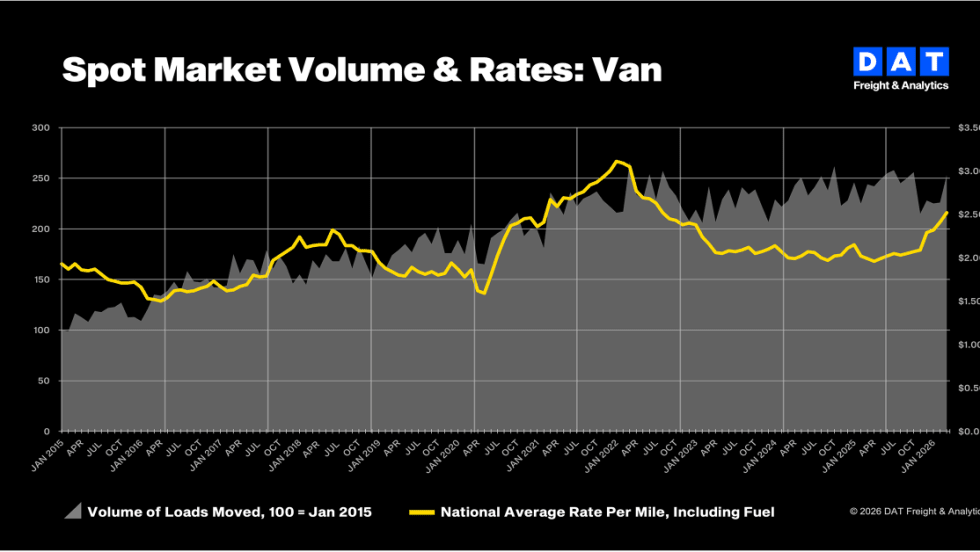
Truckload Rates Hit Two-Year Highs as Diesel Costs Surge, DAT Says
Strong March freight demand combined with a spike in fuel costs pushed both spot and contract truckload rates to their highest levels in more than two years.
Read More →
The AI Conversation You Need to Have with Your TMS Provider
Everyone’s talking about AI — but is your transportation management system actually built for it?
Read More →
Kriska Buys Fellow Canadian Carrier Sharp Transportation Systems
Being part of KTG will allow Sharp to expand and improve its services.
Read More →
Bill in House Would Raise Minimum Insurance for Motor Carriers to $5 Million
The Fair Compensation for Truck Crash Victims Act would increase insurance requirements for interstate motor carriers by nearly seven times.
Read More →
FTR Trucking Conditions Index Hits Four-Year High in February
Strong freight rates push TCI to 10.2, but FTR expects fuel-price volatility to skew March results.
Read More →
C.H. Robinson Offers Carriers Relief as Diesel Prices Surge
C.H. Robinson is waiving fees on fuel cards and cash advances for April and May, aiming to help carriers offset rising diesel costs tied to geopolitical instability.
Read More →