



The American Transportation Research Institute has posted two new truck parking studies on its website that use different methods to track available capacity.
 MENU
MENU SEARCH
The American Transportation Research Institute has posted two new truck parking studies on its website that use different methods to track available capacity.
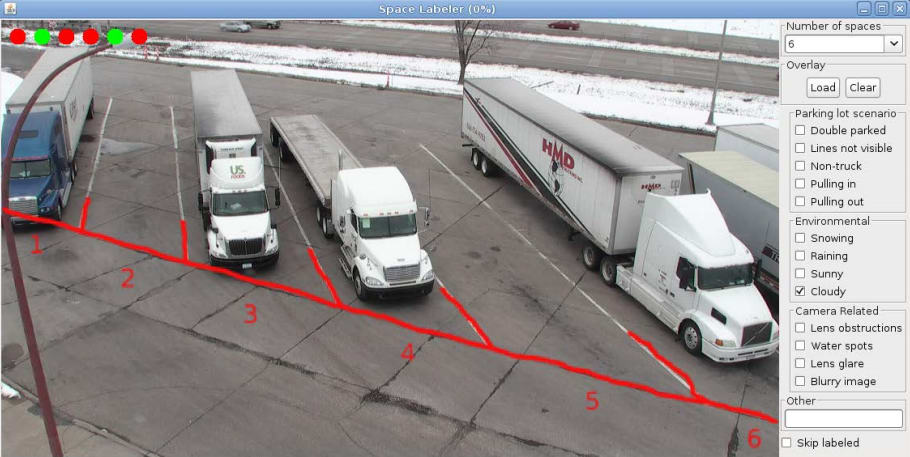
ATRI used a camera-based system to track parking availability for one of the studies. Source: ATRI
The American Transportation Research Institute has posted two new truck parking studies on its website that use different methods to track available capacity.
The studies were published by ATRI in conjunction with the Minnesota Department of Transportation and the Federal Highway Administration. The lack of available truck parking is a major issue for the trucking industry and a hot research topic for ATRI.
In the first study, Utilizing Truck GPS Data to Assess Parking Supply and Demand, ATRI presents a technical analysis that used truck GPS data to assess truck parking capacity at four Minnesota rest areas. The study looked at parking supply and demand by time-of-day and day-of-week by cross-referencing truck GPS data to identify truck activity at several rest stops.
A takeaway from the study is a consistent trend for all rest stops is to experience periods of overcrowding at some point each week. The study also found that vehicles had a harder time finding parking in the latter part of the week.
The second study, A Comprehensive System for Assessing Truck Parking Availability, details a field test conducted by ATRI and the University of Minnesota to deliver real-time truck parking information to commercial drivers through three separate delivery systems. The systems studied were: roadside changeable message signs, online, and in-cab communications systems.
To track parking availability, the team developed and deployed a multi-camera based truck parking detection system to keep track of parking capacity in real time at three state-sponsored facilities. All drivers included in the study had a positive response to increased truck parking information with many drivers saying that it significantly helped them find parking during a trip and stay compliant with hours of service regulations.
Both studies successfully demonstrated new approaches for identifying where additional truck capacity is needed and how delivering real-time information on parking availability to commercial drivers can improve their operational efficiency.
The reports are available from ATRI at www.atri-online.org.

ACT Research data shows volumes hitting a four-year high and supply-demand balance strengthening, but higher oil prices are undercutting tariff relief and tempering optimism.
Read More →
The patent-pending cargo solution integrates a digitally connected cargo door and an intelligent locking system with the TrailerHawk.AI technology platform.
Read More →
The impact of the Iran conflict extends beyond fuel costs, bringing more fraud and cybersecurity risks to the trucking industry.
Read More →
Speaking at the TMC Annual Meeting in Nashville, ATA President Chris Spear said trucking faces mounting pressure from rising fuel prices, geopolitical instability, and uncertainty around trade policy.
Read More →
More than 100,000 new trucking companies enter the industry each year, but regulators manage to audit only a fraction of them. That churn creates opportunities for inexperienced startups — and for “chameleon carriers” that shut down after safety violations and reappear under new identities. Read more from Deborah Lockridge in this commentary.
Read More →
HDTX is an intimate event that connects heavy-duty trucking fleet managers with industry suppliers through small-group discussions, educational sessions, and structured one-on-one meetings.
Read More →
New DAT One feature shows top-paying loads directly on an iPhone’s home screen, helping carriers react faster to spot-market opportunities.
Read More →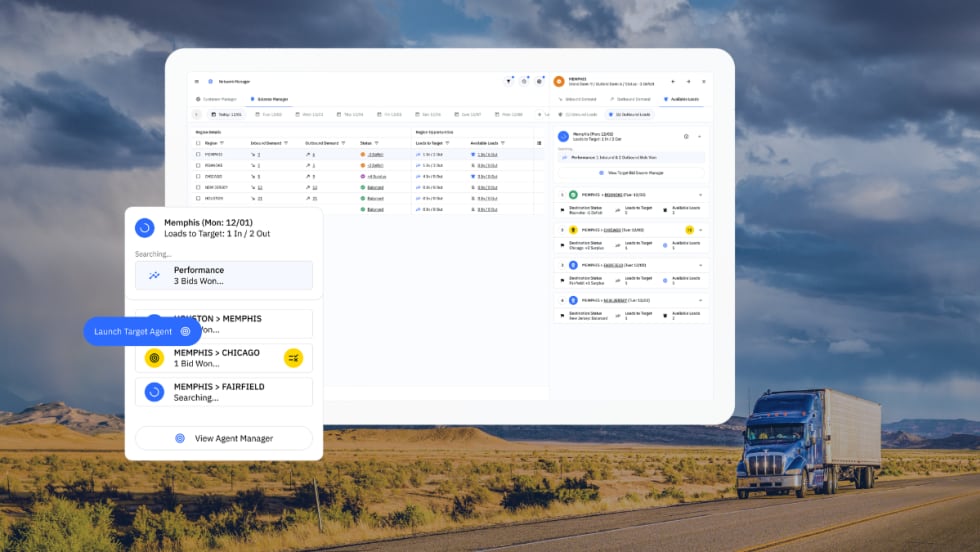
Optimal Dynamics says its new Scale platform uses AI agents and optimization to help carriers find and secure freight that improves network balance and profitability.
Read More →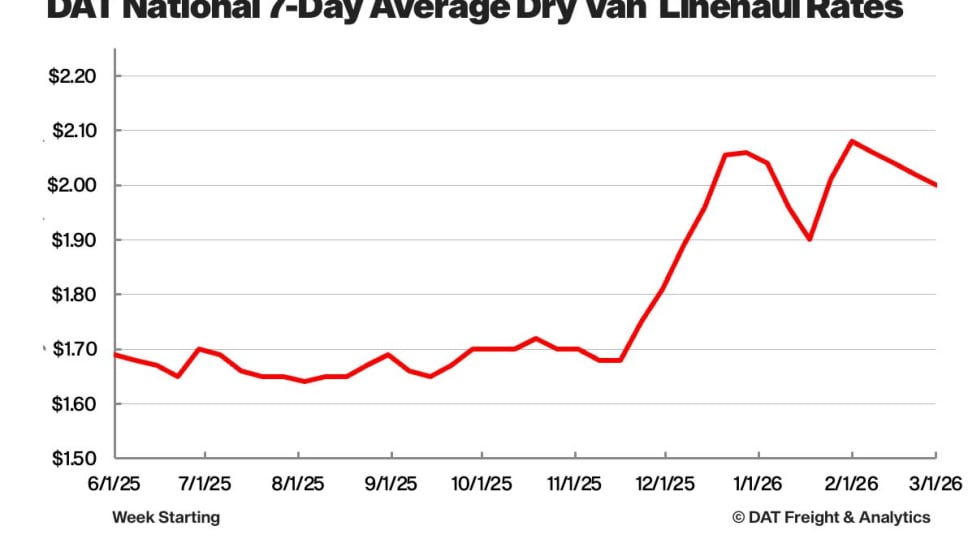
DAT Freight & Analytics data shows tightening flatbed capacity, easing produce markets, and softening van and reefer rates.
Read More →
NACFE's Run on Less - Messy Middle project demonstrates the power of data in helping to guide the future of alternative fuels and powertrains for heavy-duty trucks.
Read More →