



U.S. and Mexican officials on Friday signed an agreement to streamline the flow of goods between the two countries, including by truck.
 MENU
MENU SEARCH
A new agreement between the U.S. and Mexico allows stronger collaboration between CBP's Customs-Trade Partnership Against Terrorism program, commonly known as C-TPAT, and Mexico’s equivalent, to streamline the flow of goods between the two countries.
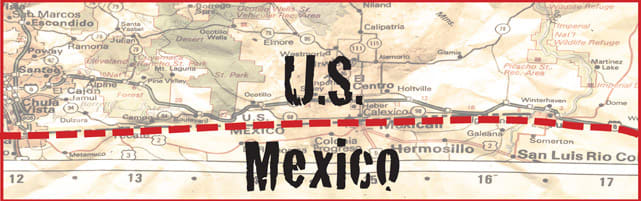
U.S. and Mexican officials on Friday signed an agreement to streamline the flow of goods between the two countries, including by truck.
It was announced at the San Ysidro port of entry in California by U.S. Customs and Border Protection Commissioner R. Gil Kerlikowske and Mexico's Tax Administration Service Chief Aristóteles Núñez Sanchez
It allows stronger collaboration between CBP's Customs-Trade Partnership Against Terrorism trade and security program, commonly known as C-TPAT, and Mexico’s equivalent, the New Certified Companies Scheme, or NEEC for short, a Spanish language acronym.
The agreement has the backing of trucking groups, customs brokers and others involved in cross-border trade, according to the San Diego Union-Tribune newspaper.
The goal of the mutual recognition arrangement is to link the two industry partnership programs, so that together they create a unified and sustainable security posture that can assist in securing and facilitating global cargo trade, according to CPB.
The arrangement is similar to one currently in place between the U.S. and Canada, and should result in a more efficient and secure supply chain between the two countries, said Kerlikowske. “This is a significant milestone for both the United States and Mexico and the facilitation of secure trade between the two countries," he said.
According to CPB, the arrangement provides tangible and intangible benefits to program members to including: fewer exams when shipping cargo, a faster validation process, common standards, efficiency for Customs and business, transparency between Customs administrations, business resumption, front-of-the-line processing, and marketability.
Read more about it from the San Diego Union Tribune.

ACT Research data shows volumes hitting a four-year high and supply-demand balance strengthening, but higher oil prices are undercutting tariff relief and tempering optimism.
Read More →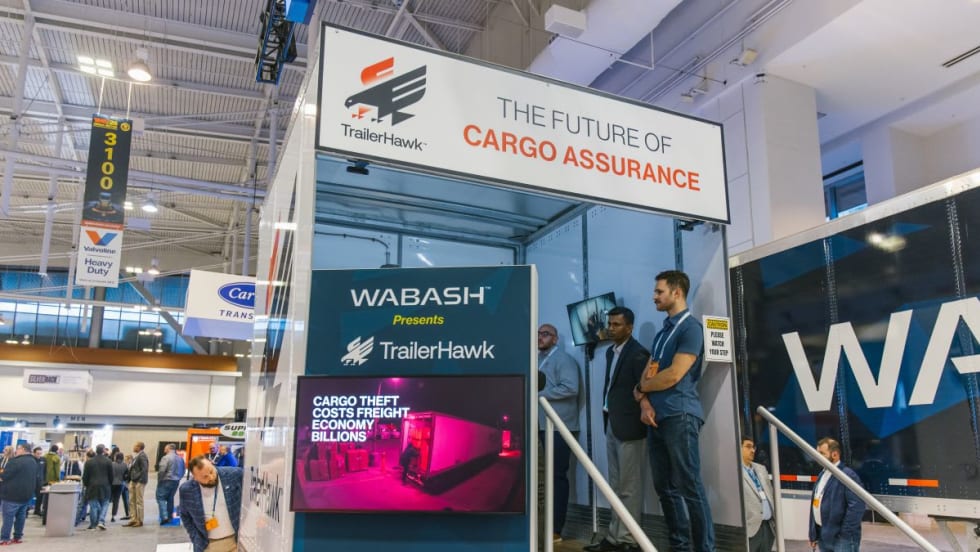
The patent-pending cargo solution integrates a digitally connected cargo door and an intelligent locking system with the TrailerHawk.AI technology platform.
Read More →
The impact of the Iran conflict extends beyond fuel costs, bringing more fraud and cybersecurity risks to the trucking industry.
Read More →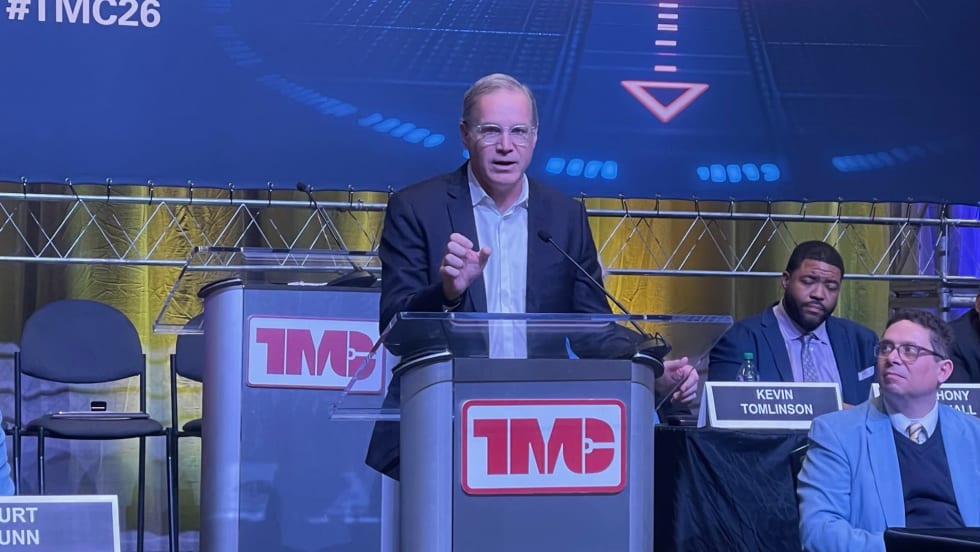
Speaking at the TMC Annual Meeting in Nashville, ATA President Chris Spear said trucking faces mounting pressure from rising fuel prices, geopolitical instability, and uncertainty around trade policy.
Read More →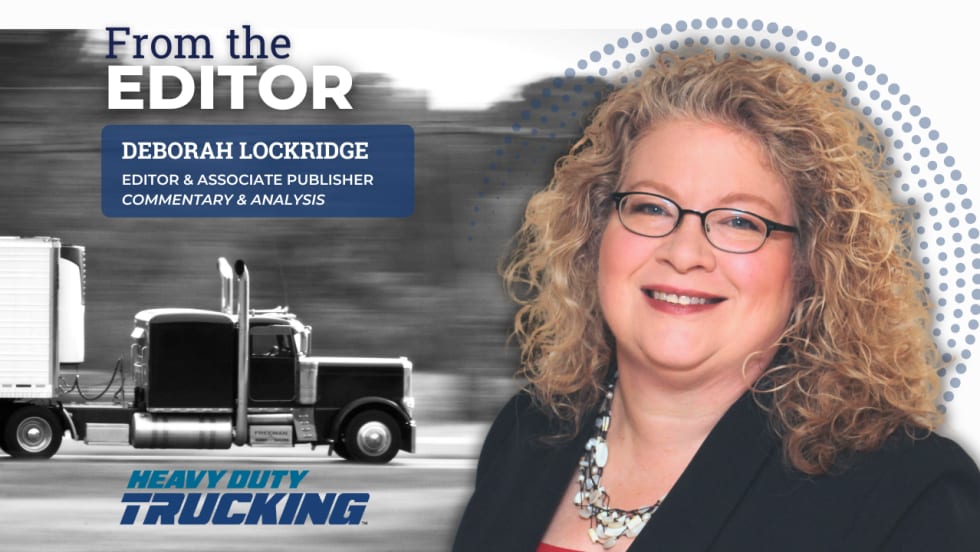
More than 100,000 new trucking companies enter the industry each year, but regulators manage to audit only a fraction of them. That churn creates opportunities for inexperienced startups — and for “chameleon carriers” that shut down after safety violations and reappear under new identities. Read more from Deborah Lockridge in this commentary.
Read More →
HDTX is an intimate event that connects heavy-duty trucking fleet managers with industry suppliers through small-group discussions, educational sessions, and structured one-on-one meetings.
Read More →
New DAT One feature shows top-paying loads directly on an iPhone’s home screen, helping carriers react faster to spot-market opportunities.
Read More →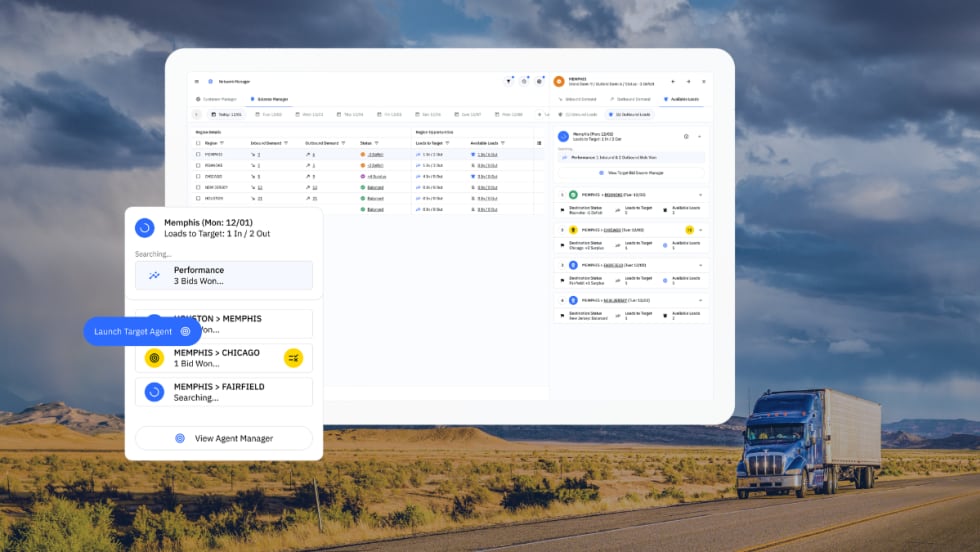
Optimal Dynamics says its new Scale platform uses AI agents and optimization to help carriers find and secure freight that improves network balance and profitability.
Read More →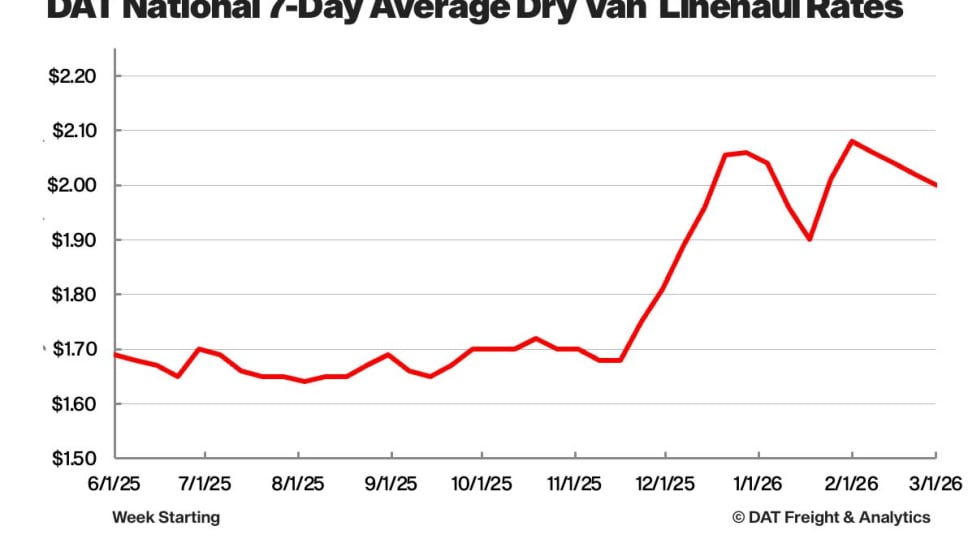
DAT Freight & Analytics data shows tightening flatbed capacity, easing produce markets, and softening van and reefer rates.
Read More →
NACFE's Run on Less - Messy Middle project demonstrates the power of data in helping to guide the future of alternative fuels and powertrains for heavy-duty trucks.
Read More →