



The National Conference of Weights and Measures has announced that a special steering committee is recommending that compressed and liquefied natural gas be sold in gasoline and diesel gallon equivalents.
 MENU
MENU SEARCH
The National Conference of Weights and Measures has announced that a special steering committee is recommending that compressed and liquefied natural gas be sold in gasoline and diesel gallon equivalents.

The National Conference of Weights and Measures has announced that a special steering committee is recommending that compressed and liquefied natural gas be sold in gasoline and diesel gallon equivalents.
The recommendation will be voted on this July at the 99th NCWM Annual Meeting in Detroit.
The NCWM is nonprofit association of state and local weights and measures officials, federal agencies, manufacturers, retailers and consumers that developed national weights and measures standards since 1905.
The recommendation sets the stage for the potential approval of the diesel gallon equivalent standard, which under the proposal is defined as 6.380 pounds of compressed natural gas and 6.060 pounds of liquefied natural gas.
Supporters of this change says the adoption of the DGE standard would provide certainty for fuel retailers and regulators as CNG and LNG would be measured in consistent units of mass.
They also claim it would allow natural gas to be displayed in units that provide customers and the broader public the ability to easily compare fuel costs and understand the value proposition of natural gas versus diesel fuel.
The gasoline gallon equivalent standard has been used in the natural gas vehicle industry since its adoption by NCWM in 1994.
“For 20 years, the GGE standard has provided fuel retailers and customers a reliable unit with which to do business,” says the group NGVAmerica, a national organization dedicated to the development of a market for vehicles powered by natural gas.
It belies as the number of LNG stations and CNG station serving the trucking industry grows, it is increasingly important that there be a national standard that provides guidance on the way to measure and dispense natural gas in DGEs.
"Establishing a diesel gallon equivalent standard is an important issue that would have a significant impact on our industry," said NGVAmerica president Richard Kolodziej.
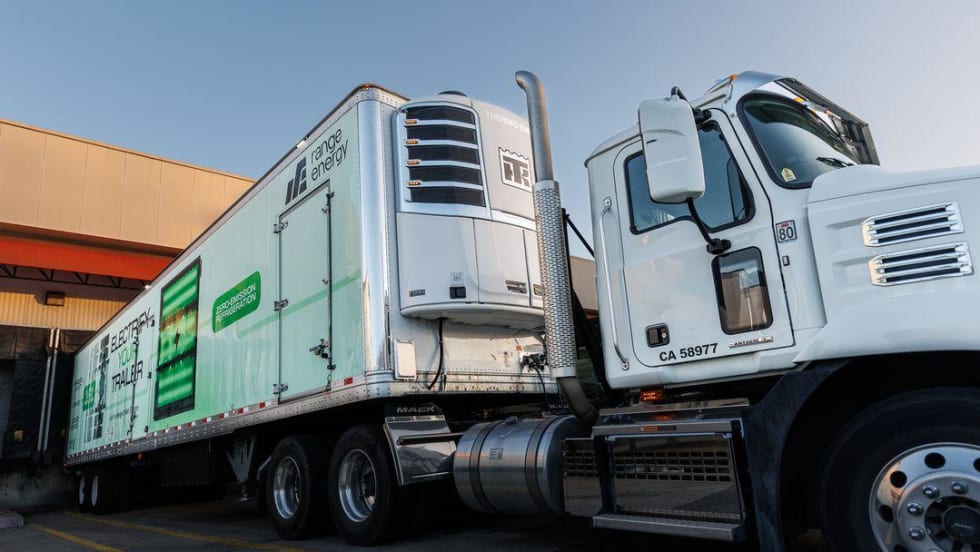
Range Energy said its production-ready eTrailer system proved it can boost stability, safety, and efficiency in sub-zero winter conditions as the company moves toward scaled deployment.
Read More →
Is your company a leader in sustainability efforts among trucking fleets? If so, Heavy Duty Trucking's editors want to hear from you.
Read More →
Watch to learn how Deflecktor's new wheel cover design is taking a simpler approach to aerodynamics, with an eye toward making it more practical for both trucks and trailers.
Read More →
Aerodynamic wheel covers can deliver small but meaningful fuel-economy gains for fleets, and Deflecktor says its latest design aims to make the technology easier and more affordable to deploy.
Read More →
When diesel prices are as volatile as they've been in 2026, it makes it tough for trucking fleets to plan and control costs. Breakthrough Fuel's Jenny Vander Zanden has insights on near-term savings strategies.
Read More →
Practical steps fleets can take to manage fuel costs, from purchasing strategies to driver behavior.
Read More →
Prices jumped another 24 cents in a week, with California topping $7.50 and new data showing fleet fuel costs may already be at record levels.
Read More →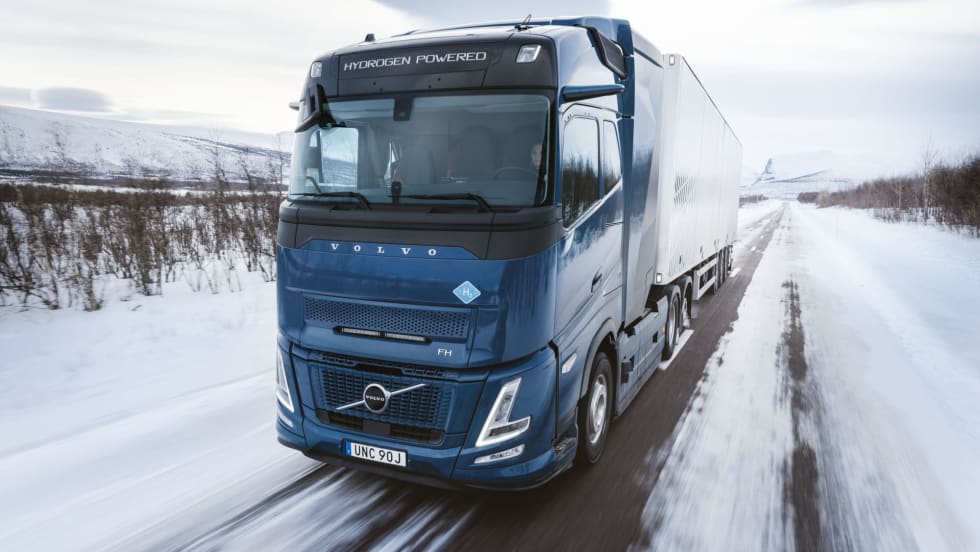
Hydrogen combustion engine trucks will be especially suitable over longer distances and in regions where there is limited charging infrastructure or time for recharging of battery-electric trucks, according to the company.
Read More →
By joining Daimler Truck and Volvo, Toyota brings fuel cell expertise to a joint effort aimed at making hydrogen viable for heavy-duty transport.
Read More →Trucking operators are slowing speeds, cutting empty miles, and declining unprofitable freight as diesel costs continue to rise due to conflict in the Middle East.
Read More →