





As I write each month on the latest advancements in tire development and improvements in technology to prolong tire life and reduce operating costs, one single theme remains front and center: the need to keep tires properly inflated.
All Pressured Up: Automatic Tire Inflation Systems Offer Protection from Underinflation Woes
As I write each month on the latest advancements in tire development and improvements in technology to prolong tire life and reduce operating costs, one single theme remains front and center: the need to keep tires properly inflated
October 12, 2010
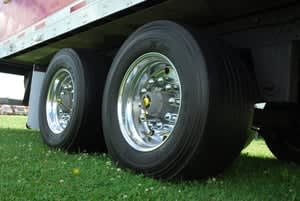
Automatic tire inflation systems are now available for 19.5-inch wheels and wide-base single tires. (Photo by Jim Park)
6 min to read
Regardless of how tires have advanced over the years - thinner treads, new rubber compounds, advanced casings - none would be very effective over the long run if the darned things are run flat.
Standard Testing Labs in Massillon, Ohio, recently compared rolling resistance on certain EPA SmartWay-approved tires at various inflation pressures. The results were predictable. Researchers noticed dramatic changes in the tire footprint and increased rolling resistance at less than optimum inflation. Underinflation completely negates the energy-savings potential of low-rolling resistance tires.
And that brings us around to automatic tire inflation systems. We know trailer tires are the most often ignored tires in the fleet, and we know that today's inflations systems virtually eliminate that worry. Why do so many fleets remain reluctant to equip trailers with what are now nearly fool-proof inflation systems?
Frank Sonzala, vice president of sales at Pressure Systems International, manufacturers of the Meritor Tire Inflation System (MTIS) by PSI, has heard all the naysayers' comments and concerns about inflation systems, and dismisses most of them out of hand.
"At first, it was cost," he says. "Today, we can make a very compelling ROI case, and as fuel, tire, and labor costs go up, the case gets even stronger. Then there were fears over reliability, but the systems have proven themselves over time. "Today, people seem to be looking for faults with the systems in order to justify not making the investment, but those arguments are getting pretty thin."
In a recent survey conducted by CK Commercial Vehicle Research, 60 fleet managers operating 158,000 trailers were asked to estimate the value they believed automatic tire inflation systems may add when the trailer is disposed of at trade or resale. Forty percent of respondents indicated they believed ATIS added zero to 20 percent to resale value. Another 28 percent believed ATIS may make trailers easier to sell. Only one respondent indicated he thought ATIS may increase value by more than 20 percent. (The full report is available CK Commercial Vehicle Research's website, www.ckcvr.com.)
Clearly, there's still work to be done in convincing buyers of the advantages of such systems, but Sonzala says he has just sold a large order to a major truckload carrier that will retrofit the system on hundreds of trailers. They bought on the fuel savings benefits alone, but that's only a small part of the equation.
"In the early years, it was the pioneers and the risk takers who bought the systems, but now the more cautious and analytical fleets are seeing the upside too," he notes. "It's taken a while, but they are catching on."
Save your money, save your tires
Automatic tire inflation systems keep your tires correctly inflated 24 hours a day, 365 days a year, regardless of the weather, or delivery schedules, or proximity to an inflator. You don't need to argue with ATIS, pay it extra, or cajole it into doing its job. It's like hiring a tire guy you never have to pay - and it even does inside duals.
Add to that a reduction in the grief, inconvenience, and cost associated with on-road tire failures and tires that mysteriously go flat in drop yards. Road hazards and driver abuse notwithstanding, ATIS will probably eliminate roadside failures. Even if you pick up a sizable chunk of foreign material in a tire, ATIS often can keep up with the leaking air, or at least allow you to get to a shop before the tire deflates completely.
John Becker of Trans Technologies Co. reports a customer of his has reduced heat-related blowouts to nearly nil this summer from more than 150 incidents last year.
"The only thing he changed was adding our T-Rac automated tire management system. It kept his tires properly pressurized," Becker says.
With proper inflation also comes improved tread life and even wear (barring external problems like alignment, balance, etc.), as well as less casing degradation because tires don't run hot or soft due to less than optimal inflation pressure.
And a number of studies have surfaced recently tying proper inflation pressure to improved fuel efficiency. Correct inflation pressure ensures an optimum contact patch, and thus the lowest possible rolling resistance.
"There are financial gains from auto inflation systems beyond improved fuel economy, like extended tread life, increased safety, increased up-time, and prevention of blowouts due to incorrect tire pressure," says Steve Slesinski, director of product management at Commercial Vehicle Products Group, Dana Holding Corp. "Obviously, controlling those costs is a wise investment."
Arguments against
Are there downsides to automatic inflation systems? Sonzala says some worry that if the system works quietly in the background, a tire problem could go undetected or ignored. All systems warn the driver in some way when they are working. It's up to drivers to report problems. Others say that since the systems provide no indication of which tire is being filled, leak detection can be time-consuming.
"True enough," Sonzala admits. "But consider the alternative. You'd have a flat tire. Actually, when the system is active you can hear the air flow and feel the hose vibrate. We've looked at installing indicators, but that would just drive up the cost."
Trans Technologies' system provides pressure gauges for each tire, so pressures can be verified, and leakers detected.
Others argue that over-pressurization is a risk if the tire is topped up at low ambient temperate and run into a warmer region. Pressure will increase by about 2 psi for each 10-degree change in temperature. Bridgestone says when a properly inflated/loaded tire is up to operating temperature (one hour or more of operation) it will typically run about 60 degrees hotter than the ambient temperature - adding about 12 psi to the tire. While that pressure increase is minimal, distortion of the contact patch would be minimal too.
Unique advantages
Several systems are currently available, but they can all be broken out into two camps: the pressurized axle systems and the tube systems.
The Meritor and Airgo systems use the axle tube as an air reservoir, but seal the ends of the axle with a fitted pressure plug and a pressure relief system to prevent seal damage. The tube systems from Airgo, Hendrickson, Pressure Guard, Spicer (Roadranger), and Trans Technologies run flexible tubing from the trailer air tanks to the wheel end, and use rotary unions with high-pressure seals and vents to protect the wheel seals.
According to Matt Wilson, the business unit manager for Hendrickson's TireMaax system, keeping the axle tube non-pressurized allows the hub to vent back through the axle.
"This locates the hub vent in a protected location inside the axle beam as opposed to on the hubcap. Remotely locating the hub vent substantially reduces the opportunity for contamination to migrate past the vent feature and into the sealed hub area," he says.
PSI's Sonzala counters that the pressurized axle tube is the least complex approach, and his system features all the necessary safeguards to prevent wheel seal failures.
Dana's Tire Inflation Management System (TIMS) does more than just pressurize tires; it checks each tire and alerts the driver to a problem, and it shows the driver when the system is working to stabilize that tire.
One unique feature of Transtech's T-RAC system is that it vents excess pressure automatically to maintain the inflation pres
Subscribe to Our Newsletter
More Maintenance

Questar Adds AI-Driven Repair Recommendations to Fleet Maintenance
Questar’s latest maintenance platform uses AI to flag potential failures, recommend repairs, and estimate the cost of waiting, helping fleets prioritize maintenance and save money and downtime.
Read More →
API Formally Approves Next-Gen Engine Oil Category for 2027 Engines
Heavy-duty engine oil marketers can begin finalizing formulations and preparing product packaging to meet the new oil specifications ahead of the January 1 licensing date.
Read More →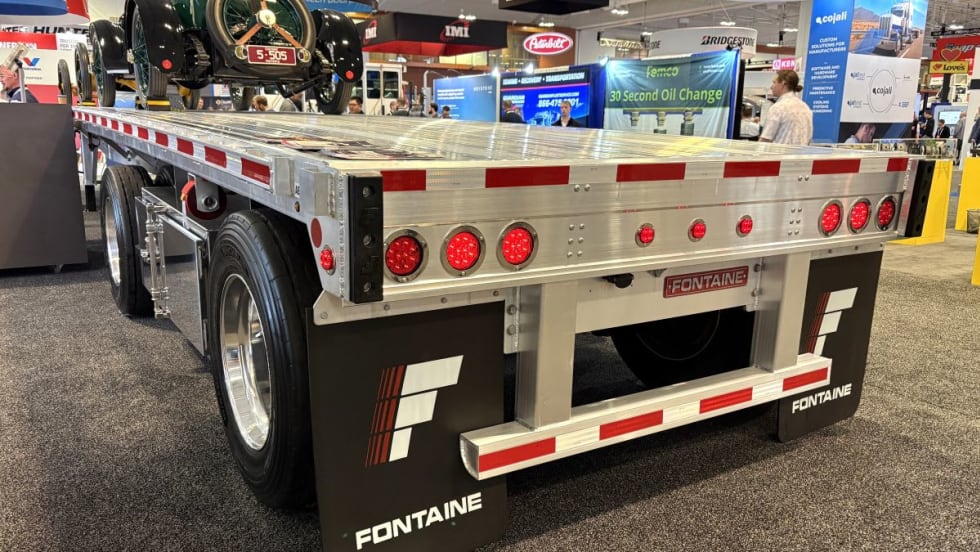
Fontaine Expands Flatbed Lineup with New Fleet-Focused Models, Eyes 2027 Launch
Fontaine is broadening its flatbed lineup with new models aimed at fleets, including a lightweight aluminum trailer expected in 2027 that emphasizes durability, repairability, and lower cost.
Read More →
Fullbay Acquires Pitstop to Strengthen AI-Powered Predictive Maintenance
Pitstop AI will use Fullbay's extensive shop data to drive predictive maintenance for trucking fleets and repair shops.
Read More →
HDT Honors the Best New Products of 2025 at TMC [Photos]
Heavy Duty Trucking's Top 20 Products awards recognize the best new products and technologies. Check out the award presentations at the 2026 Technology & Maintenance Council annual meeting.
Read More →
Sponsored•March 31, 2026
Detroit Engines: Trusted Performance, Built for What's Next
The Detroit® Gen 6 engine platform proves that real progress doesn’t require a complete redesign. Built on 20 years of trusted technology, these engines are designed for efficiency, stronger performance, and greater reliability than before. And they do it all while complying with 2027 EPA standards on every mile.
Read More →
EPA Targets DEF Sensor Failures Behind Truck Derates
New guidance allows engine makers to replace problematic DEF sensors with NOx-based systems, aiming to reduce unnecessary derates and downtime caused by failures in the sensors designed to monitor diesel exhaust fluid on trucks.
Read More →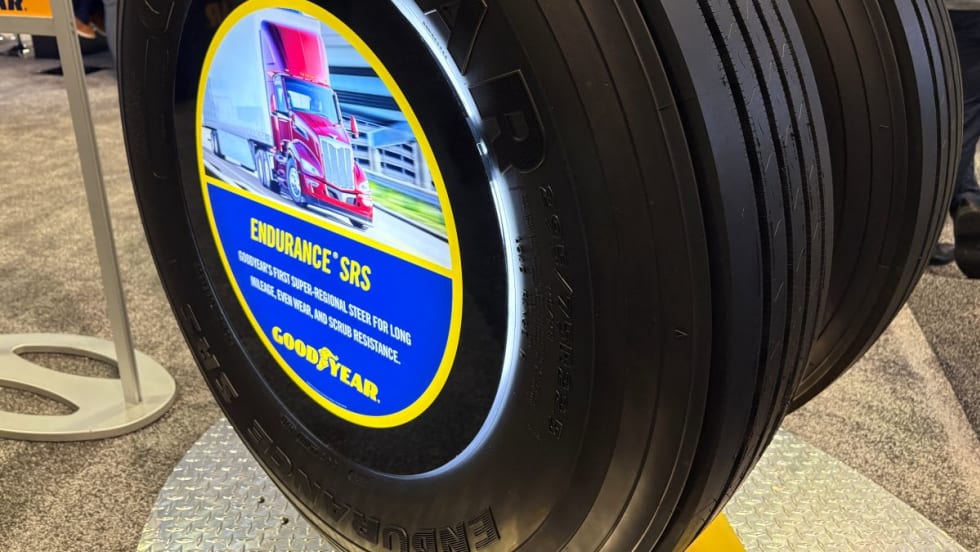
Goodyear Targets ‘Super-Regional’ Sweet Spot with New Steer Tire
Goodyear is preparing to roll out a new steer tire designed to bridge the gap between regional and linehaul for trucking fleets.
Read More →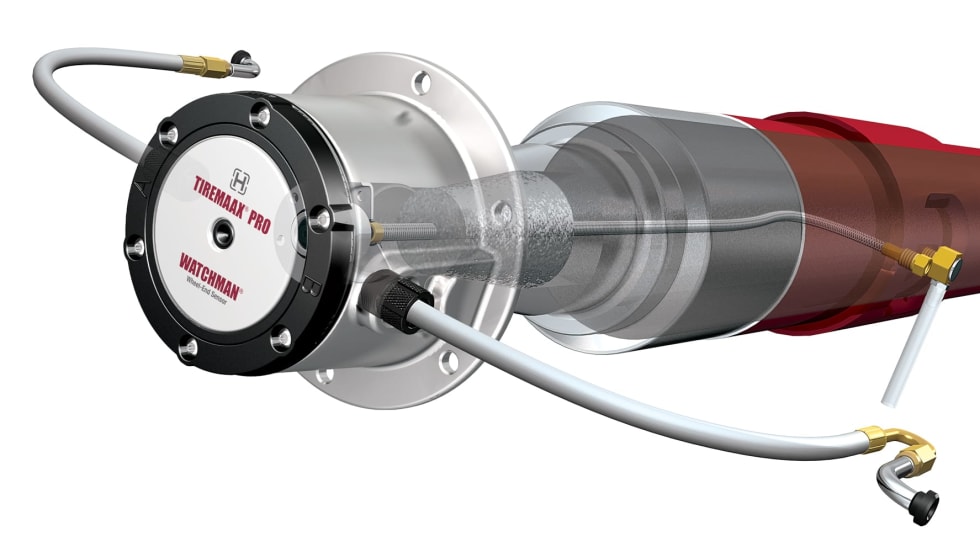
Hendrickson Unveils Watchman Smart Wheel-End System at TMC
Hendrickson’s new sensor platform integrates with its TireMaax system to deliver real-time tire and wheel-end insights, targeting uptime and cost savings.
Read More →
Over-the-Air Updates and the Modern Powertrain Explained
Over-the-air updates are moving beyond recalls, and expanding how fleets manage performance, compliance, and uptime.
Read More →