





How much are you willing to invest to make your tires last longer? There is no shortage of tools or strategies available to help prolong tire life, and thereby reduce tire costs, but are they worth the effort and expense?
Making Tires Last
How much are you willing to invest to make your tires last longer? There is no shortage of tools or strategies available to help prolong tire life, and thereby reduce tire costs, but are they worth the effort and expense
March 10, 2011
6 min to read
Maybe there comes a point along the cost/time/effort continuum where good enough is truly good enough.
Some fleets do tires better than others. Many fleets with what some would call a bare minimum tire program seem satisfied with the results, while others never give up tinkering in pursuit of the quarter-million-mile steer tire and the half-million-mile drive tire. In many applications, tires can be made to last longer; it often comes down to how much it costs to reduce tire expenses.
Ken Bartos, maintenance director for Hoovestol, a postal contractor based in Egan, Minn., is averaging 160,000 to 212,000 miles at removal on the steers, and 450,000 to 550,000 miles on his drives. His tire maintenance strategy consists of aligning trucks when new, and doing tire pressure and wear checks at the 15,000-mile A-service interval. His trailer tires get a pressure check every three months. He does not use a tire pressure monitoring system or automatic inflation system. His drivers thump the tires before each trip, and he has people at some of the mail distribution centers who watch for problems. That's it.
"Tires aren't a big problems for us," Bartos says. "We've considered tire pressure monitoring and inflation systems, but we don't think we'd see return on the investment. If I was having a lot of flats, I'd be looking more closely at a remedy, but we don't."
Hoovestol does have nearly 100 percent consistency in its recordkeeping, maintenance and repair practices across its seven terminals. The trucks run all over the system and may be anywhere when a service interval arises.
At the other end of the spectrum, Steve Cooke of National Waste Services in Ajax, Ontario, says he's working hard to get one year's service out of his drive tires. Cooke is in the refuse collection industry - traditionally one of the toughest applications for tires - and is now up to nine to ten months of service from the drive tires on his urban packer trucks.
"That's remarkable enough for this industry where three to six months service from a tire is more common. It's quite an improvement from where we were, and I still think we can do better," Cooke says.
Cooke is quite proactive. The province of Ontario uses transfer stations to collect waste from the refuse trucks before shipping it to out-of-town landfill sites on tractor-trailer units. His rear-loaders don't visit landfill sites anymore, so the need for deep lug tires on those trucks disappeared. He switched from a deep-lug traction tire to a combination lug and rib tire with a broad shoulder, and service life doubled. His biggest problem now is right-hand turns.
"We see very predictable wear on those tires and a lot of curbing damage on the right side, so I rotate them in a criss-cross pattern about halfway through their life cycle," he says. "If I get it just right, I can almost double the tire life again, and we're getting a much higher percentage of reusable casings for retreading."
Cooke's mechanics do tread depth and pressure checks every 150 hours, and he has a service provider come in monthly to do tire rotations and replacements as required. The contractor also provides estimates on future replacement needs so tires can be ordered, mounted and reinstalled on schedule.
On the highway trucks that do run into landfills, Cooke has spec'd Goodyear's DuraSeal to minimize the damage caused by foreign material picked up at the dump sites.
"We took a tire off recently that had no fewer than 25 nails in it - and it still held pressure," Cooke says. "I figure if I save one service call, DuraSeal has paid for itself. With a tire like that one, I'm money ahead on half the fleet already."
So there you have two different approaches, one very hands-on, the other much less so. Each produces the desired results; is one better than the other? It's all about what works for you.
Tire management
Tires are a significant asset to any operation and should be treated as such. They can have a significant fleet operating costs and an impact on fuel consumption - both big expenses in any trucking operation. According to Doug Jones, customer engineering support manager for Michelin Americas Truck Tires, a good tire management program can save a lot of money without costing a lot of money.
"You have to start with a cradle to grave tracking and analysis plan, and back it up with good preventative maintenance," he says. "You won't see the fruits of your efforts if you're not tracking the improvements."
Jones advises starting with the right tire for the application.
"We have seen drivers and even some fleets spec the wrong tires for the application, and that leads to poor tire life. Truck tires are optimized for specific applications," he says.
Ron Szapacs, maintenance specialist at Air Products and Chemicals in Allentown, Pa., recently hit on the right tire for his application. He had been running balanced and matched duals on his power units, and getting 350,000 miles in mixed highway and urban service, which is respectable. He then tried a fuel-efficient wide-base single tire with less than spectacular results. Then he tried an XDN2, Michelin's deeper tread traction version of the wide-base X One.
"We recently pulled a set of those that had run on two different trucks. We took them off the tractor at 480,000 miles with 9/32 of tread still on them, and moved them back to a trailer position," Szapacs says. "That's tremendous life. And they saved us 400 pounds of payload and some fuel too. I took them for the weight savings, and got spectacular mileage in the bargain."
Szapacs has all his trucks aligned when new, and runs a tire pressure monitoring system to maintain inflation pressure. He used to rotate drive tires, but hasn't seen any wear issue that would prompt him to rotate the wide-single tires - so he no longer does.
The scrap heap
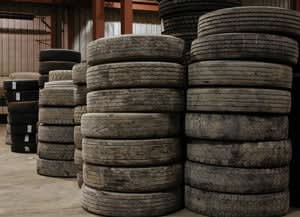
Dead tires do tell tales, if you're willing to learn from them. Of course, a pile of irregularly worn, prematurely retired tires won't tell you much of any value unless you know where they came from. A good tracking system will help immeasurably here.
"You can learn a lot from the tires about the condition of the vehicle, but if you just throw them on the scrap pile you're losing that link to what's going on with the truck," says Tim Miller, Goodyear's commercial tire marketing communications manager. "Train your shop people to note the tire and wheel position so you can trace problems back to the truck or axle. Check the tire as it comes off the truck. It's a bit late after it hits the scrap pile."
Too many tires with big differences between the wear on one side of the tread and the wear on the other side indicates that alignment issues are not being addressed. "And those differences may be a sign alignment checks need to be reviewed," Miller notes.
Even day-to-day operating issues can make a difference, says Guy Walenga, Bridgestone's director of engineering for commercial products and technologies. Inflation pressure is obviously important, but more so if you're running heavy or at higher speeds.
Weight, speed and pressure are all closely related, and one will impact the other two. Walenga recommends checking the load and inflation tables for the proper inflation, weight and speed ratings for the tires, and advises fleets not to exceed those recommendations, he says.
"If you want improved life from your tires, stay within the parameters, and keep a constant eye on them for irregular wear and signs of deterioration," Walenga says. "Catch it ear
Subscribe to Our Newsletter
More Maintenance

Questar Adds AI-Driven Repair Recommendations to Fleet Maintenance
Questar’s latest maintenance platform uses AI to flag potential failures, recommend repairs, and estimate the cost of waiting, helping fleets prioritize maintenance and save money and downtime.
Read More →
API Formally Approves Next-Gen Engine Oil Category for 2027 Engines
Heavy-duty engine oil marketers can begin finalizing formulations and preparing product packaging to meet the new oil specifications ahead of the January 1 licensing date.
Read More →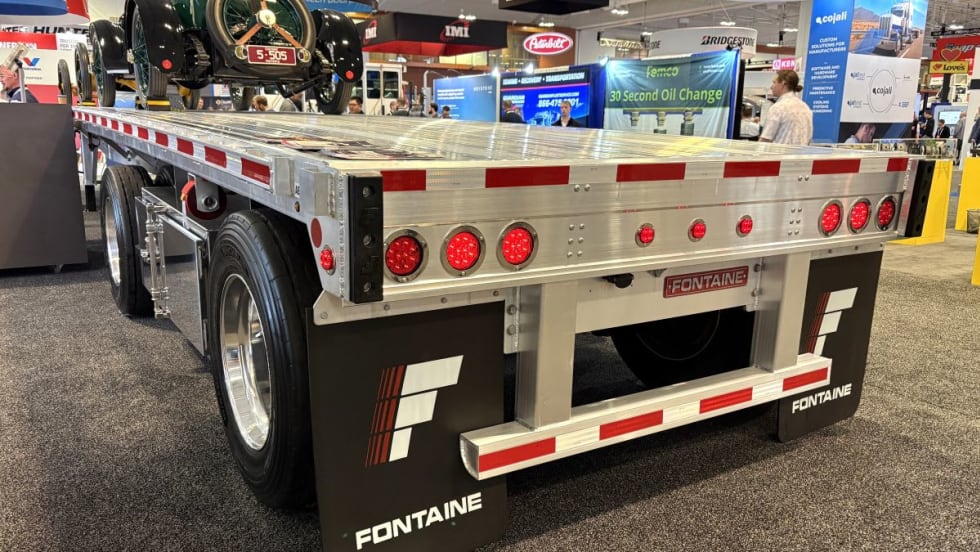
Fontaine Expands Flatbed Lineup with New Fleet-Focused Models, Eyes 2027 Launch
Fontaine is broadening its flatbed lineup with new models aimed at fleets, including a lightweight aluminum trailer expected in 2027 that emphasizes durability, repairability, and lower cost.
Read More →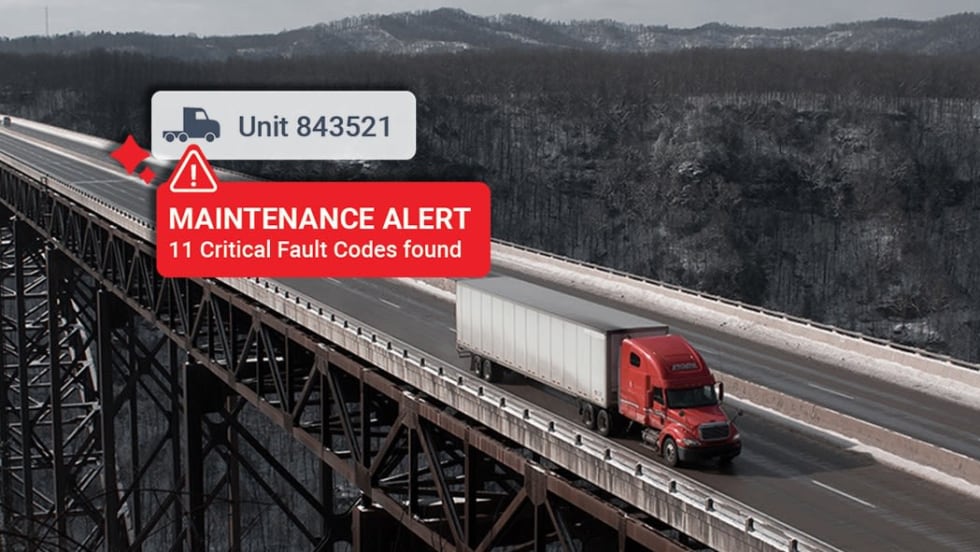
Fullbay Acquires Pitstop to Strengthen AI-Powered Predictive Maintenance
Pitstop AI will use Fullbay's extensive shop data to drive predictive maintenance for trucking fleets and repair shops.
Read More →
HDT Honors the Best New Products of 2025 at TMC [Photos]
Heavy Duty Trucking's Top 20 Products awards recognize the best new products and technologies. Check out the award presentations at the 2026 Technology & Maintenance Council annual meeting.
Read More →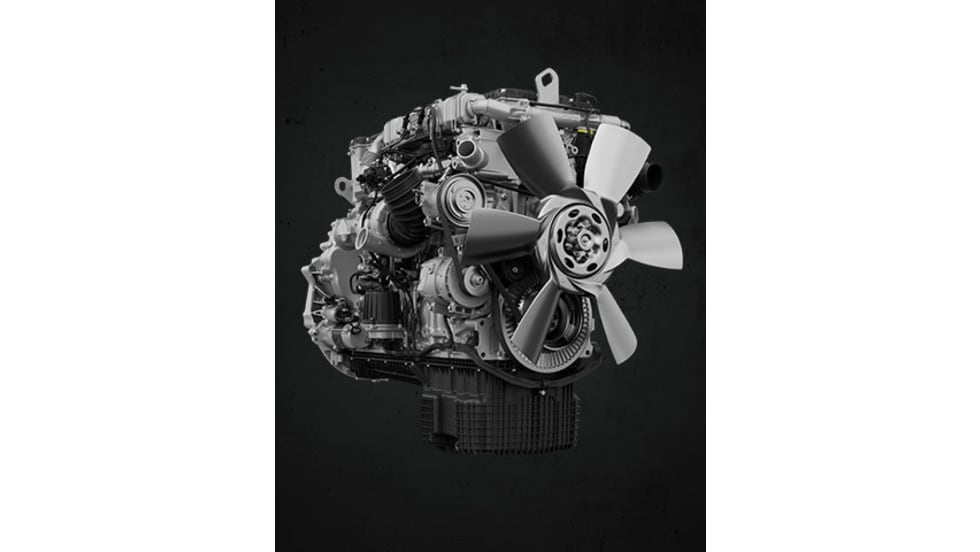
Sponsored•March 31, 2026
Detroit Engines: Trusted Performance, Built for What's Next
The Detroit® Gen 6 engine platform proves that real progress doesn’t require a complete redesign. Built on 20 years of trusted technology, these engines are designed for efficiency, stronger performance, and greater reliability than before. And they do it all while complying with 2027 EPA standards on every mile.
Read More →
EPA Targets DEF Sensor Failures Behind Truck Derates
New guidance allows engine makers to replace problematic DEF sensors with NOx-based systems, aiming to reduce unnecessary derates and downtime caused by failures in the sensors designed to monitor diesel exhaust fluid on trucks.
Read More →
Goodyear Targets ‘Super-Regional’ Sweet Spot with New Steer Tire
Goodyear is preparing to roll out a new steer tire designed to bridge the gap between regional and linehaul for trucking fleets.
Read More →
Hendrickson Unveils Watchman Smart Wheel-End System at TMC
Hendrickson’s new sensor platform integrates with its TireMaax system to deliver real-time tire and wheel-end insights, targeting uptime and cost savings.
Read More →
Over-the-Air Updates and the Modern Powertrain Explained
Over-the-air updates are moving beyond recalls, and expanding how fleets manage performance, compliance, and uptime.
Read More →