





Unlike their relatively pampered long-haul cousins that run all day long on flat, straight Interstates, tires that earn their keep on city streets get up close and very personal with all manner of road hazards, including curbs, potholes, piercing gravel
Streetwise Tires: Avoiding Urban Damage
Unlike their relatively pampered long-haul cousins that run all day long on flat, straight Interstates, tires that earn their keep on city streets get up close and very personal with all manner of road hazards, including curbs, potholes, piercing grave
September 15, 2009
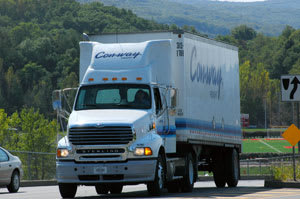
Tires for regional and P&D applications face greater stress due to tight turns and constant stop-and-start cycles.
6 min to read
, and more. Add several hundred starts, stops, and tight, scrubbing turns every day, and you can see why simply running out old highway tires on the pickup-and-delivery fleet might not be a good choice.
To achieve optimum life and efficiency from a P&D tire, fleets should consider tread and sidewall design as well as the rubber compounds used in its construction. Both tend to be thicker than those on a highway tire in order to protect the casing from damage. The additional 32nds of tread provide better resistance to stone drilling and punctures, tolerance to scrubbing, and ultimately longer time to removal and better retreadability. The thicker sidewalls protect the casing from curb damage.
"On these tires, it's about withstanding the turning forces and shoulder wear," says Roger Stansbie, director of Continental's radial truck tire technologies for the NAFTA market. "There's less of a concern about drive traction, as these tend to be all-position tires, which is probably driven by convenience, too."
The stress placed on the tread face by the constant turns and start-and-stop city environment conspires to chew away the tread pretty quickly, so balancing tread life with impact and puncture resistance takes a steady hand from an engineering point of view.
Michelin, for example, uses its Matrix Siping Technology in several regional tires to resist wear and increase tire life.
"To enable the tire to last as long as possible, we use application-specific rubber compounds that resist aggression and irregular wear," explains Chris Tolbert, business segment manager, Michelin Americas Truck Tires. "Tread design is also important to consider. Through siping and groove design, tires can provide increased traction and protection against premature or irregular wear."
Fuel economy still matters
In over-the-road applications, aerodynamics usually account for approximately 40 percent of a vehicle's fuel use, and tire rolling resistance accounts for about 35 percent. While the aerodynamic influence in a P&D application is negligible, rolling resistance remains a contributing factor to fuel economy. It's rather difficult to measure because of the frequent starts, stops, and turns, but that doesn't mean it can be ignored, especially in some types of operations.
"I don't believe mpg improvement can be measured in a pure urban P&D fleet," says Goodyear's national fleet manager, Matt D'Arienzo. "Most urban fleets have longer idle time coupled with frequent braking and accelerating. But some segments in the P&D fleet may have longer highway runs where fuel economy could be considered a controllable."
One of Goodyear's latest offerings, the G662 RSA with Fuel Max Technology, is targeted toward regional and local haul applications where rolling resistance on highway portions of runs could be a factor.
Likewise, Michelin's X One XDN2 and XZUS tires are gaining traction in the same markets because of their fuel-saving characteristics.
"We see this tire used heavily on sanitation vehicles in the urban application," says Tolbert. "Because the wide single tire replaces the duals and their four sidewalls with just two, the amount of wasted energy through sidewall flexing is reduced, saving fuel over traditional dual tires."
Stansbie says Continental is considering a move toward natural rubber or synthetic/natural blended compounds on its 17.5-inch tires in order to improve fuel economy through reduced rolling resistance.
"The low hysteresis effect of those compounds gives you the best bang for the buck in terms of rolling resistance," he says. "We're now looking at using more of the compounds we see in highway tires."
The primary cause of rolling resistance is hysteresis. As the tire rotates under the weight of the vehicle, it experiences repeated cycles of deformation and recovery, and it dissipates this hysteresis energy loss as heat. Hysteresis is the main cause of energy loss associated with rolling resistance and is attributed to the characteristics of the rubber.
Life cycle costs
While a P&D tire might see only 50,000 to 60,000 miles total tread life, there is plenty of opportunity for retreading. A successful retreading program, of course, depends on quality casings.
And casings in a P&D environment take a beating. This is where puncture resistance and sidewall protection become factors. The number of potential retreads is limited by casing condition, and with a higher tendency for casings to be damaged due to sidewall impacts or punctures, you may expect fewer retreads than with a highway casing. If you want exceptional life out of the casing, you'll have to buy the proper protection up front.
"Retreading presents a significant cost reduction over replacing a tire with a new one," says Michelin's Tolbert. "Because of the rigors of the high-scrub application, fleets should spec high-quality tires, whose casing durability would be better able to withstand the retreading process, provided the tires are properly maintained throughout their first life."
Continental has been working with a fleet customer to optimize inflation pressure in the P&D environment, with an eye toward improving fuel economy and tread life. Stansbie says the results of the field tests show that 90-95 psi is a good range for most applications, but pressures up to 105 psi started to affect tread wear.
"The thinking was, upping inflation pressure might have a positive impact on fuel economy, but we saw excessive wear in the center of the tread before we saw any real gains in fuel economy," Stansbie explains. "I think the main move to achieve lower rolling resistance is to compound the tread accordingly."
Priorities
In terms of overall spec'ing parameters, different fleets will have different priorities. Durability would take precedence over fuel economy in many cases, though economy is becoming more of a consideration as fuel costs rise. Retreadability is certainly a concern, and fleets that can capitalize on a retreading program can realize substantial returns.
Goodyear's D'Arienzo notes that the choice may come down to the availability of a reliable local service provider. "Uptime is crucial," he says. "OE availability will get you going, and local supply and service availability will keep you running."
The old axiom "you get what you pay for" also applies here. Some tires may fit in a regional and urban setting, but fleets should look to spec tires specifically designed for such applications, with features that allow the tire and vehicle to perform at a high level of efficiency.
"A tire capable of being used in, but not specifically engineered for, these applications, could succumb to the rigors of the environment more easily," Tolbert cautions. "If all other parameters are equal, the fleet should consider the tire with better casing durability to provide the lowest total cost over the life of the tire."
From the August 2009 issue of Heavy Duty Trucking.
Subscribe to Our Newsletter
More Equipment
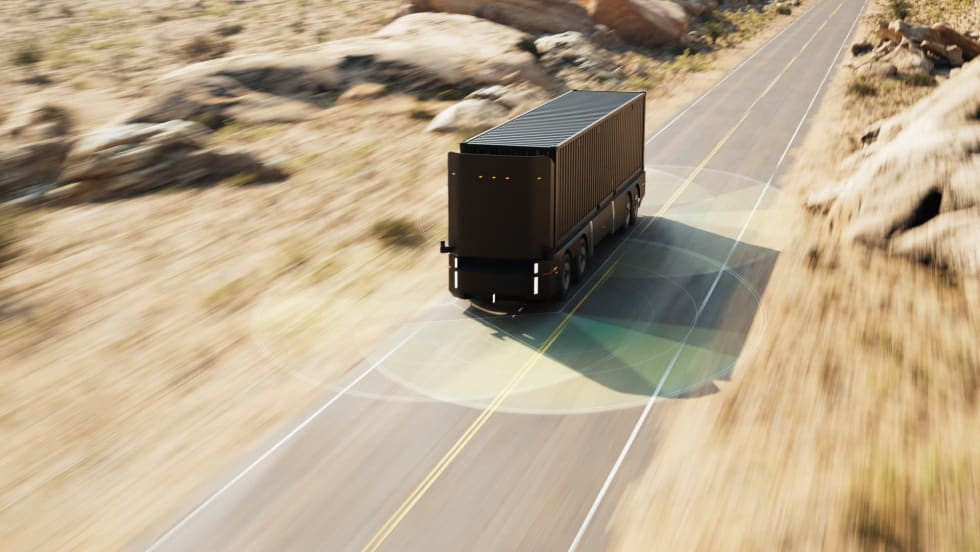
Autonomous Start-Up Humble Announces Cabless Autonomous Electric Hauler
A new autonomous truck startup company is targeting yard, port, and short-haul freight with a lighter, fully autonomous platform designed for dock-to-dock moves.
Read More →
Top Green Fleets of 2026: Nomination Deadline Extended
Is your company a leader in sustainability efforts among trucking fleets? If so, Heavy Duty Trucking's editors want to hear from you.
Read More →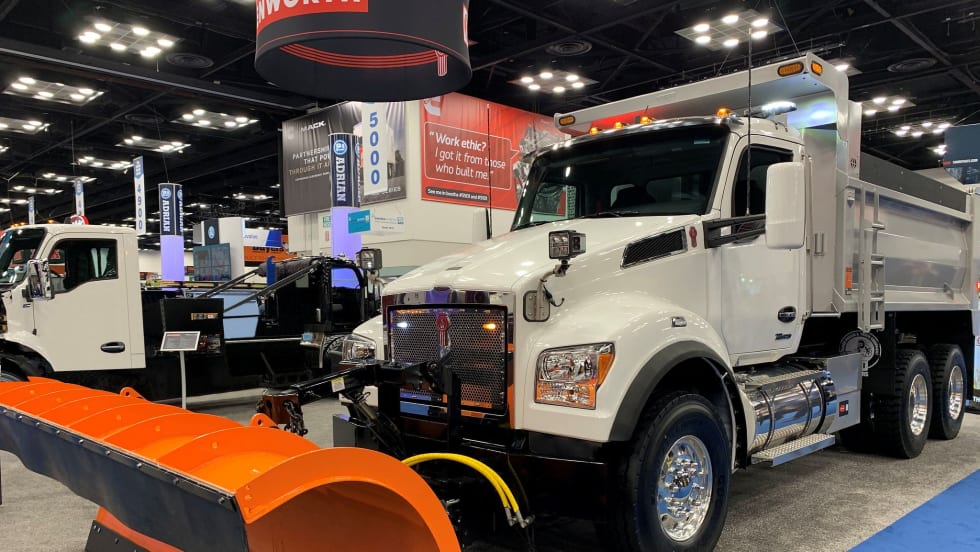
Kenworth Announces Reinforced Front Frame Option for T880 and T880S Models
Kenworth has released a factory-installed reinforced front frame option for T880 models, designed to simplify upfits, cut costs, and speed time to service.
Read More →
Stoughton Rolls Out PureBlue Reefer Trailer, Raises Safety Bar With 40-mph Rear Impact Guard
Stoughton’s new refrigerated trailer platform delivers double-digit efficiency gains while a next-generation rear impact guard exceeds current crash standards.
Read More →
New Lightweight Wheel Cover Targets Simpler Aero Gains [Watch]
Watch to learn how Deflecktor's new wheel cover design is taking a simpler approach to aerodynamics, with an eye toward making it more practical for both trucks and trailers.
Read More →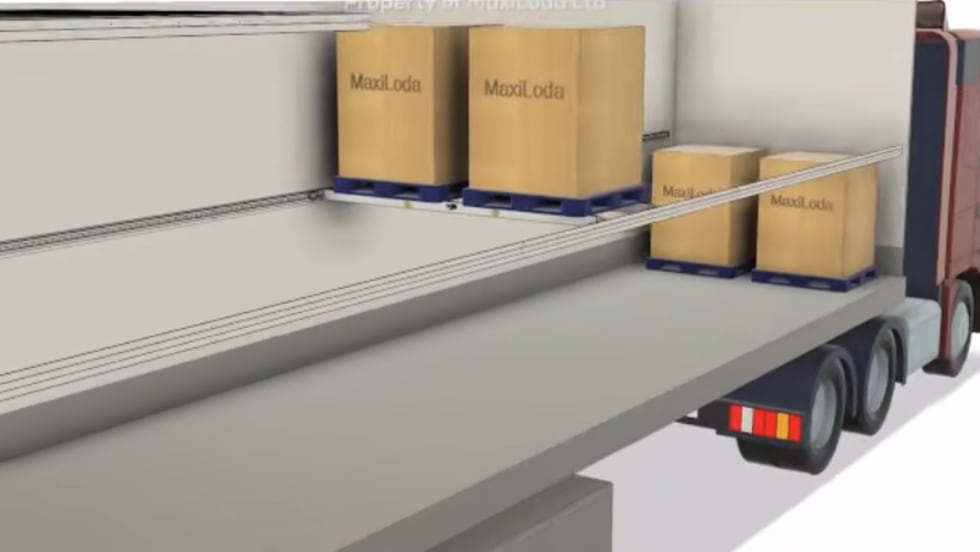
How Maxiloda’s Glide System Unlocks Hidden Trailer Capacity
By turning unused vertical space into usable capacity, Maxiloda’s Glide system helps fleets move more freight per trip while reducing loading risks and equipment damage.
Read More →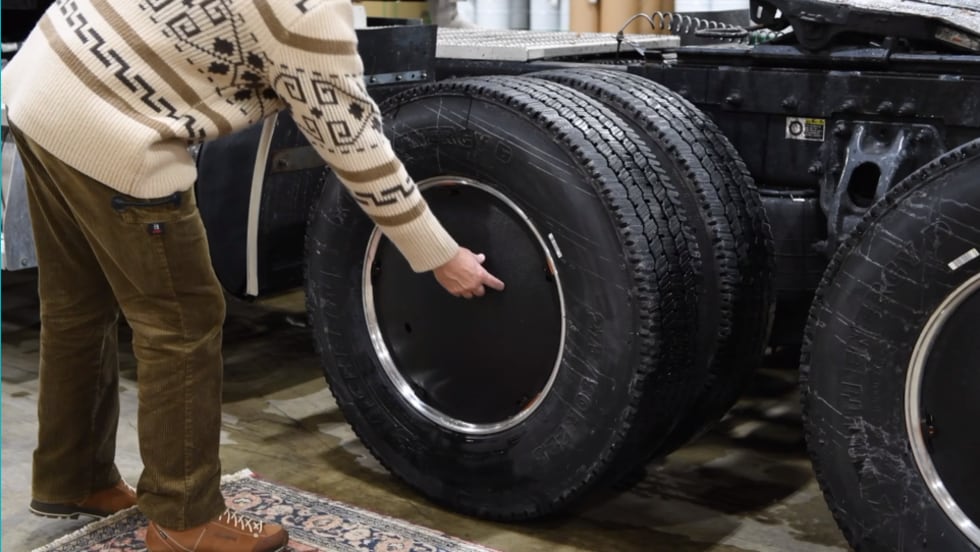
Deflecktor: Hubbub Aerodynamic Wheel Cover Cost-Effective Even for Trailers
Aerodynamic wheel covers can deliver small but meaningful fuel-economy gains for fleets, and Deflecktor says its latest design aims to make the technology easier and more affordable to deploy.
Read More →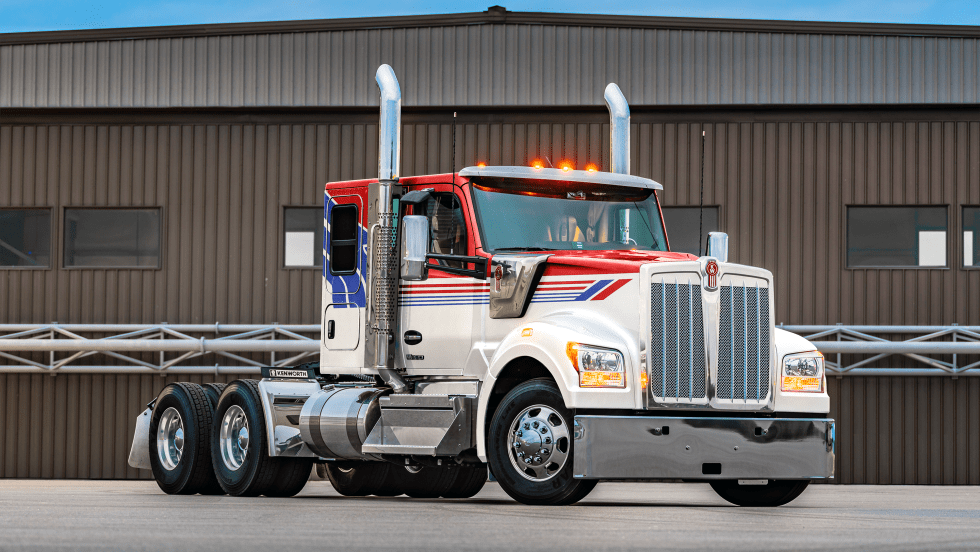
Kenworth Revives Iconic 'TourAmerica' Paint Scheme
Kenworth’s new, limited-edition scheme celebrates trucking heritage while supporting a nationwide mobile museum tour.
Read More →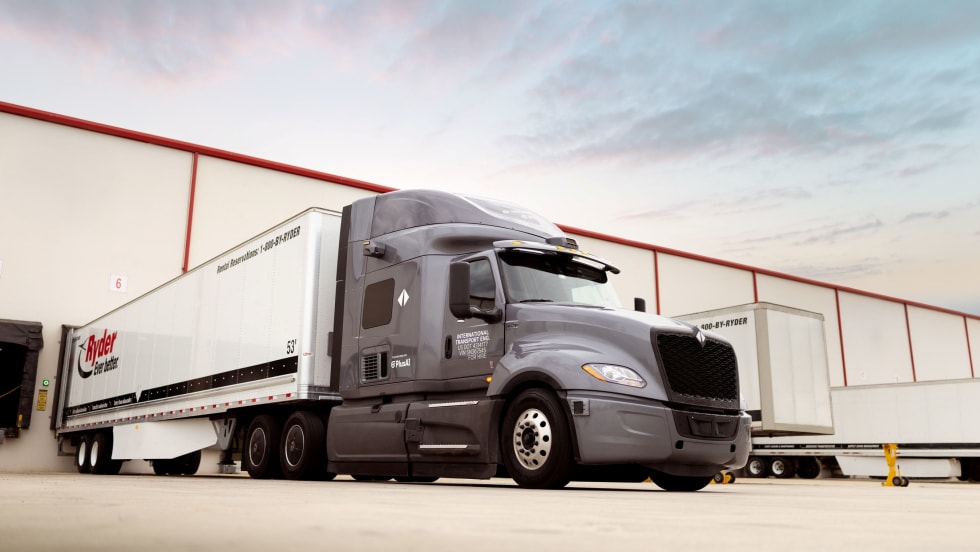
Ryder Joins International’s Autonomous Truck Pilot on Texas Freight Lane
Ryder and International take autonomous trucking out of the lab and onto a live, 600-mile Texas freight lane.
Read More →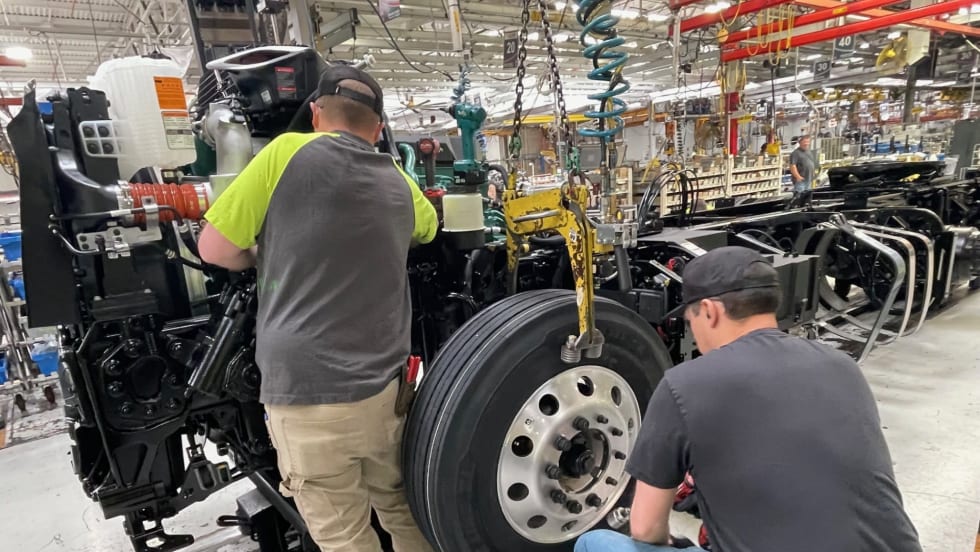
FTR: Class 8 Orders Stay Hot in March Despite Monthly Dip
Fuel prices aside, Class 8 demand remains elevated as freight fundamentals improve and fleets regain confidence in long-term investments.
Read More →