





If something is set to factory specs it must be just right, right? In the alignment world, "factory specs" really means it's close enough. Close enough, however, might not be good enough when your tires are being chewed right off the wheels.
Understand the OE's perspective here: They have just a few minutes to install an axle or set of axles on a frame, and something less than 10 minutes to verify alignment later in the assembly process. When building 200 trucks a day, time is a very expensive luxury.
A little tolerance on the spec isn't necessarily bad. It gets the truck out the door in reasonably good shape at reasonable cost at a level of accuracy engineers, assemblers and warranty people can live with. But is it good enough for your truck in your application?
"The OEM specification is a manufacturing tolerance," says Mike McCoy, national and special accounts manager at Bee Line. "If I was a fleet owner, I wouldn't be satisfied with someone setting my alignment to within OE tolerance."
McCoy points to camber as an example. Some OE specifications allow as much as 7/16 of a degree positive or negative. The ATA Technology & Maintenance Council's Recommended Practice 642 (now amended to RP 642A) calls for less than 1/4 of a degree.
While drafting RP 642, OEs and axle makers, tire companies and alignment providers submitted preferred alignment specifications, and they varied widely. McCoy was on that committee. He says the exercise produced two Excel spreadsheets of specs plus another page of footnotes.
Mike Beckett of Iowa-based M.D.Alignment, who also was on the committee, says that in analyzing why the specs were so different, the group determined "that the development of the specifications were for goals and priorities that were not necessarily the optimum performance of the tire."
In the end, the committee came up with Appendix 9, "Recommended Alignment Targets." As you'd guess, they are a compromise, middle-of-the-road generic numbers.
So, why should one assume that "factory specs" are good for your tires? RP 642 does recommend doing a "vehicle-in-service" alignment as well as a first PM alignment. If the factory specs aren't to your tire's liking, it's best they be changed early before the tires self destruct.
Read More: Tire Report: The Art & Science of Alignment
From the December 2011 issue of HDT.
Tire Report: Factory Settings vs. 'As-Driven'
If something is set to factory specs it must be just right, right? In the alignment world, "factory specs" really means it's close enough. Close enough, however, might not be good enough when your tires are being chewed right off the wheels
More Maintenance
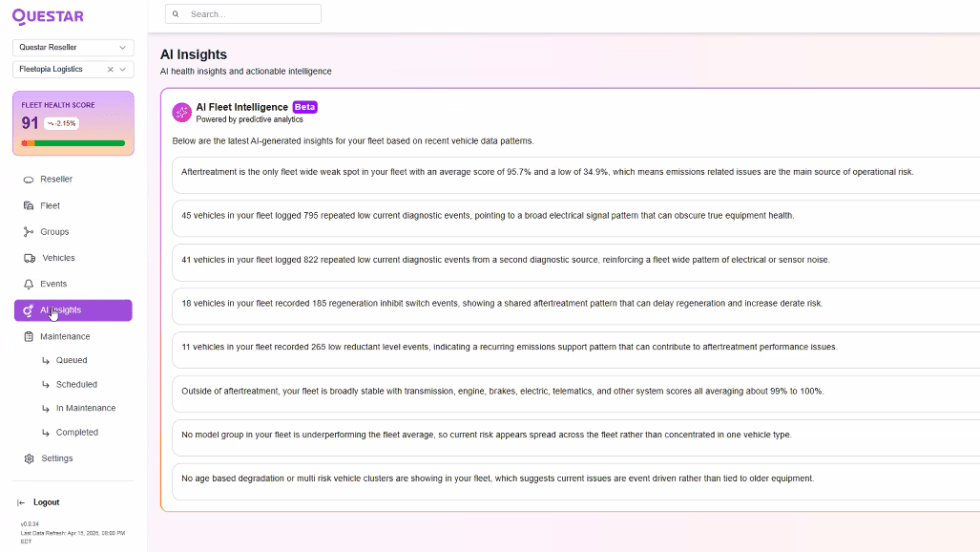
Questar Adds AI-Driven Repair Recommendations to Fleet Maintenance
Questar’s latest maintenance platform uses AI to flag potential failures, recommend repairs, and estimate the cost of waiting, helping fleets prioritize maintenance and save money and downtime.
Read More →
API Formally Approves Next-Gen Engine Oil Category for 2027 Engines
Heavy-duty engine oil marketers can begin finalizing formulations and preparing product packaging to meet the new oil specifications ahead of the January 1 licensing date.
Read More →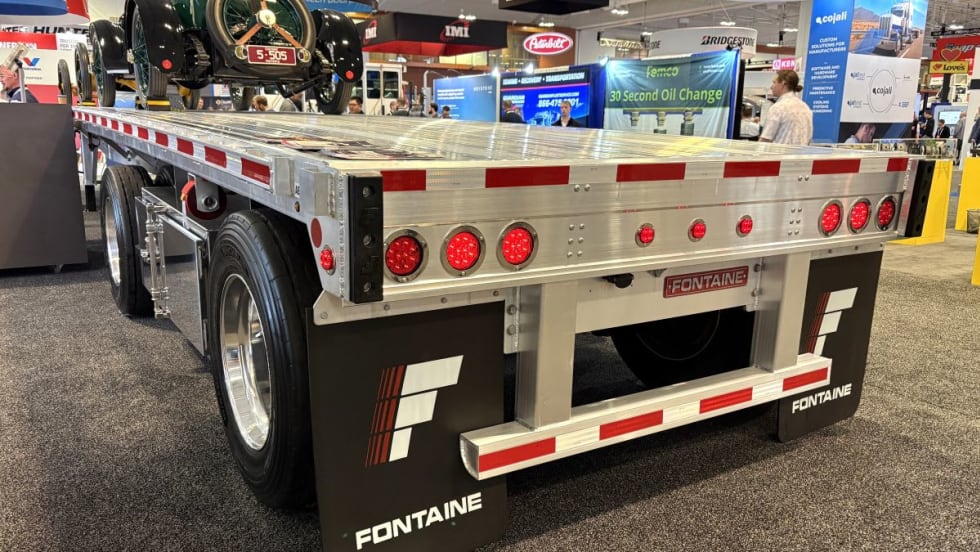
Fontaine Expands Flatbed Lineup with New Fleet-Focused Models, Eyes 2027 Launch
Fontaine is broadening its flatbed lineup with new models aimed at fleets, including a lightweight aluminum trailer expected in 2027 that emphasizes durability, repairability, and lower cost.
Read More →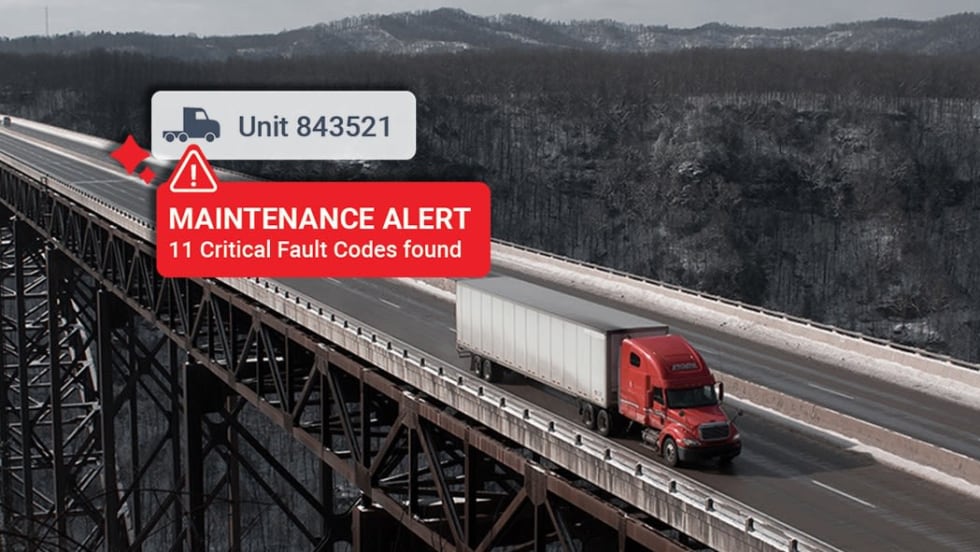
Fullbay Acquires Pitstop to Strengthen AI-Powered Predictive Maintenance
Pitstop AI will use Fullbay's extensive shop data to drive predictive maintenance for trucking fleets and repair shops.
Read More →
HDT Honors the Best New Products of 2025 at TMC [Photos]
Heavy Duty Trucking's Top 20 Products awards recognize the best new products and technologies. Check out the award presentations at the 2026 Technology & Maintenance Council annual meeting.
Read More →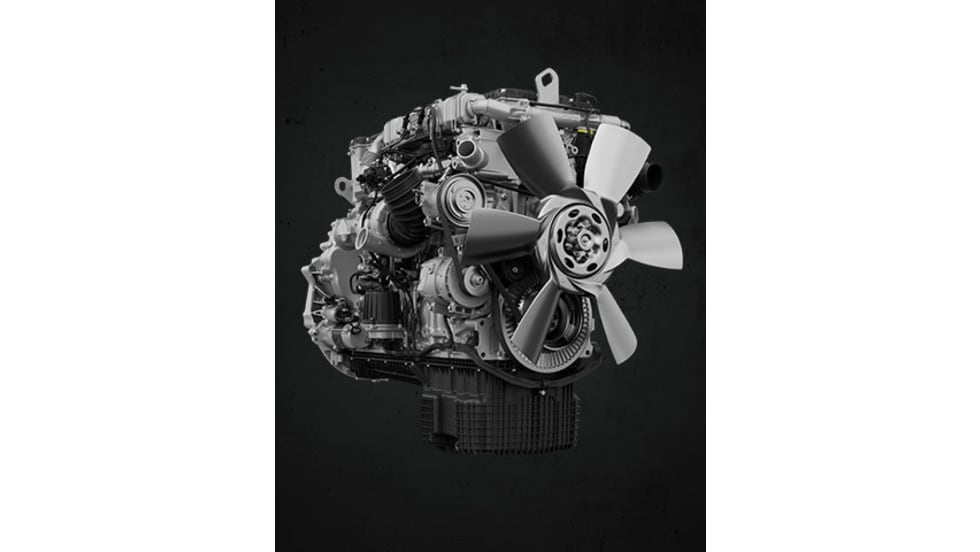
Detroit Engines: Trusted Performance, Built for What's Next
The Detroit® Gen 6 engine platform proves that real progress doesn’t require a complete redesign. Built on 20 years of trusted technology, these engines are designed for efficiency, stronger performance, and greater reliability than before. And they do it all while complying with 2027 EPA standards on every mile.
Read More →
EPA Targets DEF Sensor Failures Behind Truck Derates
New guidance allows engine makers to replace problematic DEF sensors with NOx-based systems, aiming to reduce unnecessary derates and downtime caused by failures in the sensors designed to monitor diesel exhaust fluid on trucks.
Read More →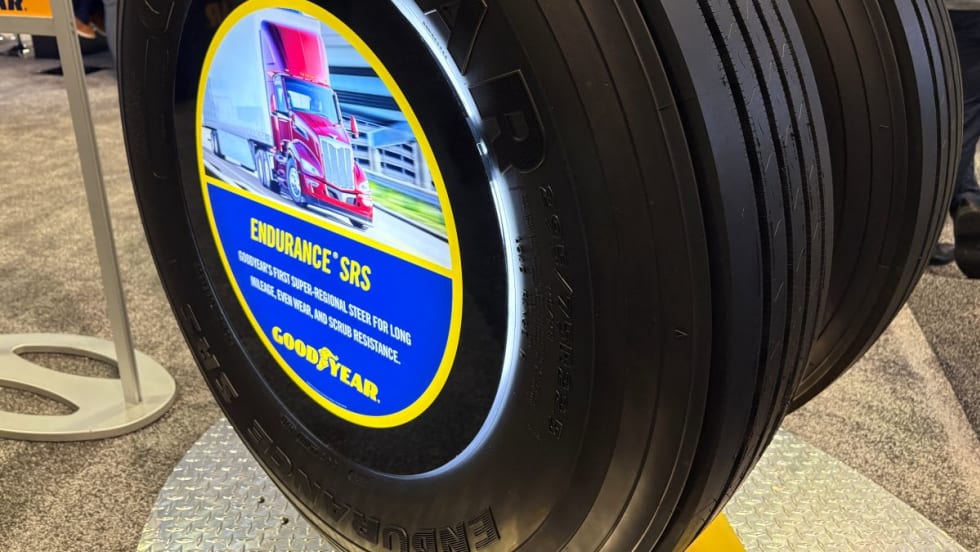
Goodyear Targets ‘Super-Regional’ Sweet Spot with New Steer Tire
Goodyear is preparing to roll out a new steer tire designed to bridge the gap between regional and linehaul for trucking fleets.
Read More →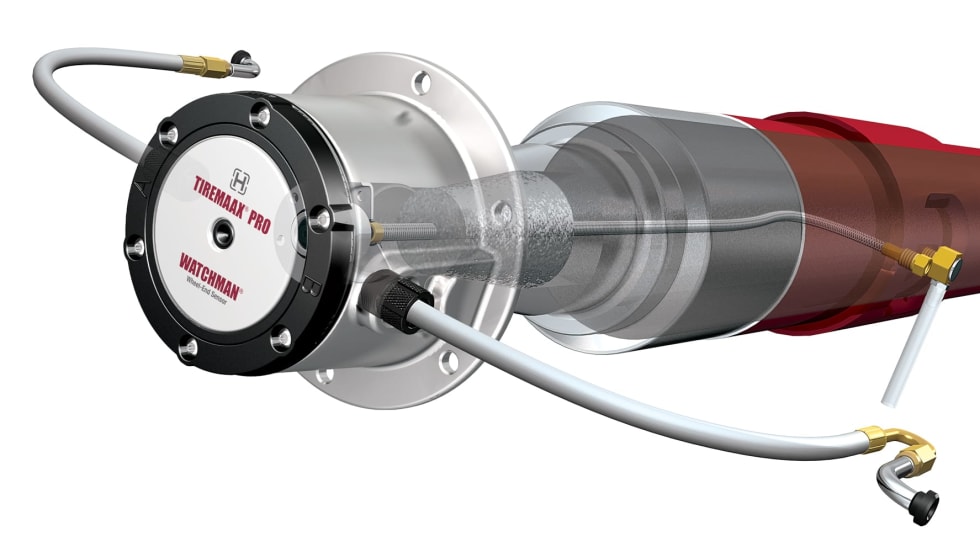
Hendrickson Unveils Watchman Smart Wheel-End System at TMC
Hendrickson’s new sensor platform integrates with its TireMaax system to deliver real-time tire and wheel-end insights, targeting uptime and cost savings.
Read More →
Over-the-Air Updates and the Modern Powertrain Explained
Over-the-air updates are moving beyond recalls, and expanding how fleets manage performance, compliance, and uptime.
Read More →