





Need another reason to sweat your tire pressure? How about CSA? It would be hell explaining to your grandkids that you used to run a trucking company until the DOT put you out of business because of poor tire maintenance.
Under-inflated Tires Are No Longer Just an Efficiency Issue: They Can Affect Your Safety Profile
Need another reason to sweat your tire pressure? How about CSA? It would be hell explaining to your grandkids that you used to run a trucking company until the DOT put you out of business because of poor tire maintenance
July 6, 2011
5 min to read
As unlikely as that might be, the Department of Transportation's own numbers suggest under-inflated tires could be a significant enforcement concern for the industry (only 44 percent of all truck tires are within 5 psi of their target inflation, FMCSA has found). And if not inflation, then tire condition in general - cut tires, insufficient tread, leaking tires, etc. - will prove problematic.
Within the context of the Federal Motor Carrier Safety Administration's CSA (Compliance, Safety and Accountability) regime, tire condition falls under the Maintenance BASIC (Behavior Analysis and Safety Improvement Categories). Within the Maintenance BASIC, there are no fewer than 14 ways your tires can get you into trouble.
Violations are weighted on pre-determined relationships to crash risk. Nine of the violations carry eight points out of a possible 10, suggesting that DOT believes tire condition plays a significant role in crash causation. The inflation-related violations are not that severe, but given the number of tires running around out there believed to be under-inflated, tire pressure violations could be easy pickin's for the truck inspectors.
The problem with Section 393.75 of the Federal Motor Carrier Safety Regulations is that it offers no definition of "under-inflated." Nor does 393.75 specify a minimum inflation pressure for tires.
Instead, 393.75 states: "No motor vehicle shall be operated on a tire which has a cold inflation pressure less than that specified for the load being carried. If the inflation pressure has been increased by heat because of recent operation of the vehicle, the cold inflation pressure shall be estimated by subtracting an inflation buildup factor."
Each 11R22.5 tire in a legally loaded dual-wheel assembly will bear as much as 4,250 pounds. The Tire and Rim Association Load and Inflation Tables tell us that tire would be just fine at 70 psi. In fact, the tire would be fine loaded up to 4,380 pounds. That's 30-35 psi lower that most fleets inflate their tires. But is that tire flat by FMCSA/CSA standards?
Just what is 'flat'?
Here's where it gets confusing. The Rubber Industry Association strongly recommends demounting and inspecting a tire that has been run at less than 20 percent of the recommended inflation pressure. The Commercial Vehicle Safety Alliance enforcement group, however, says a tire is flat if the pressure is less than 50 percent of the maximum cold pressure stamped on the sidewall. And the Inflation Tables say a tire is just fine at as low as 70 psi.
If you're keeping up with the math, CVSA says a tire is flat at just 10 psi less than the Tire and Rim Association says is an acceptable inflation pressure for a given load - in this case, the maximum load an 11R22.5 tire would experience as part of a legally loaded tandem (34,000 pounds).
Collin Mooney, deputy executive director of the Commercial Vehicle Safety Alliance, told HDT it's not likely that officers will be gauging every tire during a Level 1 inspection. "But they will be looking for tires that appear to be soft or under-inflated," he said. "If an officer suspects a tire might be under-inflated, they will check it with a gauge."
As for what constitutes an under-inflated tire, Mooney said, "We'll be looking at the maximum cold inflation pressure stamped on the tire, and determining a tire to be run flat if it's at 50 percent or less of that rating."
Neither CVSA nor FMCSA offer any direction on how or what instruments inspectors should use to measure the tire inflation pressure.
"Most law enforcement personnel use simple tire gauges, which are notoriously inaccurate," says Carl Kirk, vice president of maintenance, information technology and logistics at the American Trucking Associations.
The ATA's Technology and Maintenance Council recommends checking all tire gauges regularly against a "master gauge." Tire gauges that are off by 5 percent or more should be recalibrated or replaced, TMC says.
Al Cohn of PSI International says once he heard a DOT official at a conference say they would be using hammers to get an indication of the pressure.
"He said that in front of 500 people," Cohn recalls.
You can almost hear heads all across the land being banged against walls.
Inflation solutions
DOT inspectors will have enough low-hanging fruit to pick from with bald tires, tread separations, cuts exposing plies, etc., but it's worth noting that one pressure-related violation carries an 8-point rating: "393.75(a)(3) Tire - flat (pressure ½ of sidewall max pressure) and/or audible air leak."
Tire violations are a shared responsibility between the carrier and the driver, we know, and basic tire maintenance should be too. But that's often not the case. So maybe a little technology can be applied to the problem. Tire pressure monitoring systems and automatic inflation systems come to mind.
Both offer good ROI these days. They can prevent or mitigate pressure loss and run-flat situations, and they can improve fuel economy by reducing rolling resistance of soft tires. If your tire maintenance regimen is a little lax, the ROI will be even better. With recent advances in telematics, fleet managers can be alerted instantly to a low-pressure event and can direct drivers to repair facilities. With on-board inflation systems, pressure can usually be maintained until the tire can be repaired.
Another possible solution: nitrogen inflation, which offers a lower "permeation rate" that air. Barring any physical leaks, tires inflated with nitrogen are said to lose very little pressure over time due to permeation. An air-filled tire may loose 1 to 2 psi every few weeks. It's not much, but left unchecked it adds up.
"Tire violations are very serious (and always have been), because they are such a high safety risk," notes Doug Jones, customer engineering support manager, Michelin Americas Truck Tires. "The majority of the tire violations are those that could cause a tire to rapidly lose pressure and render the vehicle out-of-service. These count much higher against a fleet and driver in the point system. Therefore, it is in the interest of the driver to keep an eye on his tires, as well the other critical safety items."
CSA comes with enough to worry about without sweating over your tire pressure.
From the April 2011 issue of HDT
Subscribe to Our Newsletter
More Equipment
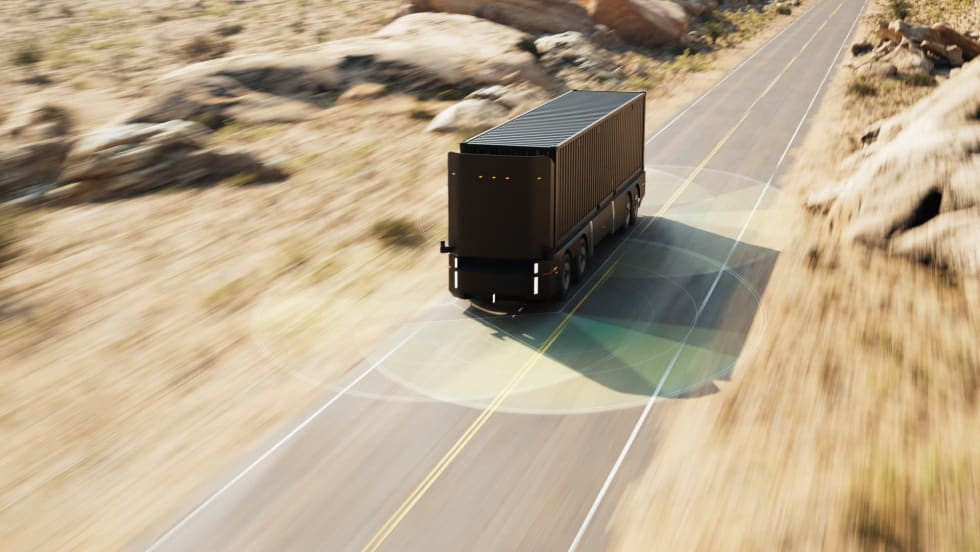
Autonomous Start-Up Humble Announces Cabless Autonomous Electric Hauler
A new autonomous truck startup company is targeting yard, port, and short-haul freight with a lighter, fully autonomous platform designed for dock-to-dock moves.
Read More →
Top Green Fleets of 2026: Nomination Deadline Extended
Is your company a leader in sustainability efforts among trucking fleets? If so, Heavy Duty Trucking's editors want to hear from you.
Read More →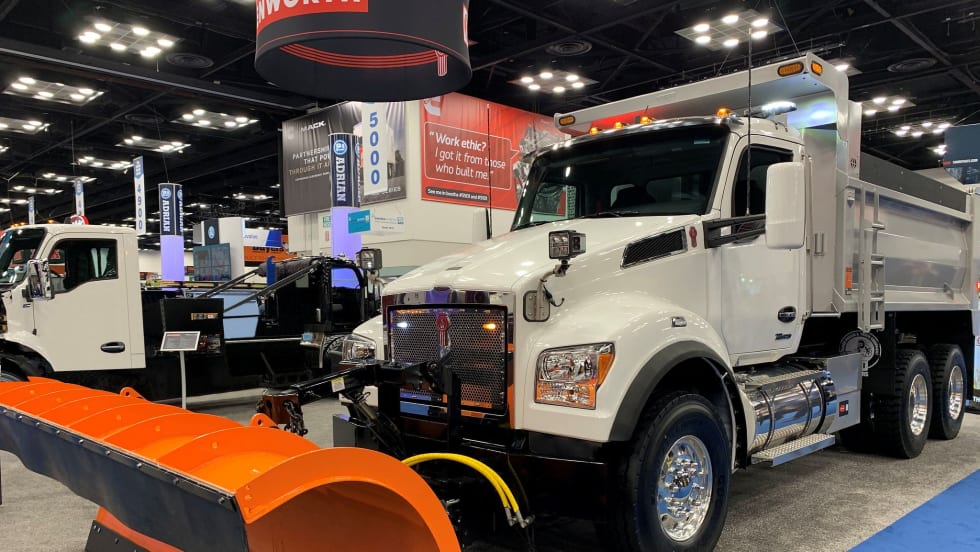
Kenworth Announces Reinforced Front Frame Option for T880 and T880S Models
Kenworth has released a factory-installed reinforced front frame option for T880 models, designed to simplify upfits, cut costs, and speed time to service.
Read More →
Stoughton Rolls Out PureBlue Reefer Trailer, Raises Safety Bar With 40-mph Rear Impact Guard
Stoughton’s new refrigerated trailer platform delivers double-digit efficiency gains while a next-generation rear impact guard exceeds current crash standards.
Read More →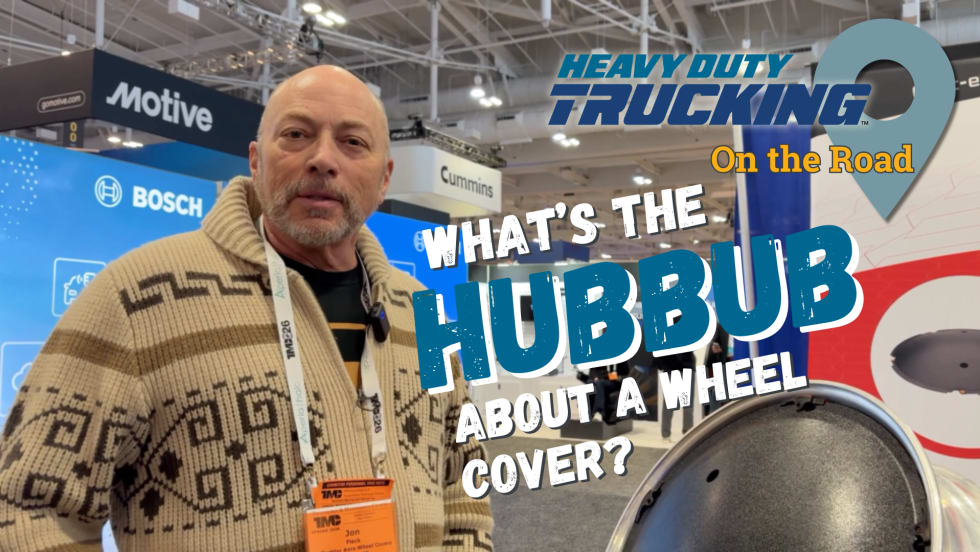
New Lightweight Wheel Cover Targets Simpler Aero Gains [Watch]
Watch to learn how Deflecktor's new wheel cover design is taking a simpler approach to aerodynamics, with an eye toward making it more practical for both trucks and trailers.
Read More →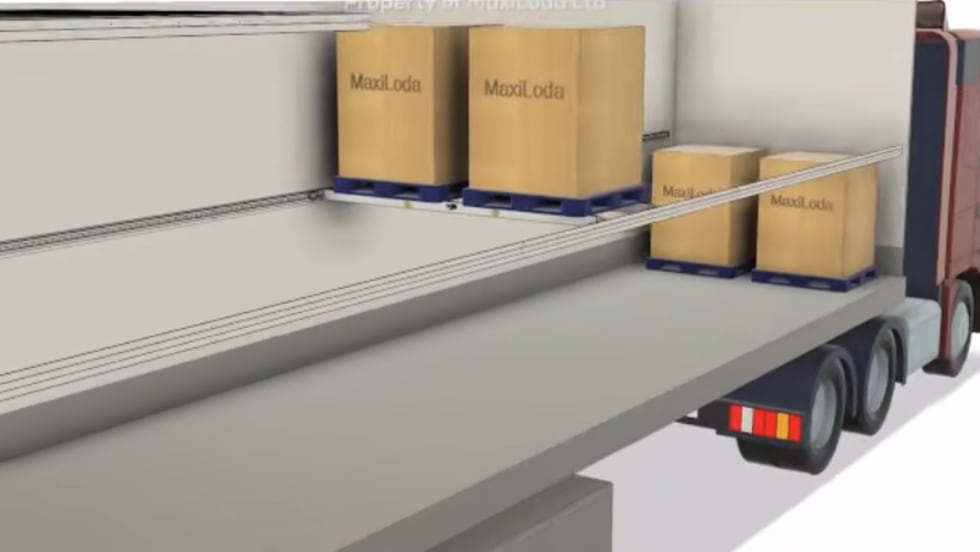
How Maxiloda’s Glide System Unlocks Hidden Trailer Capacity
By turning unused vertical space into usable capacity, Maxiloda’s Glide system helps fleets move more freight per trip while reducing loading risks and equipment damage.
Read More →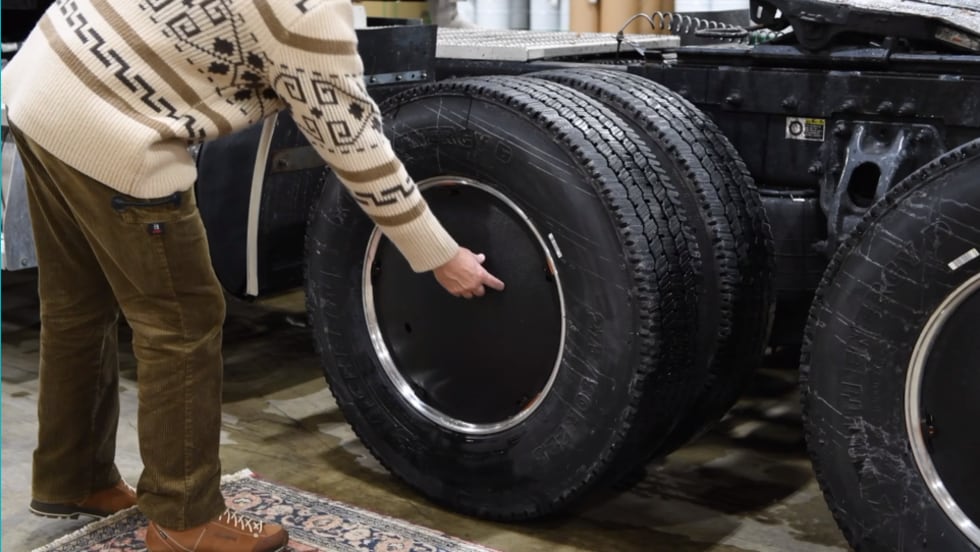
Deflecktor: Hubbub Aerodynamic Wheel Cover Cost-Effective Even for Trailers
Aerodynamic wheel covers can deliver small but meaningful fuel-economy gains for fleets, and Deflecktor says its latest design aims to make the technology easier and more affordable to deploy.
Read More →
Kenworth Revives Iconic 'TourAmerica' Paint Scheme
Kenworth’s new, limited-edition scheme celebrates trucking heritage while supporting a nationwide mobile museum tour.
Read More →
Ryder Joins International’s Autonomous Truck Pilot on Texas Freight Lane
Ryder and International take autonomous trucking out of the lab and onto a live, 600-mile Texas freight lane.
Read More →
FTR: Class 8 Orders Stay Hot in March Despite Monthly Dip
Fuel prices aside, Class 8 demand remains elevated as freight fundamentals improve and fleets regain confidence in long-term investments.
Read More →