





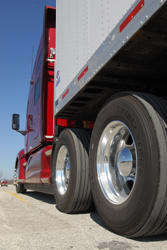
The next time you're driving alongside a truck at highway speed, have a look at the wheels. They should be running straight and true without any wobble or vibration.
Wheel Balance From the Inside Out
The next time you're driving alongside a truck at highway speed, have a look at the wheels. They should be running straight and true without any wobble or vibration
July 10, 2011
6 min to read
Lamentably, you probably won't have to look terribly hard to see wheels shaking so badly you'll wonder how they stay on the truck. This type of problem isn't always obvious in the shop with the wheel sitting still, but it is painfully obvious with the wheel turning 500 rpm or so at highway speed.
A lot of premature tire wear, as well as driver complaints about ride and handling, begins at the wheel ends. Causes range from improper tire and wheel mounting to poor wheel balance, loose bearings, damaged or worn components and even out-of-round wheels. A little diligence in the tire shop can prevent or solve many of these problems.
"Driving a vehicle, any vehicle, with even the smallest vibration can be annoying beyond description," says Goodyear spokesman Tim Miller. "Imagine the longhaul driver who is making his way across country with a seat, steering wheel or whole truck that seems to be shaking itself apart."
So if wheel balance for tire and suspension longevity isn't enough motivation, consider the recruiting and retention implications.
A wheel that has run with a severe out-of-balance or out-of-round condition for a prolonged period may have caused premature suspension wear or possibly damage to the axle/suspension mounts. Before reinstalling tires and wheels, check that the suspension and axle mounts, U-bolts, bushings, etc. are in serviceable condition. Excessive movement between components will surely wreck the new and expensive tire you're installing.
Assuming all is well inboard of the axle spindle, check the bearing endplay while the wheels are off.
"Loose wheel bearings allow for some degree of negative camber," says Bridgestone's director of engineering for commercial tires, Guy Walenga. "This will wear the inside shoulder of an inner dual tire, and it can affect steering geometry to some extent as well."
Mike Becket, president of M.D. Alignment of Des Moines, Iowa, says toe adjustments should be set to within 1/32 of an inch. "If steer axle wheel bearings are loose, the toe setting can vary by as much as 1/4 inch," he says.
Loose wheel bearings allow for some movement between the cone and the cup, which causes the hub to wiggle on the spindle. That allows the wheel to run off center - perhaps only by a tenth of a degree or so, depending on how loose the bearing is. Beckett says he sees the result of this quite often.
"When we get complaints of inner shoulder wear, the first thing we do is check the wheel bearings," he says. "It can be as easy as jacking up the wheel and alternating tugging and pushing on the top side of the tire. If there's excessive bearing play, you'll feel the wheel move on the spindle."
If that rather unscientific test produces movement, you know an adjustment is in order, but there's little room for guesswork when it comes to bearing adjustment. The Technology & Maintenance Council's Recommended Practice 618A, "Wheel Bearing Adjustment Procedures," calls for between 0.001 and 0.005 inch of endplay.
Because there are different adjustment procedures for different types of wheel end assemblies, we won't describe them here. It goes without saying, though, this isn't seat-of-the-pants territory. TMC recommends using an endplay dial indicator to get the adjustment correct.
Centered on the hub
Because the axle spindle and hub are the center point of the rotation, any deviation from straight-and-true there will be exacerbated at the tread. Correct bearing adjustment will eliminate one potential source of lateral runout, but there are others.
The contact face between the drum/hub, wheel studs and the wheel itself should be clean and smooth, free of rust and other foreign material, and within tolerance. Rust flakes, peeling paint, etc., can prevent the wheel from mounting flush with the hub/drum. Remove any suspect material before proceeding. Next, ensure the wheel studs and hub pilots are not worn or damaged so as to affect mounting concentricity. Worn or damaged pilots and wheel studs should not be used.
Centering the wheel on the hub is another matter. For a variety of reasons - manufacturing tolerances, wear, etc. - stud and hub piloted wheels may not center precisely on the hub. A gap between the hub tang and the rim no thicker than a business card can cause a radial runout condition and noticeable vibration.
If you have confirmed a high spot on a tire and wheel assembly, TMC suggests taking advantage of the manufacturing tolerances, and letting gravity supply a partial remedy: mount the high spot low on the wheel pilots to offset the effect of runout.
With two of the hub pilots at the 10 o'clock and 2 o'clock positions, place the high spot of the tire/wheel assembly at the 12 o'clock position. This allows the wheel to rest directly on the pilots at the lowest possible position. Tighten the top wheel nut with a hand wrench enough to prevent the assembly from moving, and then tighten the other nuts according to procedure and retest for radial runout.
If your tire is concentrically mounted on the rim, but there's still an out-of-round condition, gravity could be working against you. Several methods exist to correct this problem, including fastening nuts with sleeves that fill the gap between the stud and the hole, and tools that will center the hole over the stud before tightening the fasteners, taking the hub pilots out of the equation altogether.
Static and dynamic balance
Fleets have different perspectives on tire/wheel balancing, notes Al Cohn, director of new market development for Pressure Systems International and formerly with Goodyear. Some approach balancing religiously. Others don't bother with it at all. The top-tier tire makers will tell you balancing is no longer necessary to correct for manufacturing irregularities, but that speaks only to the tire.
"The bottom line is, wheel assemblies that are out of balance can lead to vibration and irregular tire wear, leading to early tire removals and driver discomfort," Cohn says.
Simply put, an out-of-balance rotating assembly exists when there is an unequal distribution of weight about the rotating axis, regardless of the cause. Causes range from non-concentrically mounted new tires to worn tires with unequal wear and tread depth around the circumference.
Static imbalance causes the assembly to bounce, but can be rectified by clipping appropriately sized weights to the wheel to counter the imbalance.
Dynamic imbalance, on the other hand, causes the assembly to wobble. Solving that requires weights on both sides of the tire/wheel assembly and use of a dynamic balancing machine.
According to TMC's RP 214-C, a dynamically balanced wheel will also be statically balanced, but the reverse is not necessarily true. That RP explains the benefits and process of wheel balancing.
Hub and drum
When you mount the tire/wheel assembly on the hub, you may now have another balance issue - that of the hub and drum assembly. Unfortunately, dynamic and static balancing addresses only the wheel. Once mounted, you have conditions at the hub to contend with, along with the changing face of the tire over time. As it wears, varying amount of rubber will scrub off the tire, changing the balance of the wheel - sometimes dramatically, as in the case of a flat-spotted tire.
Various internal balancing compounds and external balancing rings exist that claim to counter the effects of uneven tire wear over time and even substitute for wheel weights. Evidence suggests they can be quite effective when used properly and according to the tire and wheel makers' guidelines.
Achieving proper balance on a 250-pound wheel assembly rotating at 500 rpm under
Subscribe to Our Newsletter
More Maintenance

Questar Adds AI-Driven Repair Recommendations to Fleet Maintenance
Questar’s latest maintenance platform uses AI to flag potential failures, recommend repairs, and estimate the cost of waiting, helping fleets prioritize maintenance and save money and downtime.
Read More →
API Formally Approves Next-Gen Engine Oil Category for 2027 Engines
Heavy-duty engine oil marketers can begin finalizing formulations and preparing product packaging to meet the new oil specifications ahead of the January 1 licensing date.
Read More →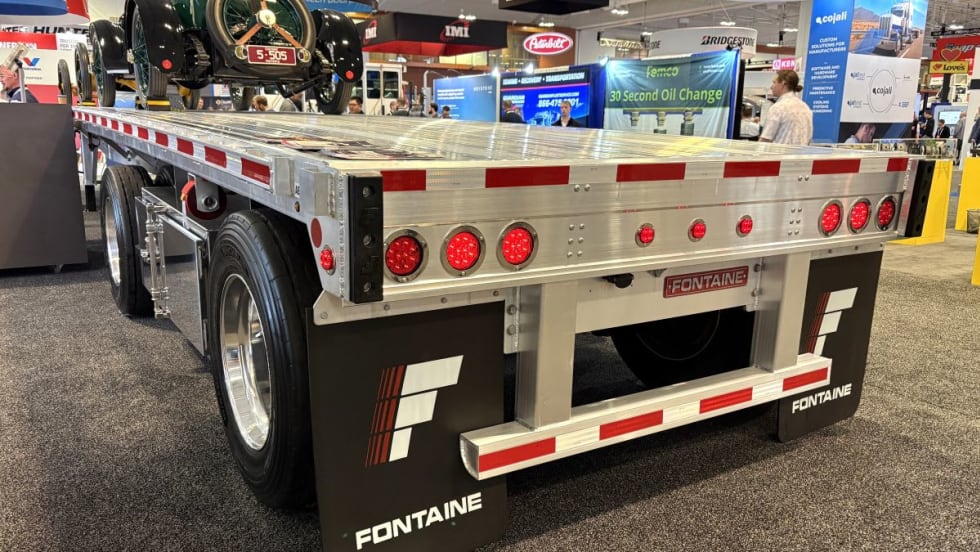
Fontaine Expands Flatbed Lineup with New Fleet-Focused Models, Eyes 2027 Launch
Fontaine is broadening its flatbed lineup with new models aimed at fleets, including a lightweight aluminum trailer expected in 2027 that emphasizes durability, repairability, and lower cost.
Read More →
Fullbay Acquires Pitstop to Strengthen AI-Powered Predictive Maintenance
Pitstop AI will use Fullbay's extensive shop data to drive predictive maintenance for trucking fleets and repair shops.
Read More →
HDT Honors the Best New Products of 2025 at TMC [Photos]
Heavy Duty Trucking's Top 20 Products awards recognize the best new products and technologies. Check out the award presentations at the 2026 Technology & Maintenance Council annual meeting.
Read More →
Sponsored•March 31, 2026
Detroit Engines: Trusted Performance, Built for What's Next
The Detroit® Gen 6 engine platform proves that real progress doesn’t require a complete redesign. Built on 20 years of trusted technology, these engines are designed for efficiency, stronger performance, and greater reliability than before. And they do it all while complying with 2027 EPA standards on every mile.
Read More →
EPA Targets DEF Sensor Failures Behind Truck Derates
New guidance allows engine makers to replace problematic DEF sensors with NOx-based systems, aiming to reduce unnecessary derates and downtime caused by failures in the sensors designed to monitor diesel exhaust fluid on trucks.
Read More →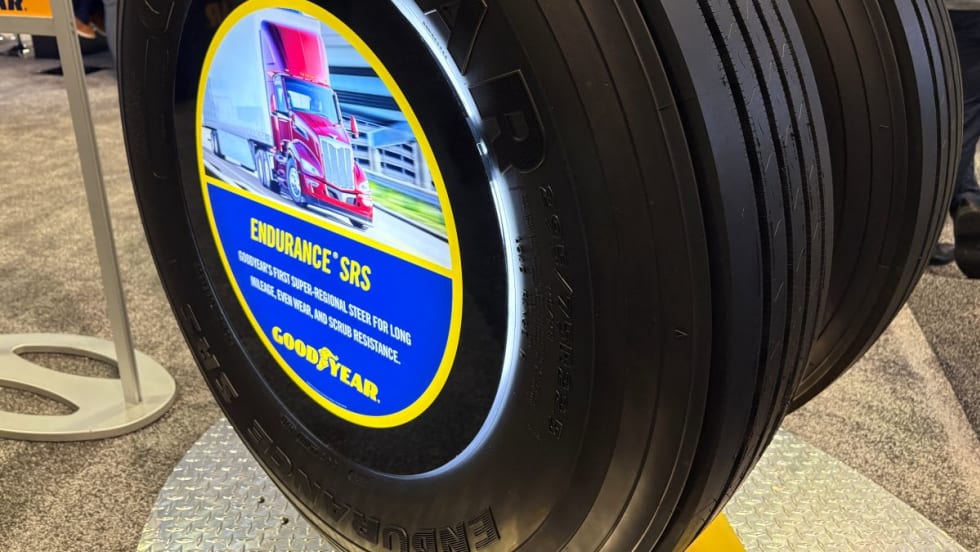
Goodyear Targets ‘Super-Regional’ Sweet Spot with New Steer Tire
Goodyear is preparing to roll out a new steer tire designed to bridge the gap between regional and linehaul for trucking fleets.
Read More →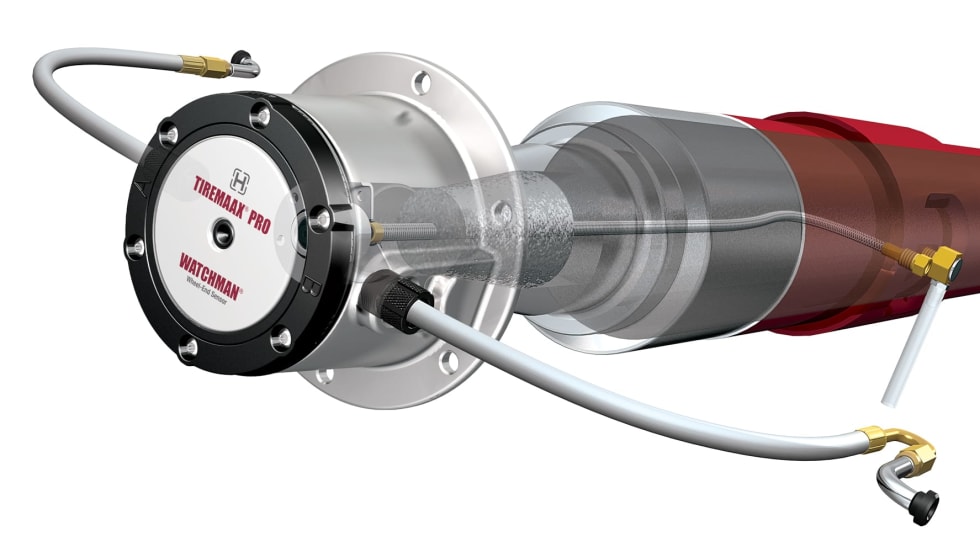
Hendrickson Unveils Watchman Smart Wheel-End System at TMC
Hendrickson’s new sensor platform integrates with its TireMaax system to deliver real-time tire and wheel-end insights, targeting uptime and cost savings.
Read More →
Over-the-Air Updates and the Modern Powertrain Explained
Over-the-air updates are moving beyond recalls, and expanding how fleets manage performance, compliance, and uptime.
Read More →