





The U.S. trucking market remains in the longest freight recession the industry has ever experienced. As a result, fleets are continuing to delay replacement cycles and carefully scrutinize capital spending amid uneven freight demand signals.
Capacity Overhang Begins to Clear, But Fleets Aren’t Ready to Spend
Daimler Truck’s David Carson sees early signs of tightening capacity — yet buyers remain wary, extending trade cycles and resisting a pre-2027 emissions surge.
February 19, 2026

DTNA Vice President David Carson thinks some form of a truck prebuy is increasingly likely as 2027 draws near.
Credit:
Jack Roberts
4 min to read
That was the assessment from David Carson, senior vice president of sales and marketing for Daimler Truck North America, speaking February 19 during the launch of Detroit’s new Gen 6 heavy-duty diesel engines. The launch was held at the Detroit powertrain manufacturing campus in Redford, Michigan.
In his comments, Carson said the freight downturn has been persistent, driven both by the broader economic cycle and by excess capacity that has taken time to unwind.
Capacity Slowly Coming Out of the Market
Speaking to journalists at the event, Carson said Daimler is beginning to see early indicators that the capacity overhang is easing.
“There’s too much capacity in the on-highway marketplace that is starting to come out,” he said, pointing to declines in overall driver capacity and an increase in the number of loads fleets are choosing to turn down.
Those signals, he suggested, reflect tightening freight availability against available equipment and labor.
Vocational truck demand is holding, Caron added, although overall growth in that segment has slowed.
While the vocational segment has helped offset softer linehaul conditions in recent years when it comes to truck sales, Carson described that market as stabilizing rather than expanding at the pace seen earlier in the cycle.
“In past cases where we saw reduced Class 8 on-highway demand, we had pretty significant vocational demand,” he said. “But that trend has now tapered off.”
Carson tied slowing vocational momentum to broader construction activity and the pace of infrastructure work already underway. Housing demand also remains strained, he said, with interest rates and affordability continuing to weigh on new home starts.
Extended Trade Cycles and Capex Scrutiny
On the on-highway side of the market, Carson said fleets remain highly disciplined in equipment purchasing decisions. Many DTNA customers are focusing on better utilization of existing assets and limiting major replacement commitments.
“They have been very discerning about what they buy, when they buy it,” he said.
As a result, fleets are holding on to equipment longer than normal, stretching trade cycles beyond what was typical in 2022 and 2023.
That caution, Carson said, reflects both the freight recession and uncertainty about when a broader recovery will take hold.
Carson said Daimler saw “pretty healthy” demand tied to cross-border freight activity late last year and into early 2026, calling it an encouraging sign.
However, he cautioned that conditions remain inconsistent.
“We’re not at the point where we would say that is a complete recovery, or that that is necessarily sustainable moving forward.”
Fleets, he added, continue to evaluate not only whether to buy, but also the scale and timing of purchases.
Avoiding a Prebuy ‘Surge’
Looking ahead, Carson said the industry risks repeating a familiar pattern ahead of new emissions regulations.
In years past, most notably in 2007 and 2010, many fleets delayed new truck purchases until a clearer view of the market emerged. Then they all tried to purchase new trucks at once.
“What we suffer from in this industry is everybody doing the exact same thing at the exact same time,” he said.
If truck buyers again wait and then suddenly rush back into the market, Carson warned, it could create the kind of capacity constraints seen in 2022, when demand outpaced industry production capability.
Despite the approaching EPA 2027 emissions standards, Carson said Daimler is not yet seeing a classic regulatory-driven pre-buy.
“At the moment, nobody’s buying just because they think there’ll be economic constraints continuing into 2027,” he said. “And these are fleets that are still feeling constrained by current business conditions.”
Carson said Daimler is encouraging customers to avoid waiting until the last moment, emphasizing the importance of spreading demand over time as the market improves.
The message to customers is to plan purchases strategically when possible.
“Your financials might not say, ‘Get ahead of equipment buying,” Carson said, “But it’s a good move, if you can do it.”
More Fleet Management

ACT: Trucking Volumes Rise, Capacity Tightens as Fuel Prices Cloud Outlook
ACT Research data shows volumes hitting a four-year high and supply-demand balance strengthening, but higher oil prices are undercutting tariff relief and tempering optimism.
Read More →
Wabash Teams Physical Security With Digital Tech For Better Cargo Visibility
The patent-pending cargo solution integrates a digitally connected cargo door and an intelligent locking system with the TrailerHawk.AI technology platform.
Read More →
From Diesel Prices to Cyberattacks: How the Iran War Is Affecting Trucking
The impact of the Iran conflict extends beyond fuel costs, bringing more fraud and cybersecurity risks to the trucking industry.
Read More →
ATA’s Spear Warns Fuel Prices, Trade Policy, and Global Conflict Could Stall Trucking Recovery
Speaking at the TMC Annual Meeting in Nashville, ATA President Chris Spear said trucking faces mounting pressure from rising fuel prices, geopolitical instability, and uncertainty around trade policy.
Read More →
New Entrants, Chameleon Carriers, and Safety: Is It Too Easy to Start a Trucking Company?
More than 100,000 new trucking companies enter the industry each year, but regulators manage to audit only a fraction of them. That churn creates opportunities for inexperienced startups — and for “chameleon carriers” that shut down after safety violations and reappear under new identities. Read more from Deborah Lockridge in this commentary.
Read More →
Fleet Managers Invited to Apply for Exclusive HDT Exchange Event
HDTX is an intimate event that connects heavy-duty trucking fleet managers with industry suppliers through small-group discussions, educational sessions, and structured one-on-one meetings.
Read More →
DAT Launches iPhone Widget to Help Owner-Operators Find Loads Faster
New DAT One feature shows top-paying loads directly on an iPhone’s home screen, helping carriers react faster to spot-market opportunities.
Read More →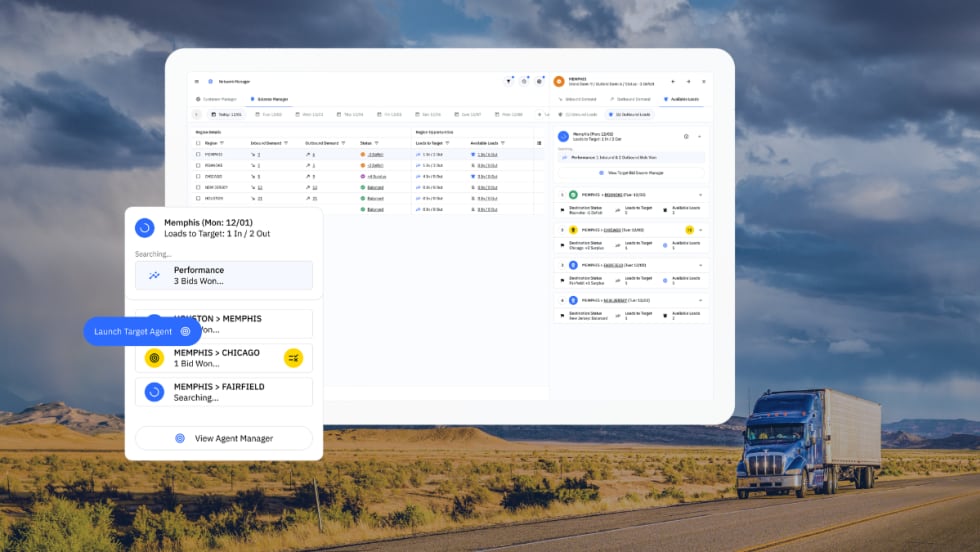
Optimal Dynamics Launches AI System to Help Carriers Choose Better Freight
Optimal Dynamics says its new Scale platform uses AI agents and optimization to help carriers find and secure freight that improves network balance and profitability.
Read More →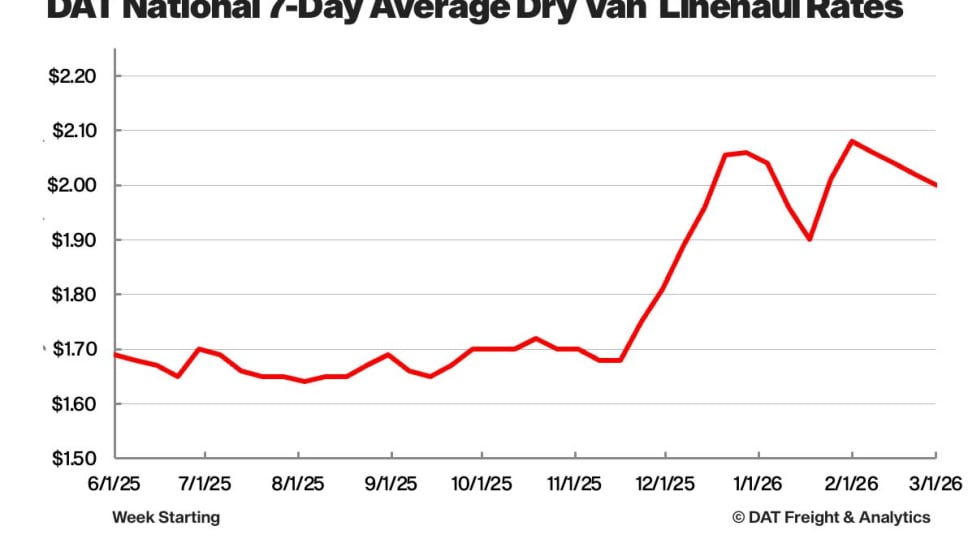
DAT: Flatbed Demand Climbs as Van and Reefer Rates Soften
DAT Freight & Analytics data shows tightening flatbed capacity, easing produce markets, and softening van and reefer rates.
Read More →
Run on Less “Messy Middle” Data Shows Multiple Paths Forward for Truck Powertrains [Watch]
NACFE's Run on Less - Messy Middle project demonstrates the power of data in helping to guide the future of alternative fuels and powertrains for heavy-duty trucks.
Read More →