





Questar Auto Technologies has made its predictive Total Fleet Health Management solution available through the Geotab Marketplace.
Questar Predictive Fleet Health Platform Now Available Through Geotab Marketplace
Quester’s AI-driven maintenance insights aim to help fleets reduce unplanned downtime, improve repair planning, and better understand the true cost of maintenance decisions.
February 10, 2026
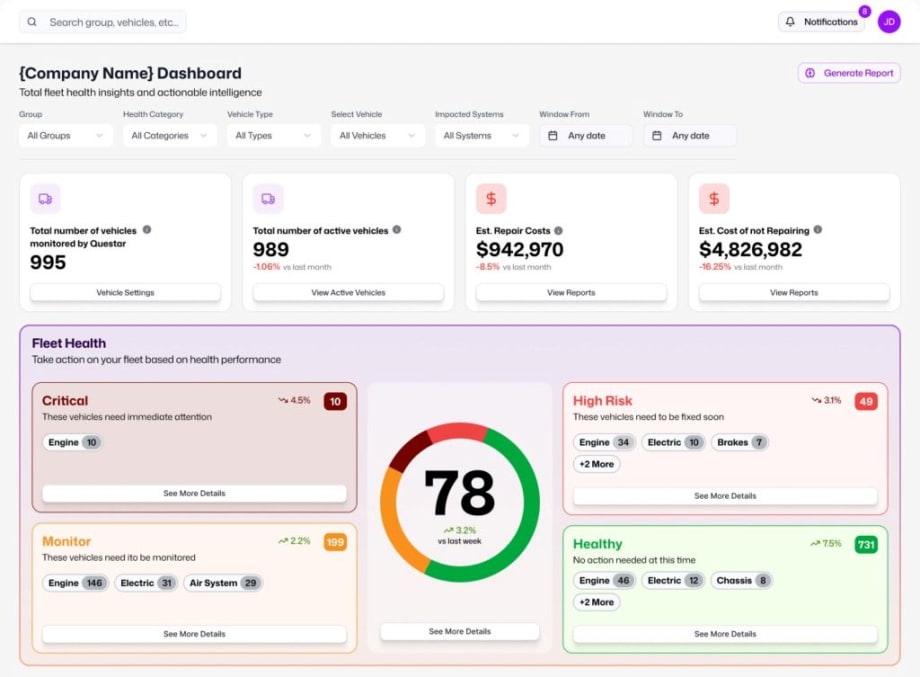
The Quester fleet health platform uses artificial intelligence to analyze vehicle telemetry, engine fault codes, maintenance history, and other operating conditions.
Credit:
Quester
2 min to read
The two companies said this partnership gives fleets a new way to leverage vehicle data to anticipate failures, plan maintenance proactively, and keep trucks on the road longer.
The solution uses artificial intelligence to analyze vehicle telemetry, engine fault codes, maintenance history, and other operating conditions. Its goal is to identify emerging issues before they become costly breakdowns.
By integrating directly with Geotab through a cloud-to-cloud connection, Questar requires no additional hardware, allowing fleets to deploy the technology quickly using data they are already collecting.
Predictive Maintenance with an Economic Lens
What differentiates Questar’s platform, according to the company, is its focus on economics as well as diagnostics.
In addition to flagging potential problems, the system estimates both the cost of early intervention and the downstream cost of doing nothing, helping fleets prioritize repairs based on financial impact rather than alarms alone.
That approach is designed to support more confident maintenance decisions, especially in operations where shop capacity, parts availability, and uptime pressures require constant trade-offs.
Questar says fleets using its predictive health tools have been able to reduce unplanned downtime while optimizing maintenance spend by addressing problems earlier, when repairs are typically less expensive and less disruptive.
Early Warnings, Actionable Insights
Using Geotab’s vehicle data as a foundation, the Questar platform provides early-warning issue alerts. In some cases, these alerts are issued up to 30 days in advance of a breakdown. The platform also issues prescriptive repair recommendations tailored to each vehicle.
Additionally, the system factors in environmental context and historical performance to reduce false positives and focus attention on issues that are most likely to escalate.
By combining high-quality telematics data with Questar’s patented AI foundation models, fleets gain a more proactive approach to maintenance planning, the company says. The result is more predictable service intervals, fewer roadside events, and improved vehicle utilization.
Seamless Integration for Fleets
Because the integration is cloud-based, fleets can activate Questar’s solution through the Geotab Marketplace without installing additional sensors or devices. That ease of implementation is increasingly important as fleets look to expand their use of data analytics without adding complexity to the vehicle.
“Fleets are looking for solutions that fit naturally into their existing technology environments,” said Aaron Howell, vice president of sales for Questar North America. “Through the Geotab Marketplace, fleets across North America can now access Questar’s advanced features.”
For fleets already using Geotab, the addition of predictive fleet health insights offers another layer of visibility into vehicle condition — one aimed squarely at reducing downtime and improving the return on maintenance investments.
More Fleet Management

ACT: Trucking Volumes Rise, Capacity Tightens as Fuel Prices Cloud Outlook
ACT Research data shows volumes hitting a four-year high and supply-demand balance strengthening, but higher oil prices are undercutting tariff relief and tempering optimism.
Read More →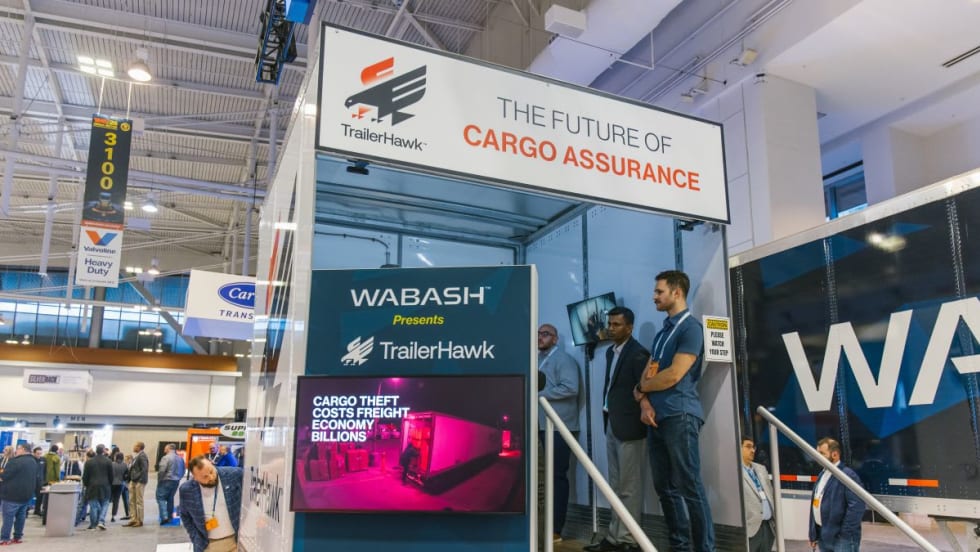
Wabash Teams Physical Security With Digital Tech For Better Cargo Visibility
The patent-pending cargo solution integrates a digitally connected cargo door and an intelligent locking system with the TrailerHawk.AI technology platform.
Read More →
From Diesel Prices to Cyberattacks: How the Iran War Is Affecting Trucking
The impact of the Iran conflict extends beyond fuel costs, bringing more fraud and cybersecurity risks to the trucking industry.
Read More →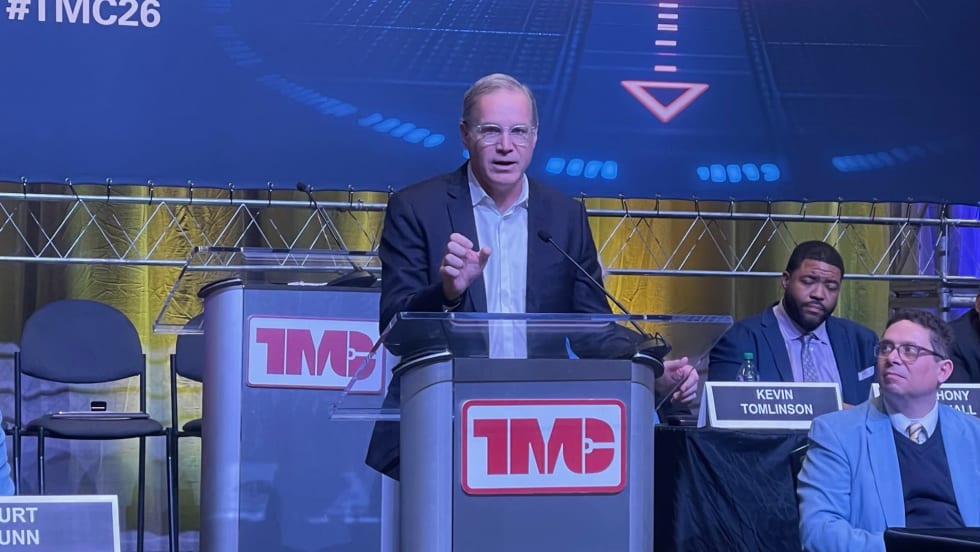
ATA’s Spear Warns Fuel Prices, Trade Policy, and Global Conflict Could Stall Trucking Recovery
Speaking at the TMC Annual Meeting in Nashville, ATA President Chris Spear said trucking faces mounting pressure from rising fuel prices, geopolitical instability, and uncertainty around trade policy.
Read More →
New Entrants, Chameleon Carriers, and Safety: Is It Too Easy to Start a Trucking Company?
More than 100,000 new trucking companies enter the industry each year, but regulators manage to audit only a fraction of them. That churn creates opportunities for inexperienced startups — and for “chameleon carriers” that shut down after safety violations and reappear under new identities. Read more from Deborah Lockridge in this commentary.
Read More →
Fleet Managers Invited to Apply for Exclusive HDT Exchange Event
HDTX is an intimate event that connects heavy-duty trucking fleet managers with industry suppliers through small-group discussions, educational sessions, and structured one-on-one meetings.
Read More →
DAT Launches iPhone Widget to Help Owner-Operators Find Loads Faster
New DAT One feature shows top-paying loads directly on an iPhone’s home screen, helping carriers react faster to spot-market opportunities.
Read More →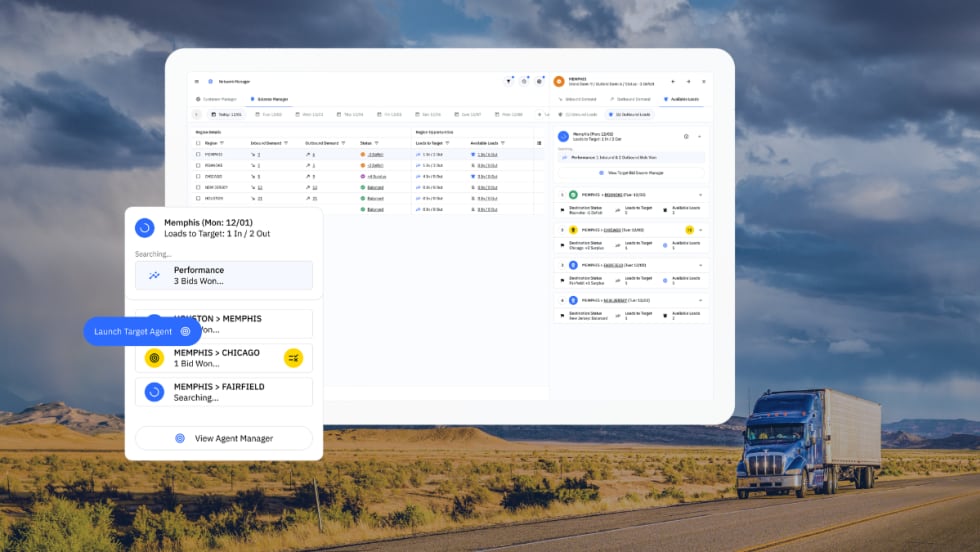
Optimal Dynamics Launches AI System to Help Carriers Choose Better Freight
Optimal Dynamics says its new Scale platform uses AI agents and optimization to help carriers find and secure freight that improves network balance and profitability.
Read More →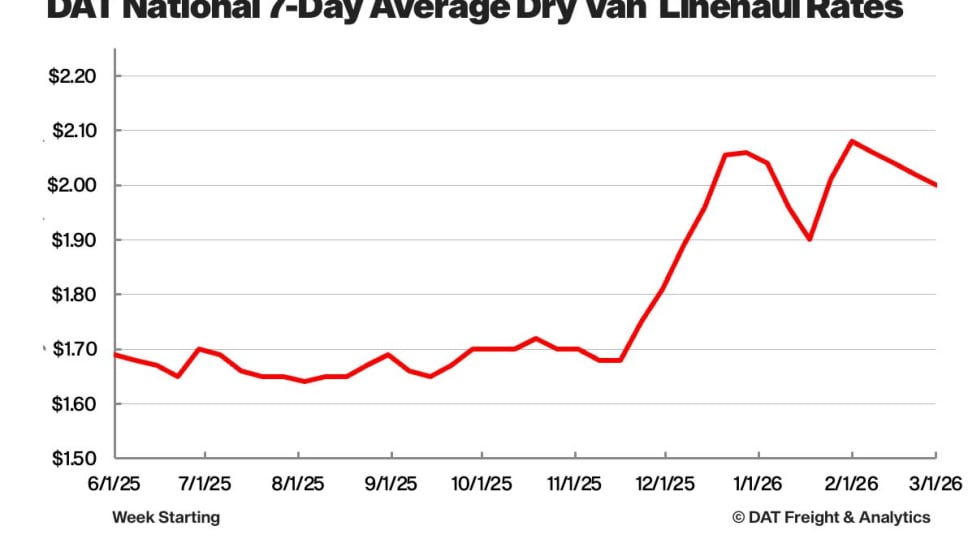
DAT: Flatbed Demand Climbs as Van and Reefer Rates Soften
DAT Freight & Analytics data shows tightening flatbed capacity, easing produce markets, and softening van and reefer rates.
Read More →
Run on Less “Messy Middle” Data Shows Multiple Paths Forward for Truck Powertrains [Watch]
NACFE's Run on Less - Messy Middle project demonstrates the power of data in helping to guide the future of alternative fuels and powertrains for heavy-duty trucks.
Read More →